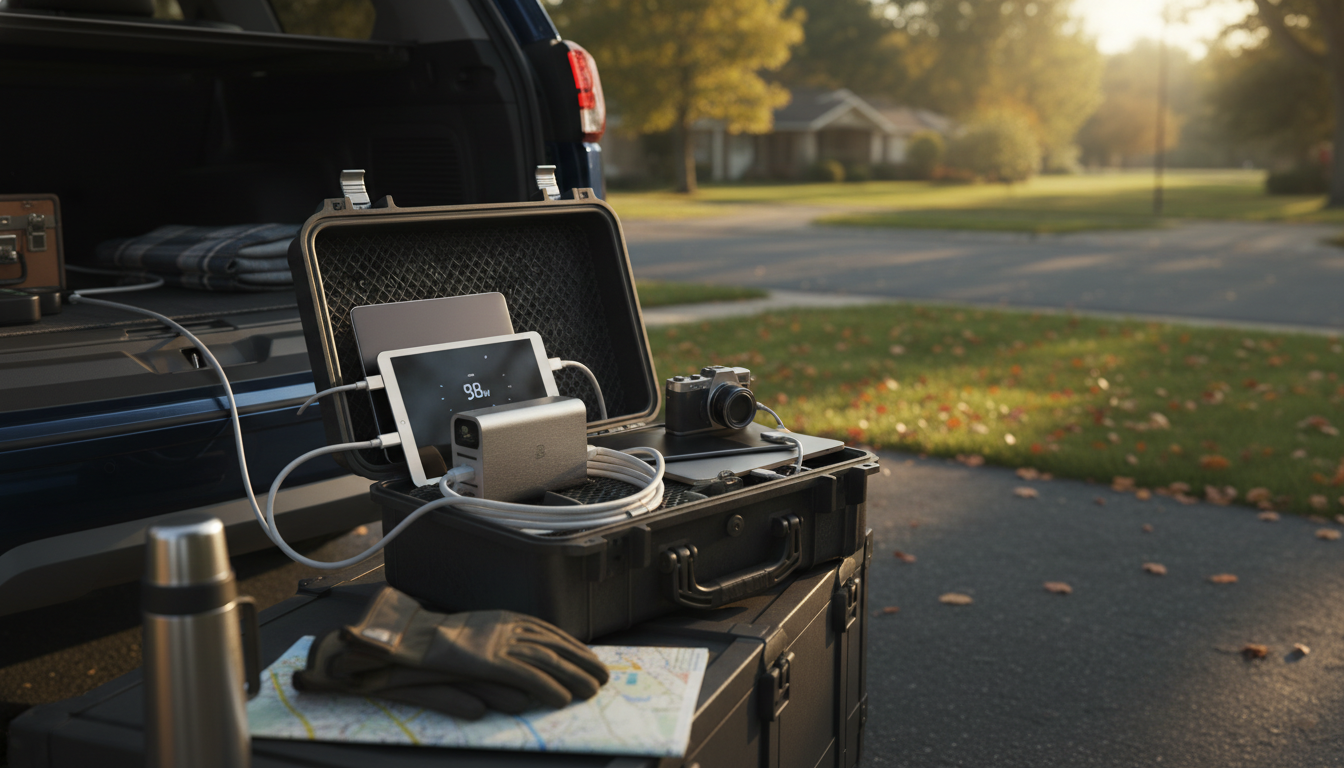
Yes—100W USB-C is considered fast charging, and for many laptops it’s “full-speed” charging. A 100W USB-C charger typically uses USB Power Delivery (USB PD) to negotiate the right voltage and current for your device, with common PD profiles reaching up to 20V/5A (100W). That’s far above older phone-only charging levels like 5W–18W and even higher than many midrange laptop chargers.
Fast charging isn’t only about the number on the charger; it’s about what your device can accept. If a laptop is designed to draw 65W, it will still charge at about 65W even if you plug it into a 100W adapter. The extra capacity simply gives the charger more headroom and can help keep speeds steadier under load (like when you’re using the laptop while charging).
For phones and tablets, a 100W charger doesn’t automatically make them charge faster than their maximum supported rate. Many phones top out around 20W–45W, so they’ll draw only what they’re built for.
To reach 100W, both the charger and the device generally need USB PD support. Some devices also require PD PPS for the most efficient fast charging, especially many modern phones.
To deliver 100W, you typically need a USB-C to USB-C cable rated for 5A (often called a 100W or 5A “e-marked” cable). A basic cable may cap you at 60W (20V/3A) even if the charger can do more.
Even with a 100W setup, charging speed often tapers as the battery fills to protect battery health and manage heat. The fastest speeds usually happen at lower battery percentages.
For more details on choosing a capable USB-C wall charger (including practical notes about wattage and fast charging standards), see the main guide here: https://splendona.com/blog/guide-65w-gan-usb-c-wall-charger-quick-charge/.
Yes. With USB PD, the phone only draws the power it’s designed to accept, and the charger negotiates an appropriate level rather than forcing 100W into the device.







Leave a comment