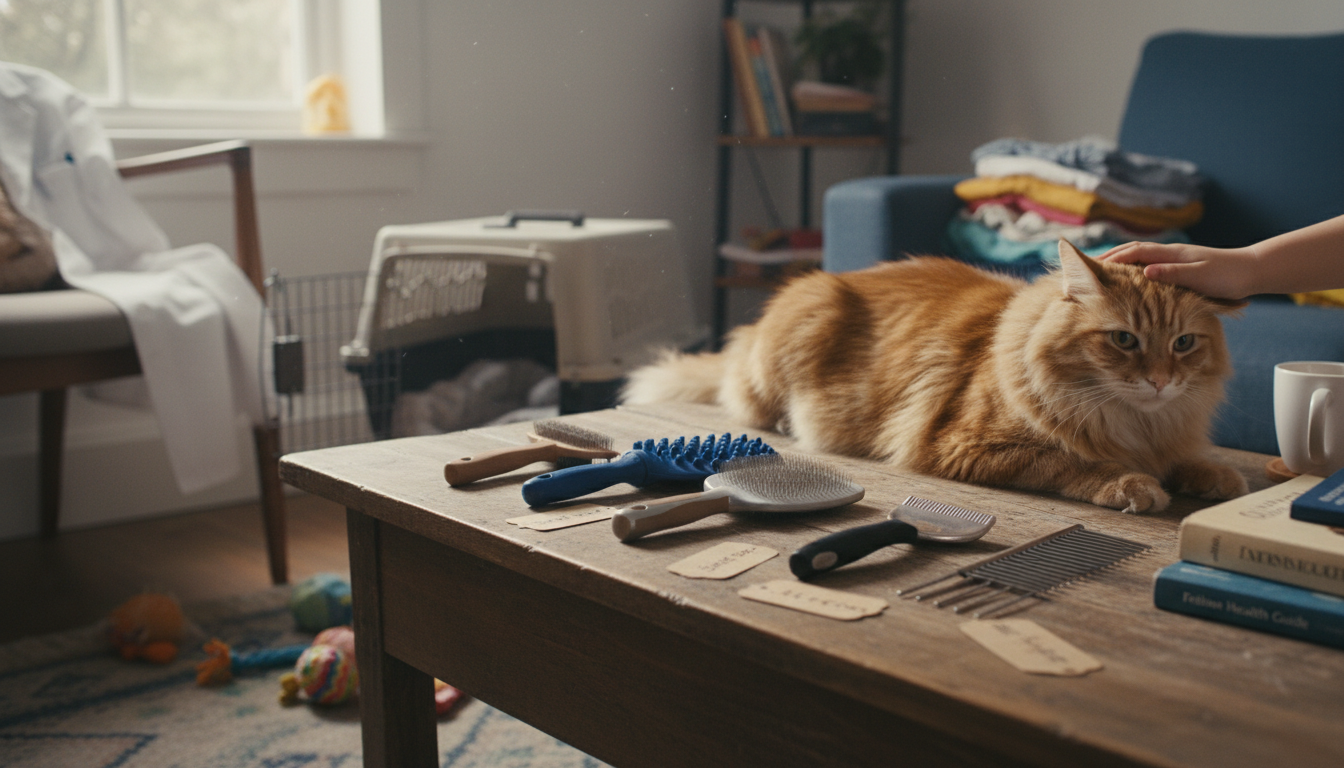
Many veterinarians recommend choosing a brush based on your cat’s coat type and what you’re trying to prevent—tangles, mats, heavy shedding, or hairballs. In most everyday situations, a slicker brush is a top vet-favorite because it lifts loose fur efficiently and helps prevent small tangles from turning into mats, especially for medium- to long-haired cats.
For short-haired cats that shed heavily, vets commonly suggest a rubber grooming brush or grooming glove. These are gentle on the skin, easy to use, and excellent at grabbing loose hair during quick sessions—often making them a better fit for cats that dislike traditional bristles.
When mats are already forming, a vet may recommend a metal comb (often a greyhound-style comb) to check the coat down to the skin and pinpoint knots. For thicker coats, an undercoat rake can be helpful, but it should be used carefully and lightly to avoid irritating the skin.
Short hair: Rubber brush/glove for de-shedding, followed by a soft bristle brush for smoothing.
Medium/long hair: Slicker brush for routine grooming, plus a metal comb to confirm the coat is tangle-free near the skin.
Prone to mats: Comb for detection, slicker for maintenance; severe mats may require professional grooming rather than at-home pulling.
Look for a brush that feels effective without scraping. Rounded pins on slickers, flexible rubber nubs, and a comfortable handle all help keep sessions calm. Aim for short, frequent grooming—especially during seasonal shedding—so you’re removing loose fur before it becomes hairballs or clumps.
For more detailed guidance on brush types and how to use them safely, visit the full guide here: https://splendona.com/blog/what-brush-do-vets-recommend-for-cats/.
Most short-haired cats do well with brushing 1–2 times per week, while medium- and long-haired cats often need brushing at least every other day. During heavy shedding seasons, a brief daily session can help reduce loose fur and hairballs.






Leave a comment