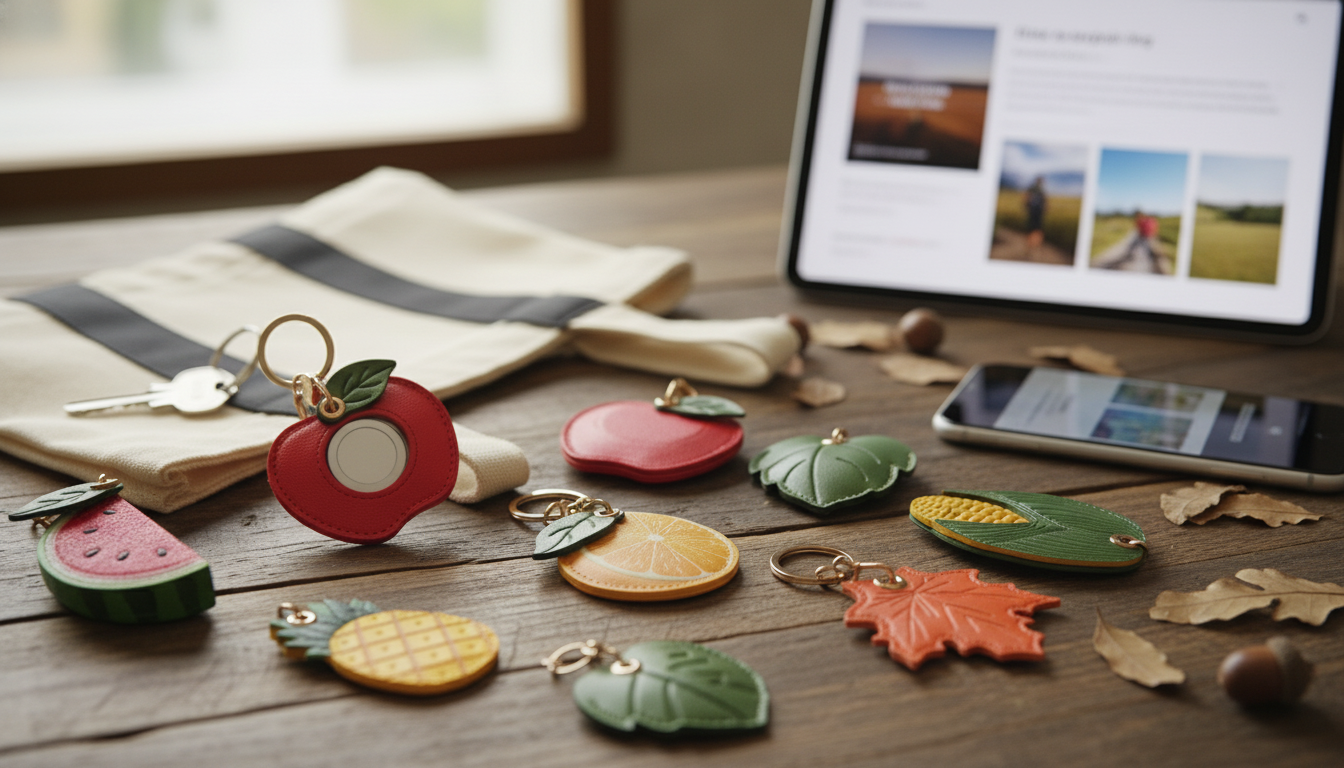
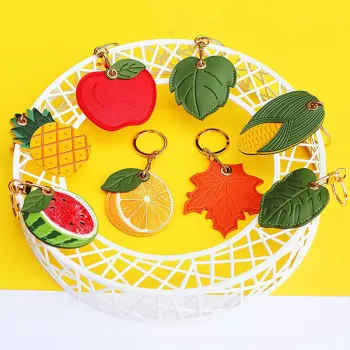
A small AirTag accessory can make a big difference in daily use—especially when it helps protect the tracker, keeps it easy to attach, and adds a bit of personality. This cartoon fruit–style leather protective case with keychain is designed to hold an Apple AirTag securely while reducing scuffs from keys, bags, and everyday bumps. The keychain attachment makes it simple to clip onto backpacks, luggage, pet collars (size permitting), or keyrings, while the leather exterior aims for a softer feel and a more finished look than bare plastic. Below are the main features to look for, how to use and care for it, and how to choose the right AirTag holder for different items.
What the case is designed to do
- Holds an Apple AirTag in a dedicated cover to reduce cosmetic wear from daily handling.
- Adds an attached keychain so the AirTag can be clipped to items instead of being placed loosely in pockets or bags.
- Uses a cartoon fruit exterior to make the tracker easier to spot and more distinctive on shared items.
- Helps reduce rattling and friction when carried with keys, coins, or other hard objects.
Beyond the playful look, the practical goal is simple: keep the AirTag where you want it, limit direct contact with hard surfaces, and make the tracker easier to grab when you need to move it between items.
Materials and build details to check before buying
- Leather type and finish: smoother finishes tend to wipe clean more easily; textured finishes can better hide scratches.
- Stitching and edge finishing: tight stitching and sealed edges can improve durability and prevent fraying.
- Keychain hardware: look for a secure clasp or ring that closes fully and resists twisting open.
- AirTag fit: the AirTag should sit snugly so it doesn’t pop out when pulled or snagged.
- Contact surfaces: ensure the interior won’t scratch the AirTag’s stainless-steel side during insertion/removal.
Quick checklist for an AirTag keychain case
| Feature |
Why it matters |
What to look for |
| Snug holder |
Prevents the AirTag from slipping out |
Firm fit with a secure closure or tight pocket |
| Protective coverage |
Reduces scuffs and minor dings |
Raised edge or full wrap around the AirTag perimeter |
| Keychain strength |
Avoids accidental loss |
Solid metal ring/clasp and reinforced attachment point |
| Comfort in use |
Better for pockets, bags, and collars |
Smooth edges and non-snagging seams |
| Style visibility |
Easier to identify quickly |
Distinctive color/shape such as the cartoon fruit design |
Best everyday uses
- Keys: keeps the AirTag attached without adding a bulky separate holder.
- Backpacks and luggage: clips to zipper pulls or internal loops so the AirTag stays in place.
- Kids’ bags or lunch bags: a playful design can help identify the right bag quickly.
- Camera bags or gear pouches: keeps tracking discreet while still easy to remove if needed.
- Pet collars: only if the size and hardware are suitable for the collar and the pet’s comfort (avoid oversized or heavy setups).
For shared items—like family luggage, loaner equipment, or classroom backpacks—a distinctive fruit character can make the AirTag stand out at a glance without needing to check initials or labels.
How to attach it securely (and avoid common mistakes)
- Insert the AirTag fully: confirm it sits flat without wobbling; a tilted fit can stress seams and speed up wear.
- Clip to a fixed anchor point: use a proper loop or ring rather than thin fabric that can tear under tension.
- Hide it inside luggage when possible: clipping to an internal loop can reduce snagging and discourage tampering.
- Avoid weak zipper tabs: frequent yanking can deform metal rings or split light fabric tabs unless both tab and hardware are robust.
- Do quick check-ins: for daily-use items (keys, school bags, gym bags), inspect the clasp/ring about once a week.
A good rule: if the item gets pulled hard (kids’ bags, overstuffed luggage, keyrings with heavy bundles), the attachment point matters as much as the case itself.
Care and maintenance for leather and hardware
- Wipe the exterior with a soft, slightly damp cloth; avoid soaking the leather.
- Keep away from harsh cleaners, alcohol wipes, and heavy oils that can discolor dyed leather.
- If the case gets wet, air-dry at room temperature (no hair dryers or heaters) to reduce cracking or warping.
- Inspect the metal ring/clasp for bending or loosening; replace the ring if it begins to gap.
- Minimize long-term exposure to abrasive surfaces inside bags (sand, grit) that can wear the finish.
If the case is frequently tossed into a pocket with keys and coins, occasional wiping helps remove fine grit that can act like sandpaper over time.
How to Choose
Compatibility notes
For setup and feature details, refer to Apple’s official resources: Apple Support: AirTag, Apple: Find My, and Apple Support: Add an AirTag in Find My on iPhone.
FAQ
Is fruit leather actually healthy?
In this product name, “fruit leather” refers to a cartoon fruit design on a leather case, not a snack. As a food, fruit leather can vary a lot—some options are mostly fruit, while others include added sugars and concentrates, so checking ingredients matters.
Why is it called fruit leather?
The snack is called fruit leather because puréed fruit is dried into a thin sheet with a flexible, leathery texture. This AirTag accessory uses fruit-themed styling, but it’s a leather case rather than an edible fruit product.
What can I use to make fruit leather?
Typically, fruit leather is made from fruit purée, with optional sweetener and a little lemon juice, then dried in an oven or dehydrator until pliable. That process is separate from AirTag accessories, which use leather and hardware for everyday carry.
Recommended for you
A small AirTag accessory can make a big difference in daily use—especially when it helps protect the tracker, keeps it easy to attach, and adds a bit of personality. This cartoon fruit–style leather protective case with keychain is designed to hold an Apple AirTag securely while reducing scuffs from keys, bags, and everyday bumps. The keychain attachment makes it simple to clip onto backpacks, luggage, pet collars (size permitting), or keyrings, while the leather exterior aims for a softer feel and a more finished look than bare plastic. Below are the main features to look for, how to use and care for it, and how to choose the right AirTag holder for different items.
What the case is designed to do
- Holds an Apple AirTag in a dedicated cover to reduce cosmetic wear from daily handling.
- Adds an attached keychain so the AirTag can be clipped to items instead of being placed loosely in pockets or bags.
- Uses a cartoon fruit exterior to make the tracker easier to spot and more distinctive on shared items.
- Helps reduce rattling and friction when carried with keys, coins, or other hard objects.
Beyond the playful look, the practical goal is simple: keep the AirTag where you want it, limit direct contact with hard surfaces, and make the tracker easier to grab when you need to move it between items.
Materials and build details to check before buying
- Leather type and finish: smoother finishes tend to wipe clean more easily; textured finishes can better hide scratches.
- Stitching and edge finishing: tight stitching and sealed edges can improve durability and prevent fraying.
- Keychain hardware: look for a secure clasp or ring that closes fully and resists twisting open.
- AirTag fit: the AirTag should sit snugly so it doesn’t pop out when pulled or snagged.
- Contact surfaces: ensure the interior won’t scratch the AirTag’s stainless-steel side during insertion/removal.
Quick checklist for an AirTag keychain case
| Feature |
Why it matters |
What to look for |
| Snug holder |
Prevents the AirTag from slipping out |
Firm fit with a secure closure or tight pocket |
| Protective coverage |
Reduces scuffs and minor dings |
Raised edge or full wrap around the AirTag perimeter |
| Keychain strength |
Avoids accidental loss |
Solid metal ring/clasp and reinforced attachment point |
| Comfort in use |
Better for pockets, bags, and collars |
Smooth edges and non-snagging seams |
| Style visibility |
Easier to identify quickly |
Distinctive color/shape such as the cartoon fruit design |
Best everyday uses
- Keys: keeps the AirTag attached without adding a bulky separate holder.
- Backpacks and luggage: clips to zipper pulls or internal loops so the AirTag stays in place.
- Kids’ bags or lunch bags: a playful design can help identify the right bag quickly.
- Camera bags or gear pouches: keeps tracking discreet while still easy to remove if needed.
- Pet collars: only if the size and hardware are suitable for the collar and the pet’s comfort (avoid oversized or heavy setups).
For shared items—like family luggage, loaner equipment, or classroom backpacks—a distinctive fruit character can make the AirTag stand out at a glance without needing to check initials or labels.
How to attach it securely (and avoid common mistakes)
- Insert the AirTag fully: confirm it sits flat without wobbling; a tilted fit can stress seams and speed up wear.
- Clip to a fixed anchor point: use a proper loop or ring rather than thin fabric that can tear under tension.
- Hide it inside luggage when possible: clipping to an internal loop can reduce snagging and discourage tampering.
- Avoid weak zipper tabs: frequent yanking can deform metal rings or split light fabric tabs unless both tab and hardware are robust.
- Do quick check-ins: for daily-use items (keys, school bags, gym bags), inspect the clasp/ring about once a week.
A good rule: if the item gets pulled hard (kids’ bags, overstuffed luggage, keyrings with heavy bundles), the attachment point matters as much as the case itself.
Care and maintenance for leather and hardware
- Wipe the exterior with a soft, slightly damp cloth; avoid soaking the leather.
- Keep away from harsh cleaners, alcohol wipes, and heavy oils that can discolor dyed leather.
- If the case gets wet, air-dry at room temperature (no hair dryers or heaters) to reduce cracking or warping.
- Inspect the metal ring/clasp for bending or loosening; replace the ring if it begins to gap.
- Minimize long-term exposure to abrasive surfaces inside bags (sand, grit) that can wear the finish.
If the case is frequently tossed into a pocket with keys and coins, occasional wiping helps remove fine grit that can act like sandpaper over time.
How to Choose
Compatibility notes
For setup and feature details, refer to Apple’s official resources: Apple Support: AirTag, Apple: Find My, and Apple Support: Add an AirTag in Find My on iPhone.
FAQ
Is fruit leather actually healthy?
In this product name, “fruit leather” refers to a cartoon fruit design on a leather case, not a snack. As a food, fruit leather can vary a lot—some options are mostly fruit, while others include added sugars and concentrates, so checking ingredients matters.
Why is it called fruit leather?
The snack is called fruit leather because puréed fruit is dried into a thin sheet with a flexible, leathery texture. This AirTag accessory uses fruit-themed styling, but it’s a leather case rather than an edible fruit product.
What can I use to make fruit leather?
Typically, fruit leather is made from fruit purée, with optional sweetener and a little lemon juice, then dried in an oven or dehydrator until pliable. That process is separate from AirTag accessories, which use leather and hardware for everyday carry.
Recommended for you



Leave a comment