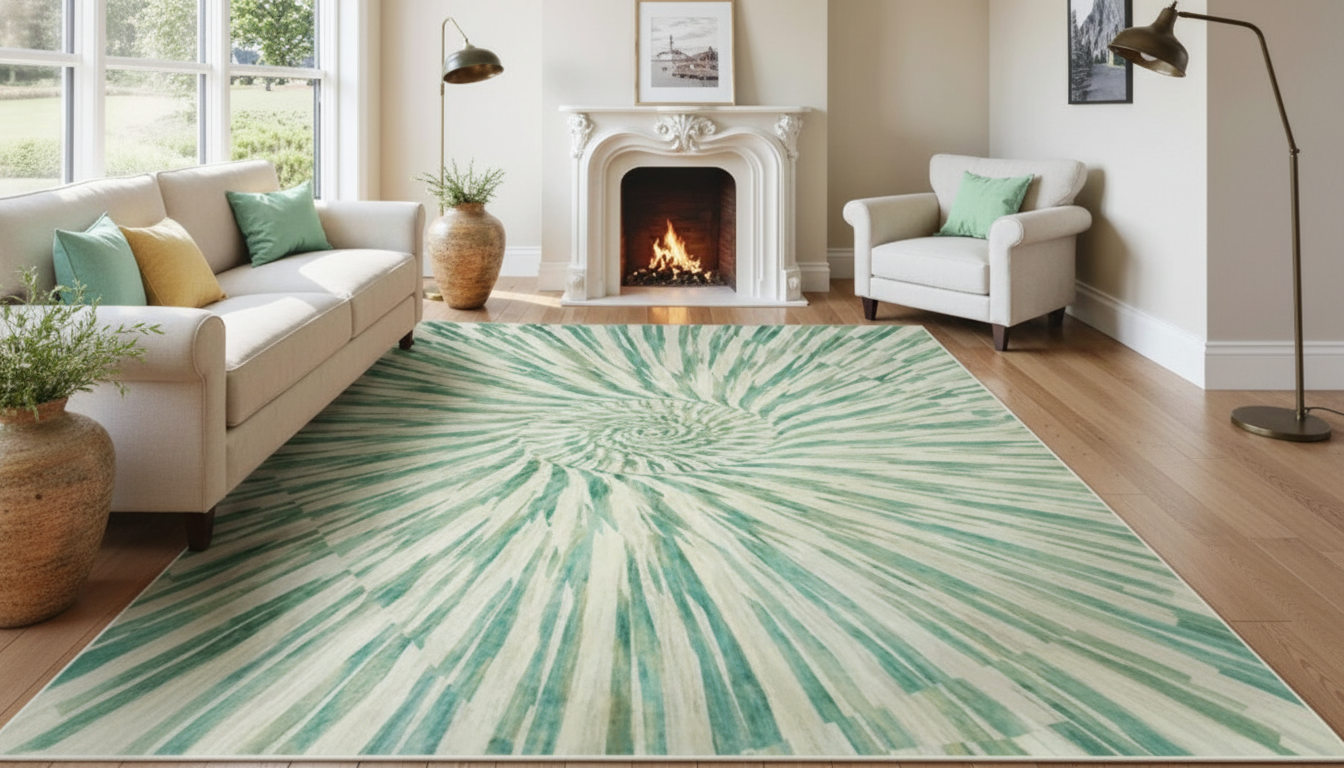
A soft swirl rug can instantly warm up a living room seating area or make a bedroom feel calmer underfoot. The swirl pattern adds movement without overwhelming the space, while plush fibers help soften noise and create a cozy landing spot beside the bed or sofa. The result is a room that feels more finished, more comfortable, and easier to relax in—especially on hard flooring where every step can sound louder and feel colder.
What Makes a Swirl Rug Feel So Comfortable
Comfort comes down to more than “soft to the touch.” The way a rug is built—its fibers, height, density, and backing—determines how it feels day after day.
- Fiber feel: A plush pile with a gentle texture reduces that “scratchy” sensation some rugs have, especially in bedrooms where bare feet are common.
- Pile height: Thicker pile usually feels softer and more lounge-worthy; a lower pile is often easier to vacuum and less likely to show footprints or shading from traffic.
- Backing and density: A dense rug with a stable backing feels more cushioned and helps the surface stay smooth instead of shifting or rippling.
- Warmth and sound: Soft rugs can cut echo in open rooms and add a bit of insulation on tile, vinyl, or wood floors.
Where It Works Best: Living Room vs. Bedroom Placement
Swirl rugs are flexible because the pattern adds subtle energy while still reading as a “soft neutral” in most spaces. Placement is what makes the rug look intentional rather than temporary.
- Living room: Place the front legs of the sofa and chairs on the rug to visually anchor the seating zone and prevent the space from feeling like furniture is “floating.”
- Bedroom: A rug under the lower two-thirds of the bed creates a soft border for morning steps; if you prefer targeted comfort, use runners on each side instead.
- Open-concept layouts: Swirl patterns can subtly define zones (lounge, reading nook, vanity area) without relying on harsh color blocking.
- High-traffic paths: If tracking dirt is a concern, keep the plushest sections away from entry routes and consider placing a mat near doors to reduce grit.
Room-Sizing Guide: Choose Dimensions That Look Intentional
Size is the fastest way to make a rug look polished. A well-sized rug makes a room feel complete even when the palette is quiet and the pattern is subtle.
- Scale first, pattern second: Prioritize coverage that supports your furniture layout; the swirl design should complement, not compete.
- Leave a border: In most rooms, a small margin of visible flooring around the rug helps the space feel balanced rather than wall-to-wall crowded.
- Consider furniture footprint: Aim for consistent contact—either key furniture legs on the rug, or fully off—rather than awkward partial placement that looks accidental.
Quick Rug Size Picks for Common Setups
| Room setup |
Suggested rug size |
Placement tip |
| Small living room seating (sofa + chair) |
5′ x 8′ (approx.) |
Front legs of main seating on the rug |
| Medium living room seating (sofa + 2 chairs) |
8′ x 10′ (approx.) |
Keep side tables on or off consistently |
| Queen bed |
8′ x 10′ (approx.) |
Rug under bed with 18–24 in. showing at sides/foot |
| King bed |
9′ x 12′ (approx.) |
Prioritize softness where feet land most |
How to Choose: Softness, Practicality, and Everyday Maintenance
A swirl rug can be cloud-soft, family-proof, or somewhere in between. The best pick depends on how the room is used and how much upkeep you want.
- If comfort is the priority: Look for a plush, high-pile feel and a dense surface that rebounds after footsteps so it doesn’t flatten quickly.
- If shedding or allergies are a concern: Consider tighter constructions and materials that release less fuzz; frequent, gentle vacuuming can also help keep dust under control.
- If pets or kids are in the home: Choose textures that hide minor lint and select a darker or mid-tone color to mask everyday dust between cleanings.
- If the rug will sit on hard flooring: Plan for a quality rug pad to reduce slipping and improve cushioning, especially in bedrooms where you’ll step onto it first thing in the morning.
- If cleaning ease matters: Confirm whether spot cleaning is simple and whether the pile is easy to vacuum without snagging—high pile can require a higher vacuum setting or suction adjustment.
Color and Pattern Tips: Making Rooms Feel Larger and Lighter
Swirl designs are great for adding visual softness without heavy contrast. Color choices can make the same room feel airier, calmer, or cozier.
Care Routine: Keeping a Plush Rug Looking Fresh
For deeper guidance on routine care and cleaning best practices, see resources from the Carpet and Rug Institute (CRI) and general rug-cleaning tips from The Spruce. When you’re checking cleaning instructions, care labels are designed to give standardized guidance; the FTC’s overview of textile care labeling can help you understand what those instructions mean: FTC care labeling reference.
FAQ
What are the softest rugs for a living room?
Softness is usually driven by pile height, density, and fiber type. Plush or high-pile rugs tend to feel the most cushioned, and a supportive rug pad can noticeably boost comfort underfoot.
What are soft fluffy rugs called?
Common names include shag rugs, plush rugs, flokati-style rugs, and high-pile rugs. They can vary in how “long” the fibers look, how much texture they show, and how much maintenance they need to stay fluffy.
What color rug makes a bedroom look bigger?
Light neutrals and low-contrast palettes often make a bedroom feel more open by reducing visual breaks. Matching undertones between the rug, walls, and bedding also helps the space read as larger and calmer.
Recommended for you





Leave a comment