A consistent grooming routine helps keep coats soft, cuts down on loose hair around the home, and makes it easier to notice tangles, dry patches, or irritated skin early. The right brush can make the difference between a quick, relaxing habit and a struggle that leaves fur pulled and skin stressed. Below are practical ways to choose a grooming brush for both cats and dogs, use it safely on different coat types, and keep the brush clean so every session stays comfortable and effective.
Why regular brushing matters for cats and dogs
Brushing is more than “cleanup.” Done gently, it supports coat health and gives a simple way to spot issues before they become bigger problems.
- Reduces loose hair and dander: Brushing lifts shedding fur before it ends up on furniture, clothing, and floors.
- Helps prevent mats and tangles: This is especially important behind the ears, under collars or harnesses, and in armpit/groin areas where friction is common.
- Supports skin and coat condition: Light brushing helps distribute natural oils along the hair shaft, which can improve shine and reduce dryness.
- Creates an easy weekly check-in: While brushing, it’s easier to notice fleas, ticks, scabs, bumps, hot spots, or areas that feel unusually sensitive.
- Can be calming: For many pets, predictable, gentle sessions become a relaxing routine—especially when paired with praise and breaks.
For additional grooming guidance from trusted organizations, see the American Kennel Club’s dog grooming tips and the ASPCA’s cat grooming overview.
How to choose a grooming brush for different coats
A “one-style-fits-all” brush can work in some multi-pet homes, but it should match the most delicate coat and skin in the group. When in doubt, choose gentler tips and use shorter sessions more often.
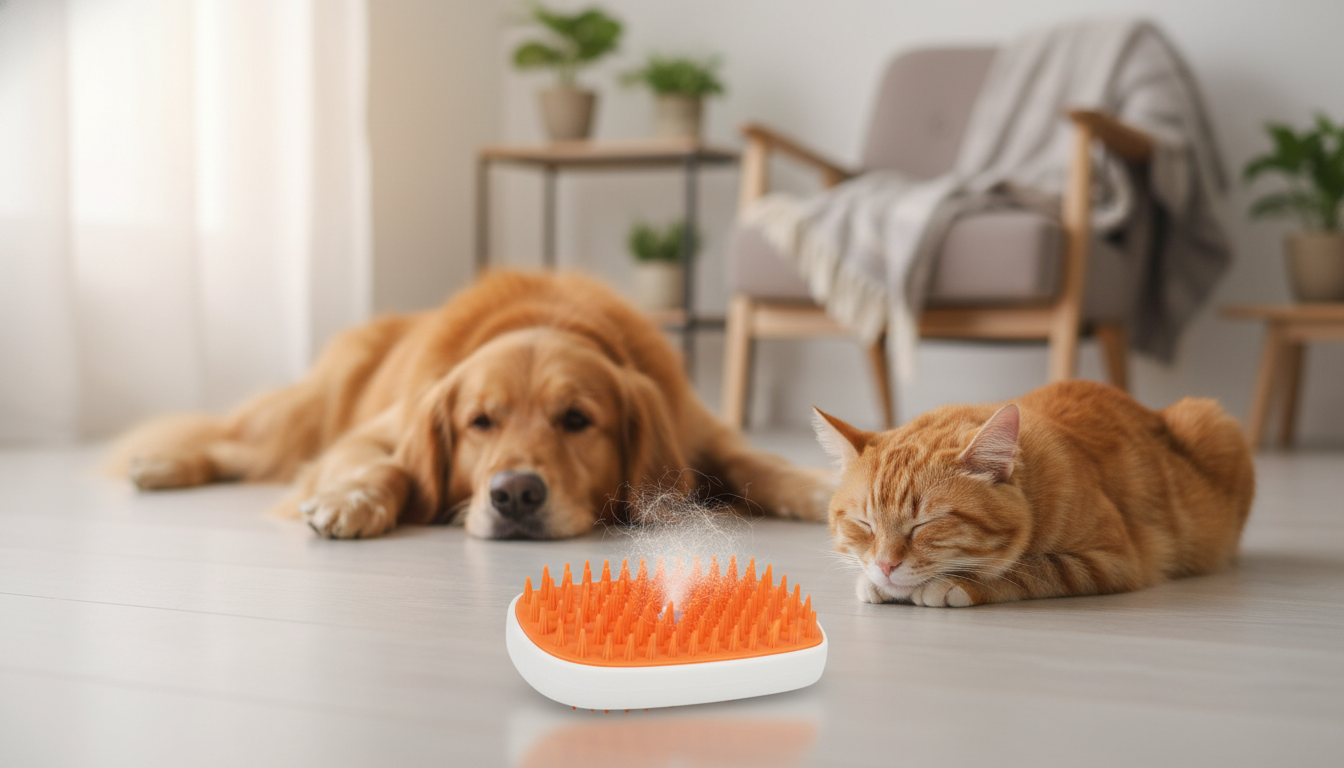
- Short coats: Soft bristles or rubber-style nubs can lift loose hair without scraping skin. Use light pressure and quick passes.
- Medium coats: Look for flexible pins or a combo design that can reach deeper hair while staying comfortable against the skin.
- Long coats: Prioritize detangling. Longer pins with rounded tips help separate hair. Work in sections and finish with a comb around problem areas.
- Double coats (many dogs and some cats): A brush that reaches undercoat is helpful during seasonal shedding. Aim for steady, short sessions rather than overworking one spot.
- Sensitive skin, seniors, and kittens/puppies: Softer tips and a secure, comfortable grip matter most. Keep sessions brief and upbeat.
- Handle comfort: An ergonomic, non-slip handle helps keep strokes controlled and reduces hand fatigue—important for thick coats or frequent brushing.
- Cleanup convenience: Brushes that release collected hair easily make it more likely brushing happens often (which is the real secret to fewer mats).
Brush type quick guide by coat needs
| Coat or situation |
Brush features to look for |
Notes for safe use |
| Short coat, light shedding |
Soft bristles or rubber nubs; flexible base |
Use gentle pressure; avoid scrubbing sensitive belly areas |
| Medium coat, routine care |
Pins with rounded tips; medium spacing |
Brush with the coat direction; finish with a comb if needed |
| Long coat, tangles |
Longer pins; comfortable grip; easy hair release |
Work in small sections; support skin at the base of tangles |
| Double coat, heavy seasonal shed |
Undercoat-reaching pins; sturdy head |
Short sessions; don’t rake the same spot repeatedly |
| Anxious pets |
Quiet, smooth brush head; secure handle |
Pair with treats; stop before the pet becomes restless |
How to brush safely and comfortably (step-by-step)
A calm, predictable approach helps pets accept grooming faster. The goal is to remove loose hair and prevent tangles—not to “scrub” the coat.
- Pick the right moment: Brush after a walk or play session when your pet is naturally calmer.
- Introduce the brush: Let your pet sniff it. Start with a few gentle strokes on the shoulders or back, where many pets tolerate touch best.
- Follow hair growth: Brush in the direction the coat lies. Use short, controlled strokes instead of long passes that can catch and pull.
- Handle tangles carefully: Hold the fur close to the skin to reduce tugging, then work from the ends of the tangle toward the base in small steps.
- Save sensitive zones for later: Tail base, belly, and inner legs can be ticklish or tender. Return to these areas only after your pet relaxes, using lighter pressure.
- Watch skin and body language: Stop if you see redness, your pet flinches, growls, snaps, or fixates on licking a spot afterward.
- Keep it short at first: Aim for 2–5 minutes for beginners, then gradually extend as your pet becomes comfortable.
If you’re also doing outdoor adventures, routine checks help reduce the risk of parasites and skin irritation. The CDC Healthy Pets, Healthy People resource offers practical guidance on safe handling and parasite awareness.
Brushing frequency by season and lifestyle
How often you brush depends on coat type, shedding cycles, and how much time your pet spends outside. A realistic schedule that you can maintain is better than occasional marathon sessions.
Care and cleaning for the brush
How to Choose
FAQ
Can one grooming brush work for both cats and dogs?
Yes if the brush is gentle, comfortable to hold, and appropriate for the pet’s coat type. Use lighter pressure for cats and sensitive pets, and adjust session length based on how each animal responds.
How can brushing be made easier for pets that dislike grooming?
Start with very short sessions and brush the most tolerated areas first, pairing the routine with treats or calm praise. Avoid tugging on tangles and stop while your pet is still doing well so the next session is easier.
When should brushing be avoided and a veterinarian consulted?
Avoid brushing over open sores, significant redness, hot spots, or any area that seems painful. If irritation, itching, or skin changes persist or worsen, consult a veterinarian for guidance.
Recommended for you






Leave a comment