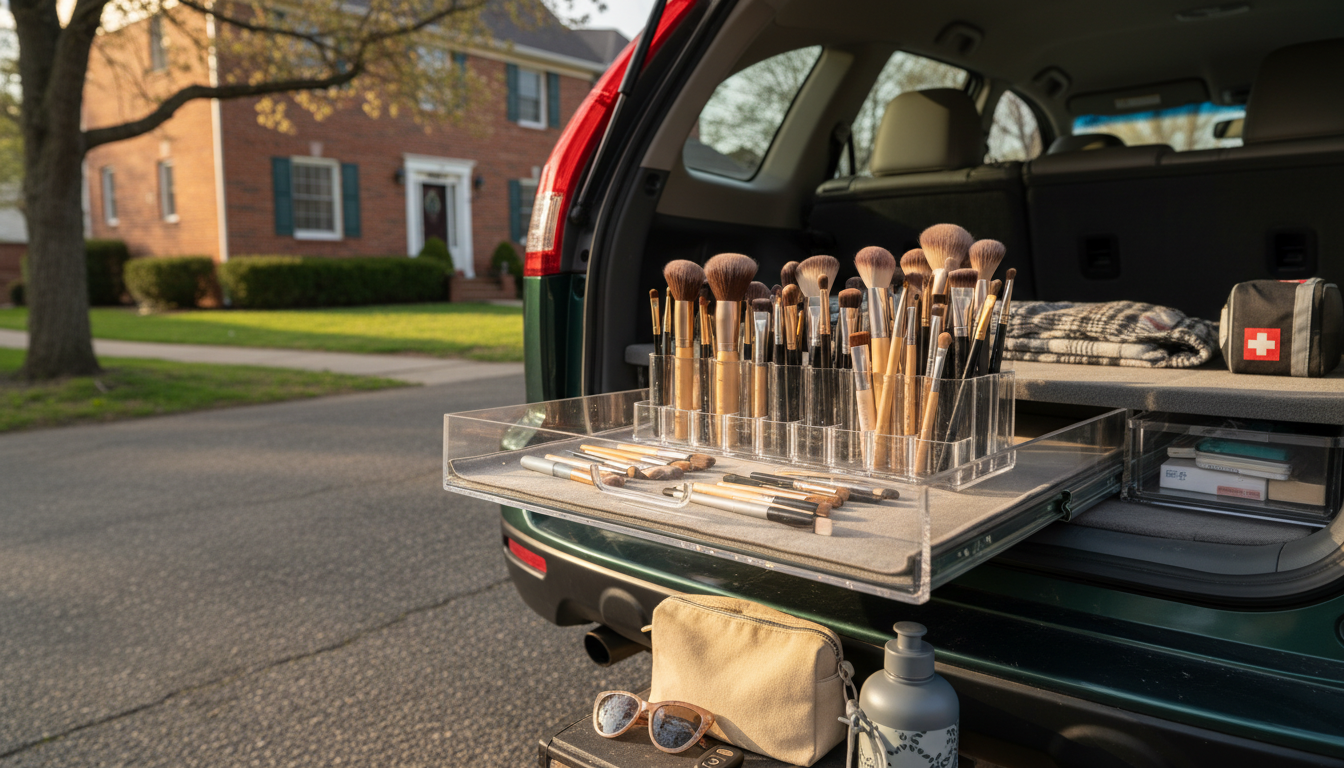
Yes—storing makeup brushes in a drawer is a smart option as long as you keep them clean, protected from dust, and separated so the bristles don’t get bent. A drawer also helps shield brushes from bathroom humidity and countertop splashes, which can shorten the life of the bristles and encourage buildup on handles and ferrules.
The biggest risk of drawer storage is pressure. If brushes roll around or get trapped under palettes, the bristles can splay, fray, or lose their shape. Use a dedicated organizer with compartments so each brush has its own lane, and place it where the drawer closes without compressing the brush heads. If your drawer is shallow, store brushes horizontally in a fitted tray rather than standing them up.
Even when brushes look clean, makeup residue transfers easily if everything is piled together. Reserve one section for freshly washed, fully dry brushes and another for “in-rotation” brushes. This small separation helps cut down on product buildup and makes it easier to stick to a regular washing routine.
Look for clear, wipeable organizers with divided slots so you can see what you have at a glance and keep face, eye, and lip brushes separated. Many people prefer a drawer organizer that includes a brush holder section, especially if you want your everyday brushes to be easy to grab while still staying contained.
For a practical setup idea and sizing tips, see this guide to a clear makeup drawer organizer with a brush holder.
Only store brushes once they’re completely dry to prevent musty odors and possible mildew. If the drawer is in a bathroom, consider adding a simple liner and wiping the drawer interior regularly to reduce powder dust. Finally, avoid overcrowding—more space around bristles means less friction and longer-lasting shape.
Place brushes in a covered compartment or a drawer organizer with separated slots, and keep the drawer closed when not in use. Store fully dry brushes only, and wipe the organizer regularly so powder residue doesn’t settle back onto bristles.
Yes—storing makeup brushes in a drawer is a smart option as long as you keep them clean, protected from dust, and separated so the bristles don’t get bent. A drawer also helps shield brushes from bathroom humidity and countertop splashes, which can shorten the life of the bristles and encourage buildup on handles and ferrules.
The biggest risk of drawer storage is pressure. If brushes roll around or get trapped under palettes, the bristles can splay, fray, or lose their shape. Use a dedicated organizer with compartments so each brush has its own lane, and place it where the drawer closes without compressing the brush heads. If your drawer is shallow, store brushes horizontally in a fitted tray rather than standing them up.
Even when brushes look clean, makeup residue transfers easily if everything is piled together. Reserve one section for freshly washed, fully dry brushes and another for “in-rotation” brushes. This small separation helps cut down on product buildup and makes it easier to stick to a regular washing routine.
Look for clear, wipeable organizers with divided slots so you can see what you have at a glance and keep face, eye, and lip brushes separated. Many people prefer a drawer organizer that includes a brush holder section, especially if you want your everyday brushes to be easy to grab while still staying contained.
For a practical setup idea and sizing tips, see this guide to a clear makeup drawer organizer with a brush holder.
Only store brushes once they’re completely dry to prevent musty odors and possible mildew. If the drawer is in a bathroom, consider adding a simple liner and wiping the drawer interior regularly to reduce powder dust. Finally, avoid overcrowding—more space around bristles means less friction and longer-lasting shape.
Place brushes in a covered compartment or a drawer organizer with separated slots, and keep the drawer closed when not in use. Store fully dry brushes only, and wipe the organizer regularly so powder residue doesn’t settle back onto bristles.





Leave a comment