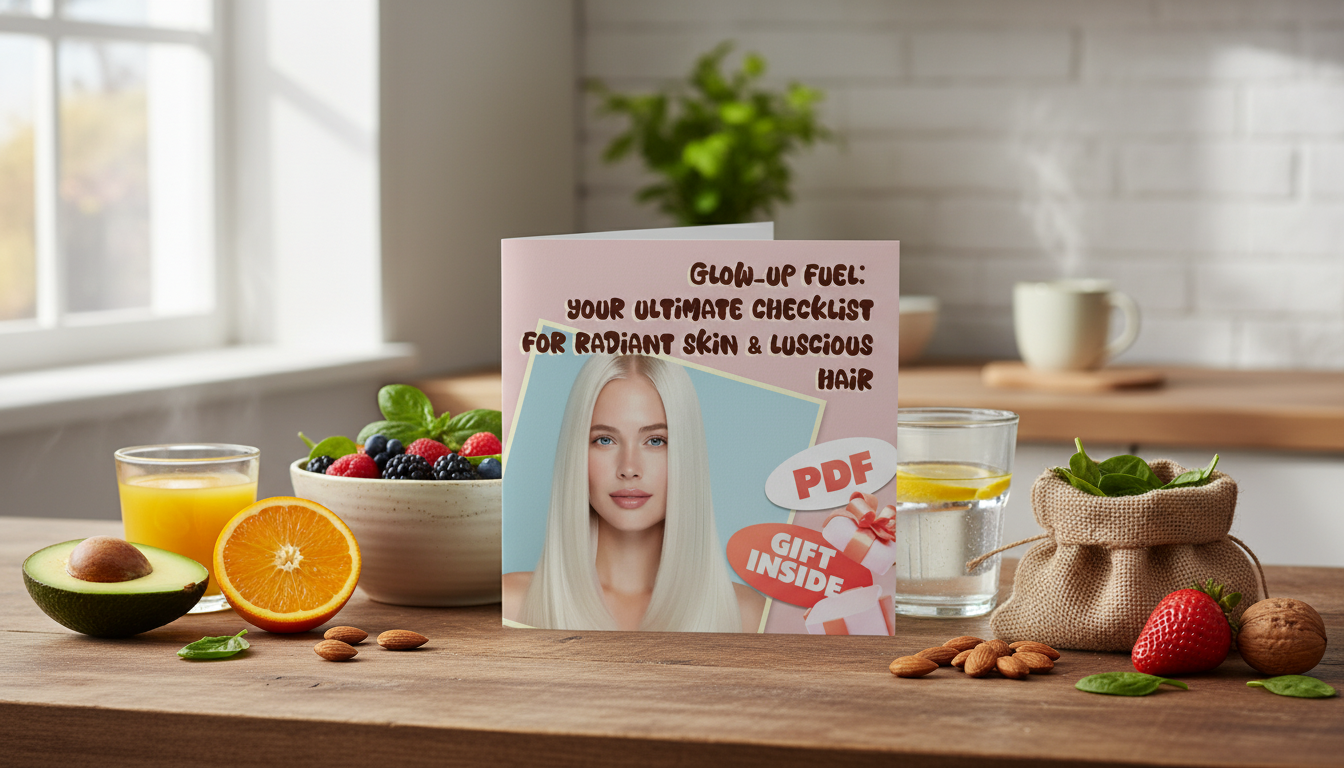
Glow-Up Fuel: A Practical Checklist for Radiant Skin and Luscious Hair
Radiant skin and strong, shiny hair are built on consistent basics: nutrient-dense meals, hydration, steady sleep, and simple routines that support the scalp and skin barrier. Use this checklist-style guide to keep the most effective foods, nutrients, and daily habits in one place—without turning wellness into a full-time job.
The glow-up fundamentals that actually move the needle
- Protect the skin barrier and scalp health: Choose gentle cleansing, consistent moisturization, and daily sun protection. If skin feels tight, stings when you apply products, or looks persistently red, scale back exfoliants and “strong” actives until things calm down.
- Eat for building blocks: Protein supports the structure of keratin (hair) and the repair of skin tissue. Healthy fats help with softness and barrier function, while colorful plants bring antioxidants that support an even-looking tone and bounce.
- Stabilize your daily rhythm: Consistent sleep and stress management help keep inflammation steadier—which can matter when dullness, breakouts, shedding, or scalp itch flares during stressful weeks.
- Hydration is more than water: Fluids matter, but so do electrolytes and water-rich foods. Soups, fruit, and balanced meals can support fluid balance better than trying to “catch up” by chugging water late in the day.
- Consistency over perfection: Small habits done most days beat occasional “reset” weeks. Aim for repeatable, not extreme.
Your weekly food checklist for skin and hair
- Protein (daily): Eggs, Greek yogurt, tofu/tempeh, beans/lentils, poultry, fish. Include a protein source at each meal to support hair structure and skin repair.
- Omega-3 fats (2–4x/week): Salmon, sardines, trout, chia, flax, walnuts—often helpful for comfort and dryness.
- Vitamin C produce (most days): Citrus, kiwi, strawberries, bell peppers, broccoli. Vitamin C supports collagen formation; the NIH explains common sources and needs in its Vitamin C Fact Sheet.
- Vitamin A/carotenoids (most days): Sweet potato, carrots, spinach, kale—commonly associated with healthy-looking skin renewal.
- Zinc and iron foods (several times/week): Pumpkin seeds, oysters, beef, lentils, chickpeas, spinach—important for growth cycles and resilience.
- Vitamin E and healthy fats (most days): Almonds, sunflower seeds, avocado, olive oil—support moisture and barrier function.
- Gut-friendly fiber (daily): Oats, beans, berries, vegetables—supports digestion patterns that can influence skin clarity for some people.
Nutrients to focus on (what to eat and why it helps)
| Nutrient |
Best food sources |
Skin & hair support |
Easy add-ons |
| Protein |
Eggs, yogurt, tofu, lentils, chicken, fish |
Supports keratin and tissue repair |
Add Greek yogurt to breakfast; include beans in salads |
| Omega-3s |
Salmon, sardines, chia, flax, walnuts |
Supports skin comfort and moisture balance |
Chia pudding; walnuts on oatmeal |
| Vitamin C |
Kiwi, citrus, berries, bell peppers, broccoli |
Supports collagen formation and antioxidant defense |
Bell pepper snack plate; berries daily |
| Zinc |
Pumpkin seeds, oysters, beef, chickpeas |
Supports growth cycles and immune balance |
Sprinkle seeds on salads; hummus dip |
| Iron |
Red meat, lentils, spinach, fortified cereals |
Supports oxygen delivery for follicles and skin vitality |
Lentil soup; pair plant iron with vitamin C foods |
| Vitamin E |
Almonds, sunflower seeds, avocado, olive oil |
Supports barrier function and softness |
Avocado toast; olive oil on roasted vegetables |
A simple daily routine checklist (skin + scalp)
- Morning: Gentle cleanse (or rinse), moisturize, then apply broad-spectrum sunscreen. If skin is reactive, keep the routine minimal and boring.
- Daytime: Reapply sunscreen when outdoors; add a hat and sunglasses for extra coverage. The American Academy of Dermatology’s sunscreen FAQs are a helpful refresher on best practices.
- Evening: Cleanse to remove sunscreen and grime, moisturize, and add targeted actives only if tolerated (start 2–3 nights/week rather than daily).
- Scalp basics: Wash as needed for oil and buildup. Focus shampoo on the scalp and conditioner on lengths; avoid heavy styling residue that can contribute to itch or flakes.
- Hair care: Minimize heat, use heat protectant, detangle gently, and protect hair during sleep with a loose style or a silk/satin pillowcase.
- Track triggers: New products, tight hairstyles, and stress spikes can correlate with itching, flaking, or shedding.
Meal-building templates that keep the checklist effortless
- Glow-up breakfast: Protein + vitamin C fruit (example: Greek yogurt with berries and chia).
- Lunch formula: Leafy greens + colorful veg + protein + olive oil dressing (example: salmon salad with bell peppers).
- Snack ideas: Citrus + nuts; hummus + bell peppers; boiled eggs + fruit.
- Dinner formula: Protein + roasted orange/green vegetables + whole grain (example: tofu stir-fry with broccoli and brown rice).
- Sweet cravings swap: Dark chocolate + berries; yogurt bark with fruit; chia pudding.
- Batch-cook helpers: Lentils, quinoa, roasted vegetables, boiled eggs—mix and match all week.
Common “healthy” habits that can backfire
How to Choose a printable wellness guide that gets used
When to get extra help
FAQ
How long does it take to see changes in skin glow and hair strength from diet?
Skin can look more hydrated within about 2–4 weeks when barrier care and balanced meals are consistent. Hair changes usually take longer because growth happens in cycles, so noticeable improvements often take 8–12+ weeks.
Do I need supplements like biotin or collagen for better hair and skin?
Not always—supplements tend to help most when there’s a confirmed deficiency or a specific medical reason. High doses aren’t automatically better; the NIH’s biotin fact sheet is a useful overview to discuss with a clinician if you’re unsure.
What are the best foods to eat every day for healthier skin and hair?
A solid daily base is: a protein source, a vitamin C fruit or vegetable, colorful vegetables, healthy fats (like olive oil, avocado, nuts), and high-fiber plants. Add omega-3 sources several times per week for extra support.
Recommended for you




Leave a comment