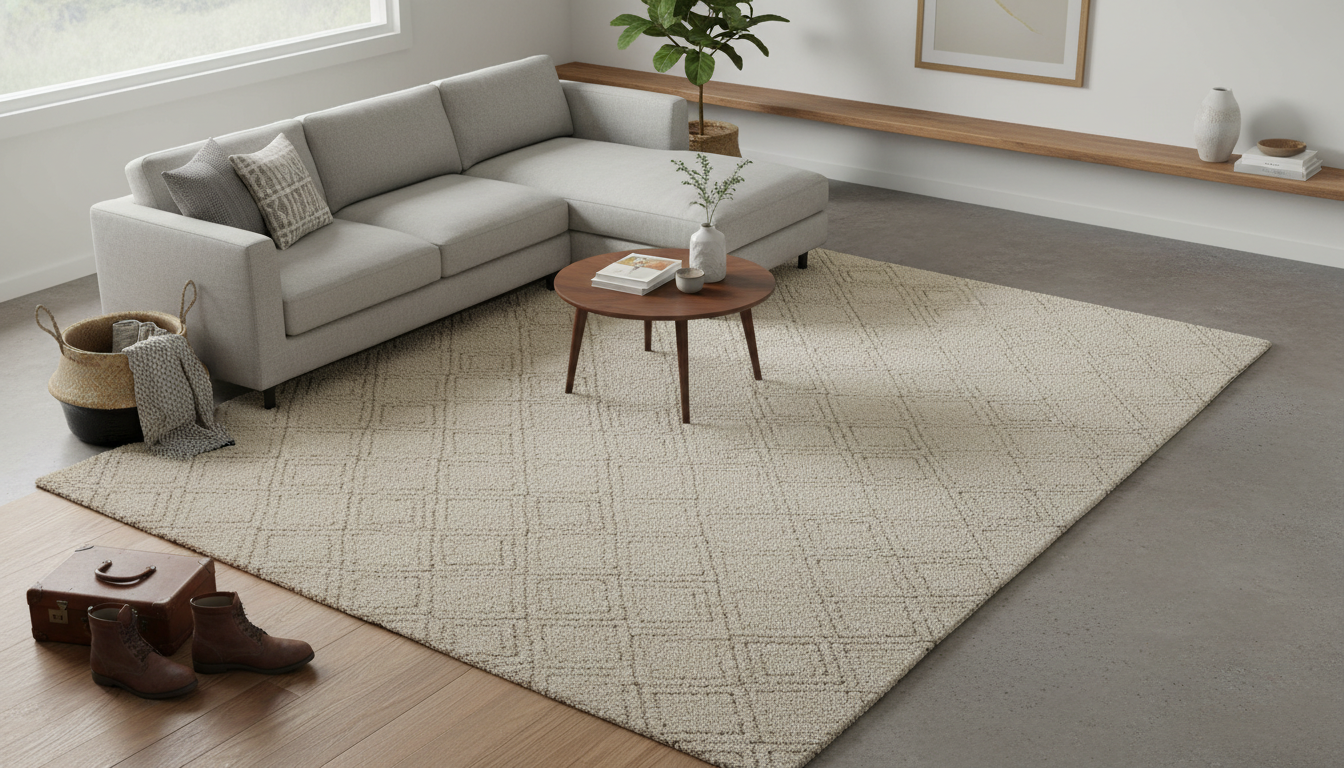
A larger rug usually makes a room look bigger. When more of the floor is covered by a single, continuous surface, the eye reads the space as more expansive and less visually “chopped up.” A too-small rug can have the opposite effect, making furniture look disconnected and the room feel tighter.
The key is choosing a rug that’s large enough to visually anchor the main furniture group. In living rooms, that often means a size where at least the front legs of the sofa and chairs sit on the rug; even better is fitting all seating legs on it when the room allows. In bedrooms, a rug that extends beyond the sides and foot of the bed creates a wider footprint, which can make the entire room feel more generous.
Size alone isn’t magic—placement matters. A large rug can make a room feel smaller if it’s jammed wall-to-wall without breathing room, or if it clashes heavily with the floor and furnishings. Leaving a border of visible floor (often around 8–18 inches, depending on the room) helps define the perimeter and keeps the space from feeling cramped.
Also watch proportions: an oversized rug under a tiny furniture arrangement can make the furniture look underscaled, which may create an odd, shrunken effect. Aim for a balanced layout where the rug extends beyond the furniture group by several inches on all sides.
Try to keep the rug centered with the main seating or bed, maintain even margins, and avoid “floating” rugs that sit too far from furniture. If you’re using a patterned rug, a softer, flowing design can reduce visual boundaries and feel more open. For more practical placement ideas and easy-care guidance, see the full guide here: https://splendona.com/guide-soft-swirl-rugs-placement-sizing-easy-care-tips/.
Aim for a visible border of floor around the rug, often about 8–18 inches depending on room size. Keeping the border consistent on multiple sides helps the room look more intentional and spacious.





Leave a comment