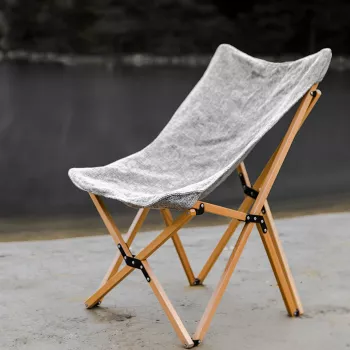
A portable wooden butterfly chair combines a compact folding frame with a sling-style seat that cradles the body. It fits naturally in patios, reading corners, camping trips, and small spaces where quick setup and easy storage matter as much as comfort and style. With its warm wood tones and relaxed, low-profile posture, it can read as both casual and design-forward—without committing to a bulky armchair footprint.
What Makes a Butterfly Chair Different
The butterfly chair stands out because it’s built around a suspended sling rather than a rigid, upholstered seat. That single design choice changes how it feels, how it stores, and how it complements a room.
- Sling seat comfort: The fabric or leather sling distributes weight across a broad surface, encouraging a relaxed, slightly reclined posture.
- Folds flatter than many accent chairs: A crossed frame structure typically collapses down for easy moving between rooms—or out the door.
- Wood adds visual warmth: Compared with all-metal camping chairs, a wooden frame blends more easily with indoor décor and soft furnishings.
- Low lounge height: The seat sits closer to the floor, which feels cozy and casual; pairing it with a small side table makes everyday use more convenient.
Everyday Uses: Indoors to Outdoors
Because it’s lightweight (relative to traditional furniture) and quick to set up, a portable wooden butterfly chair can serve multiple “jobs” throughout the week.
- Living room: A flexible accent chair for reading, gaming, or extra guest seating when the sofa is full.
- Bedroom: A compact lounge chair for putting on shoes, laying out an outfit, or creating a quiet corner near a window.
- Balcony or patio: Easy to carry out for morning coffee; simple to bring back in when weather shifts.
- Camping and travel: Folds down for transport and feels great near a fire pit or scenic overlook (best on stable, level ground).
- Events: Helpful for pop-up gatherings when quick seating is needed without hauling bulky furniture.
Materials and Build: Frame, Seat, and Hardware
Portable seating gets handled more often than stationary furniture, so materials matter. A few details can separate a chair that lasts for seasons from one that loosens or sags quickly.
- Wood frame: Look for hardwood or well-finished engineered wood with smooth edges to reduce snagging and splinter risk. Wood properties and performance vary widely by species and construction, so a solid, consistent finish and clean joinery are good signs of quality. For deeper background on wood as a material, see the USDA Forest Service’s Wood Handbook.
- Finish: Protective coatings help resist moisture and UV fading; occasional outdoor use benefits from a weather-resistant finish.
- Seat sling options: Canvas/cotton blends tend to feel breathable and casual, polyester is often easy to spot-clean, and leather offers a classic look with a different kind of “give.”
- Stitching and hems: Reinforced seams and double-stitching add durability where the sling loops over the frame.
- Hardware: Hinges, bolts, and rivets should feel tight with minimal wobble; corrosion-resistant hardware is preferable if the chair travels outdoors.
For outdoor exposure and seasonal storage, practical care guidance for finishes and materials can extend the life of your furniture; the University of Maryland Extension provides a helpful overview in Outdoor Furniture Care and Maintenance.
Comfort and Ergonomics Checklist
Butterfly chairs are known for relaxed lounging rather than structured posture support. To find a comfortable match, focus on fit, edge pressure, and stability.
- Seat depth: Deeper slings feel more lounge-like but may make standing up harder; shallower seats can feel more upright and accessible.
- Edge pressure: A well-cut sling avoids tight edges behind knees or along shoulders.
- Back support: Support is flexible, not firm. A small cushion can improve lower-back comfort during longer sessions.
- Stability: A wide stance and non-slip feet help prevent shifting on tile, hardwood, or packed dirt.
- Weight rating: Match the chair’s load capacity to expected users and avoid exceeding stated limits.
Quick Comfort Comparisons
| Feature |
What It Affects |
Good Sign |
| Deeper sling |
More lounge posture |
No tight pull at shoulders |
| Wider seat |
Roomier feel |
Hips supported without squeezing |
| Thicker fabric/leather |
Pressure distribution |
Minimal edge digging |
| Non-slip feet |
Floor grip |
Doesn’t creep on smooth surfaces |
| Optional cushion |
Lower-back support |
Less slouching over time |
Portability: Folding, Carrying, and Storage
“Portable” can mean different things: moving from room to room, packing into a car trunk, or storing in a closet between uses. A few checks can prevent frustration later.
- Fold mechanism: Opening and closing should feel smooth; keep fingers clear of pinch points around hinges and crossing supports.
- Packed profile: A flatter fold is easier to slide behind doors, next to shelving, or into a vehicle.
- Weight: Wooden frames can run heavier than aluminum; consider who will carry it and how far.
- Protective storage: A simple cover or wrap helps prevent scuffs during transport and keeps the sling cleaner.
- Floor protection: Felt pads or rubber caps reduce scratches indoors and improve grip outdoors on hard surfaces.
Care and Maintenance
With occasional attention, a wooden butterfly chair can stay comfortable and attractive through regular use.
FAQ
Can a wooden butterfly chair be used outdoors?
Yes—it’s a great fit for patios, decks, and occasional outdoor use. Choose a chair with a weather-resistant finish and corrosion-resistant hardware, and store it in a dry place to extend its lifespan.
How do you clean a butterfly chair sling?
Most fabric slings can be spot-cleaned with mild soap and water, then air-dried completely before storage. Leather slings typically need gentle wiping and periodic conditioning; always follow the sling’s care label.
Are butterfly chairs comfortable for long sitting sessions?
They’re comfortable for relaxed lounging, but they provide flexible support rather than structured lumbar support. A small lumbar pillow and an appropriate seat width and depth can make longer sessions more comfortable.
Recommended for you





Leave a comment