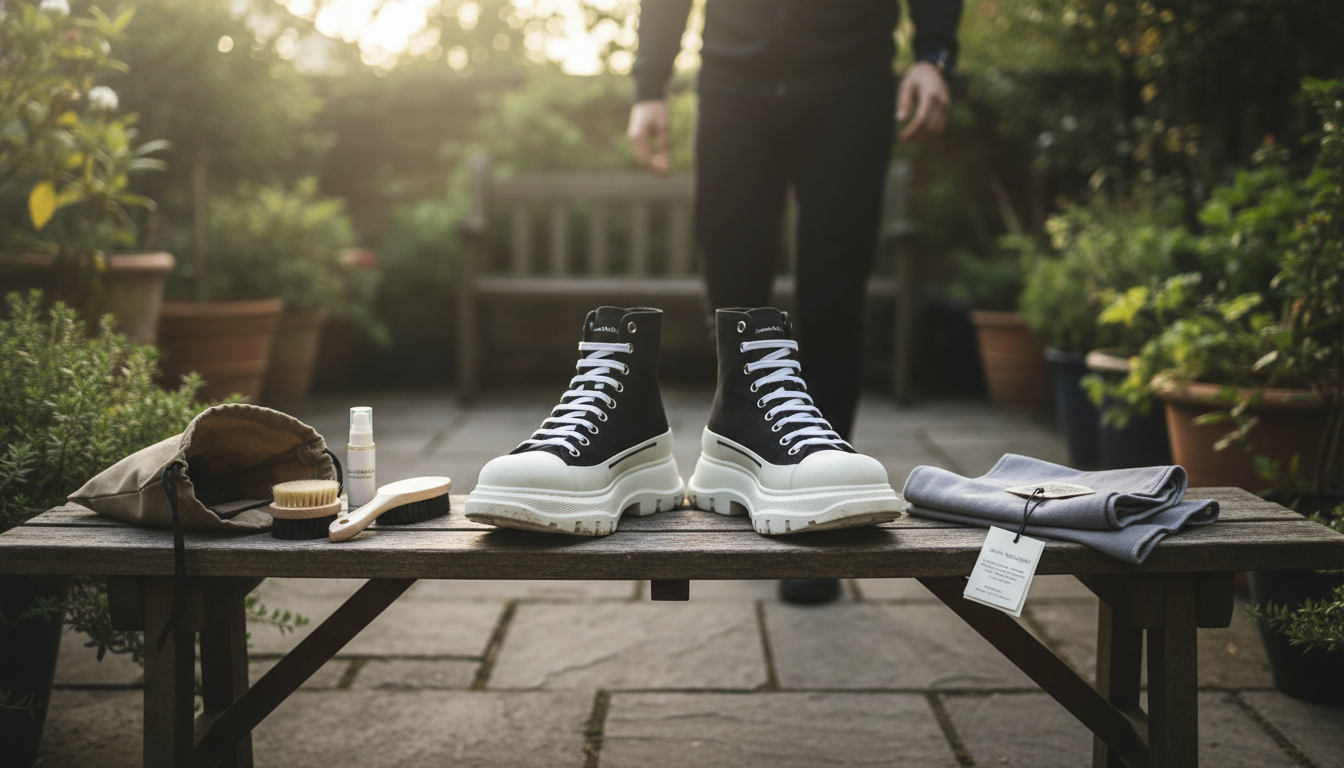
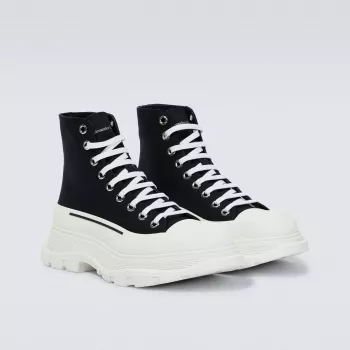
Alexander McQueen Cotton Sack Sneakers blend a sculptural, fashion-forward silhouette with an intentionally textural cotton upper and a bold sole profile. The result feels more organic than smooth leather while still reading polished and intentional. Below is a practical guide to what makes the Cotton Sack look unique, what to inspect before buying, how the fit typically behaves, easy outfit formulas for different seasons, and care habits that help cotton stay crisp instead of looking tired. For more guidance, see Alexander McQueen (fashion house) – Wikipedia.
The Cotton Sack variation stands out because the upper leans into texture rather than hiding it. Cotton-forward material creates a tactile finish that lands slightly more casual than leather, but the overall shape stays elevated thanks to clean lines and a strong platform-like sole. For further reading, see Mcqueen White Sneaker Pelle S Gomma Alexander Mcqueen ….
This texture also changes how the sneaker “reads” in an outfit: it behaves like a statement basic. Even with minimal color (often neutrals), the surface and silhouette keep the shoe visually interesting without requiring loud branding or busy styling.
The bold sole profile is the design anchor. On-body, that means the shoe can ground an outfit and pull the eye downward—especially with slim pants, cropped hems, or shorts. Because cotton can look best when it’s kept clean and structured, storage and light maintenance matter more than they do for sneakers that look better “beat in.”
Before purchasing, focus on how the textile and sole are finished. Cotton and cotton-blend uppers often show creases, scuffs, discoloration, and rub marks more quickly than leather, so small issues are easier to spot and harder to hide later.
Look for an even weave and consistent color across both shoes. Check high-contact areas (toe box edges, lace area, and lateral sides) for dark rubbing, faint yellowing, or patchy dye. On cotton, those early signs can become more noticeable with wear.
A chunkier outsole adds height and presence, but it also makes clean bonding and symmetry important. Inspect the sidewall for neat edges, uniform glue lines, and consistent spacing where the upper meets the sole. Check tread depth and pattern symmetry to ensure both shoes are wearing evenly (or, if new, were produced consistently).
Smooth seams and a stable heel lining can reduce rubbing during break-in. Stitching should look straight and deliberate, with tidy ends and no loose threads. Branding details—placement, clarity, and alignment—should match across the pair; misalignment can be a sign of heavy wear, damage, or authenticity concerns depending on context.
| Area | What to Check | Why It Matters |
|---|---|---|
| Cotton upper | Even texture, no yellowing, no dark rub marks | Cotton stains and oxidation can be hard to reverse |
| Toe and sidewalls | No separation, no cracking, clean edges | Early separation often worsens with wear |
| Heel counter | Firmness and lining condition | Reduces slipping and blister risk |
| Insole | Cushion rebound, odor, secure fit | Comfort and hygiene over long wear |
| Outsole tread | Even tread depth and stable grip | Helps predict remaining life and traction |
Cotton uppers often feel softer right away, but they typically don’t “mold” to the foot the same way leather can. The goal is comfort from day one without counting on stretching to fix tight spots.
Start by evaluating toe room—especially if the silhouette looks sleek through the forefoot. You want enough space for natural foot splay when walking. Next, focus on heel security: chunkier soles can amplify heel movement, so a snug heel reduces friction during longer wear.
Break-in is usually about softening pressure points rather than expanding the upper. Thin socks can reveal fit issues quickly; thicker socks can reduce rubbing but may also make the shoe feel smaller. For everyday wear, prioritize a stable midfoot and a non-pinching top line, since cotton can crease and rub if the fit is too tight across the instep.
Choosing well comes down to three things: how you’ll wear them, what you’ll wear them with, and how much maintenance you’re willing to do.
For occasional fashion wear, a slightly snugger look can work if it still feels comfortable standing and walking. For all-day use, prioritize toe room and heel hold; small fit compromises are more noticeable after hours on foot.
Cotton generally has less structural stretch than leather, so the fit should feel comfortable immediately. You may get minor “give” as the material relaxes, but it typically won’t expand enough to fix a size that’s truly too small.
Dry brush first, then spot clean with a mild soap solution using a soft cloth. Blot instead of scrubbing and air dry away from heat to reduce fraying, fuzzing, and distortion.
They can work for light moisture, but cotton absorbs water and can hold it longer than leather. Use a fabric protectant, avoid heavy rain when possible, rotate pairs, and let them air dry fully to prevent odor and shape issues.





Leave a comment