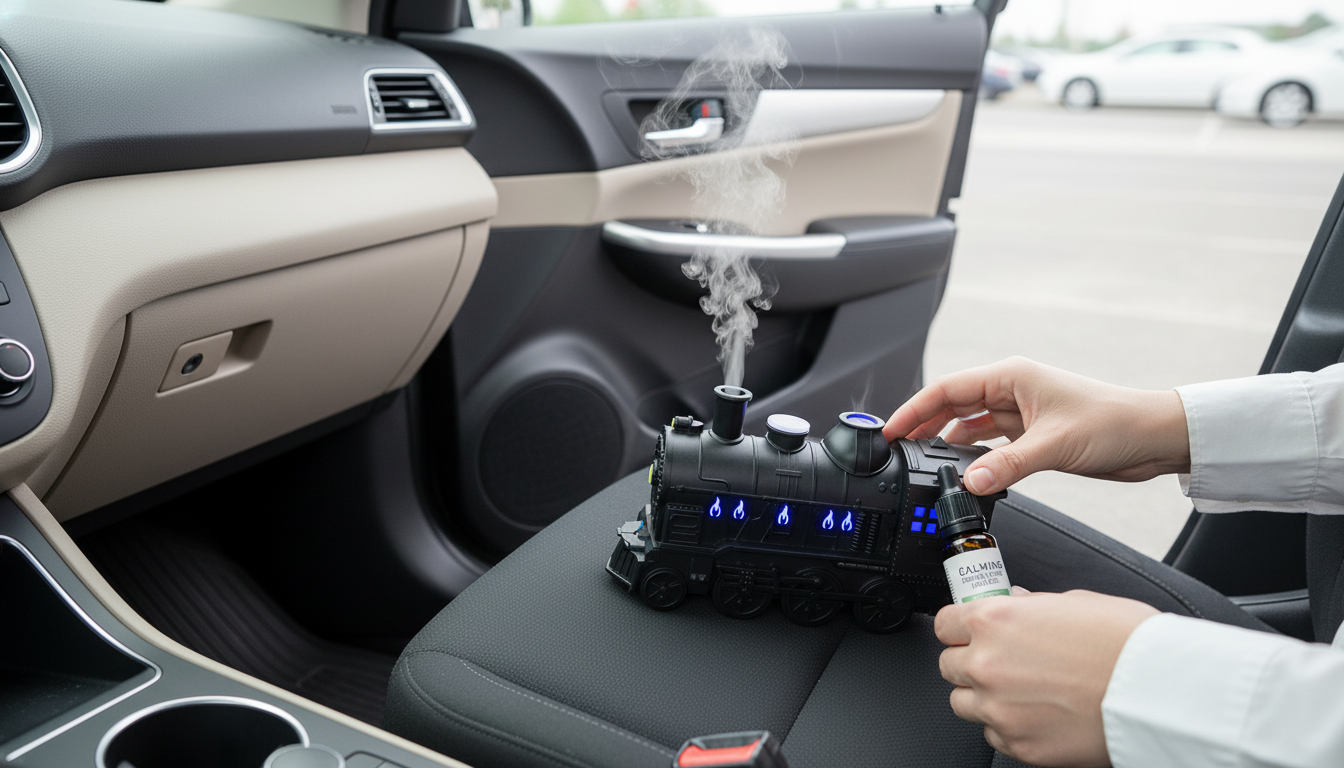
A mini train diffuser can help some people feel more comfortable during travel, but it isn’t a guaranteed fix for motion sickness. Motion sickness usually comes from mixed signals between the eyes and inner ear, and aromatherapy can only support symptoms like nausea, stress, or headache—not address the underlying sensory mismatch.
Diffusers that disperse essential oils into the air can be calming, which matters because anxiety and stress often make nausea feel worse. Certain scents are also commonly associated with nausea relief. For example, peppermint and ginger aromas are frequently used to settle the stomach, while lavender may help with relaxation. A compact train-shaped diffuser can be convenient on a desk, nightstand, or even in a hotel room to create a steadier, more soothing environment before and after a trip.
If you’re actively riding in a car, bus, or plane, a diffuser won’t “stop” the motion signals that trigger symptoms. In addition, strong fragrances can sometimes worsen nausea for sensitive users. If you’re prone to motion sickness, start with a mild scent, use less oil than usual, and stop immediately if the smell feels overwhelming.
Use only a few drops of oil, keep airflow gentle, and avoid continuous diffusion in small spaces. If you’re traveling with others, consider that scents can bother nearby passengers or trigger headaches or asthma symptoms. It’s often best to use a diffuser before departure, at your destination, or in a private room rather than in crowded shared transit.
For settings, oil ideas, and care tips for a mini train diffuser, see this guide to mini train diffuser humidifier settings, oils, and care.
Peppermint and ginger are popular options for queasiness, while lemon can feel fresh and uplifting. If scents tend to make you more nauseated, choose a very light diffusion or skip oils and focus on ventilation instead.






Leave a comment