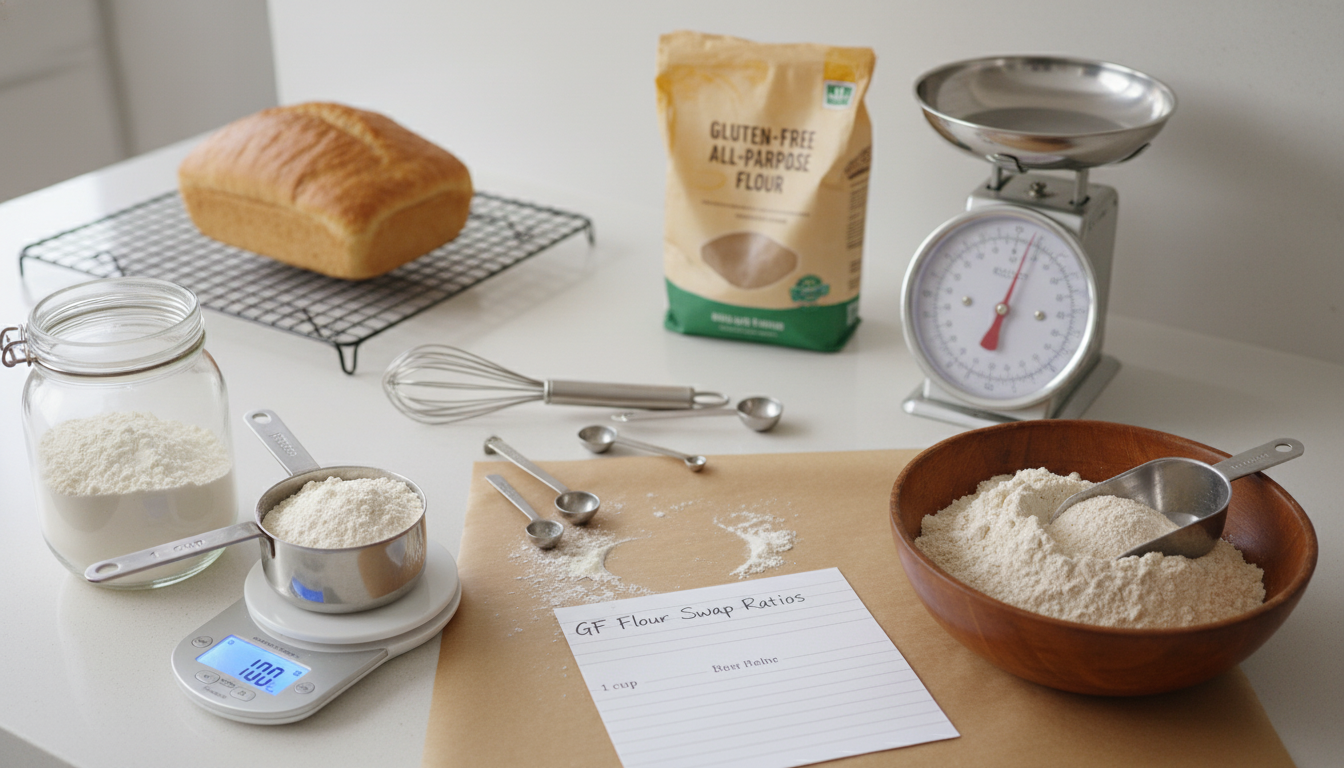
Swapping gluten-free flour for wheat flour works best by weight because gluten-free blends vary widely in density. A “cup” of one blend might weigh much more (or less) than a cup of wheat flour, which can throw off moisture, structure, and bake time. When possible, use a kitchen scale and match the wheat flour weight listed in your recipe.
If your recipe lists flour in grams or ounces, replace it with the same weight of a gluten-free 1:1 baking flour blend (one labeled as a cup-for-cup replacement and intended for baking). Example: if a recipe calls for 300 g all-purpose wheat flour, use 300 g of the gluten-free blend.
If your recipe only lists cups, you can still convert to weight by using a common benchmark: 1 cup all-purpose wheat flour is about 120 g (4.25 oz) when lightly spooned and leveled. Multiply that out, then use that total weight of gluten-free blend. This avoids the biggest “why is my batter so thick?” surprises that come from volumetric scooping.
When you must swap by cups, start with a cup-for-cup gluten-free blend and use the same number of cups as the recipe’s wheat flour. Measure using the spoon-and-level method: fluff the flour, spoon it into the cup, then level it off—don’t pack or scoop directly from the bag.
Because gluten-free flours hydrate differently, it helps to let batter or dough rest 10–15 minutes before baking. If the mixture looks unusually dry, add liquid 1 tablespoon at a time. If it’s too loose, add 1–2 tablespoons of blend, then re-check after a brief rest.
For a printable cheat sheet and more swap guidance (including binders like xanthan gum and which blends behave most like wheat), see this gluten-free recipe swaps guide.
It depends on the blend. Many 1:1 gluten-free baking blends already include xanthan gum (or a similar binder), but single-ingredient flours and some “gum-free” blends often need one to improve structure and reduce crumbling.







Leave a comment