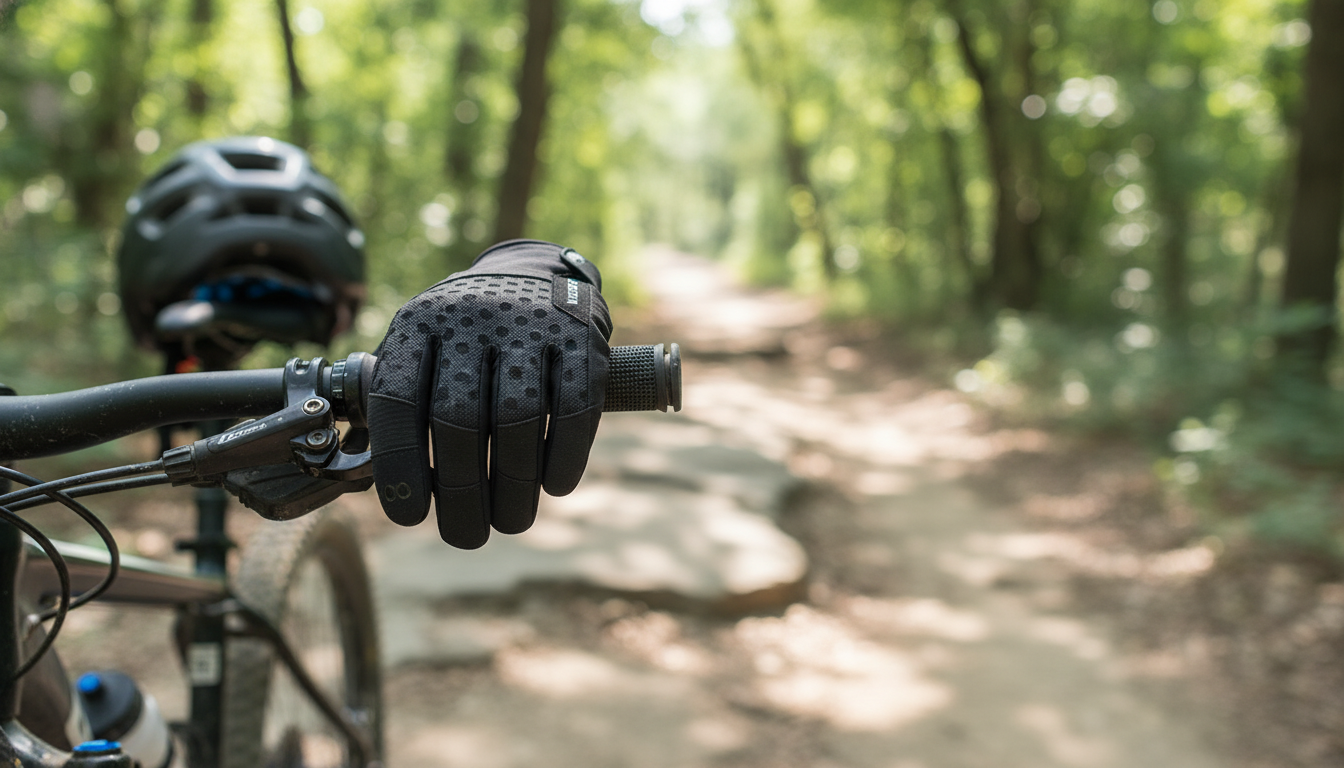
Full-finger cycling gloves can add grip, protect hands from trail and road hazards, and reduce fatigue on longer rides. The right pair balances bar feel with padding, stays breathable as effort increases, and keeps fingers functional for shifting, braking, and quick phone checks.
Full-finger coverage is a practical upgrade when rides get faster, rougher, or more unpredictable. On MTB, that extra material between skin and the trail can make the difference between a minor brush with branches and a scraped-up hand. On road rides, gloves help when you hit loose gravel, sudden rain, or a surprise slide at low speed.
Good gloves support better control habits, too. If braking gets choppy or hands tense up on descents, a more secure interface between hand and bar can help you stay relaxed and consistent—key fundamentals emphasized in skills education from groups like USA Cycling.
“Anti-slip” isn’t just a buzzword; it’s a mix of materials, patterning, and fit. The best grip upgrades are the ones you notice most when conditions are imperfect—humid climbs, dusty singletrack, or sweaty palms during a hard interval.
Pay attention to how the glove behaves when you “load” the bar—standing climbs, hard braking, and quick direction changes. If the palm wrinkles or slides, you’ll likely over-grip to compensate, which can accelerate fatigue.
Breathability matters most when effort spikes. The goal isn’t just to feel cool—it’s to keep sweat from pooling inside the glove, which can reduce friction and make the bars feel less secure.
A helpful way to think about it: the back of the hand is your “radiator,” while the palm is your “contact patch.” A glove can be airy up top and still durable where it counts.
Touchscreen capability is most useful when it works quickly—one tap to check a route, change a song, or confirm a call—without forcing you to remove a glove on the shoulder of the road.
Dexterity also comes from good seam placement. Seams that sit directly on a bend point (like the knuckle crease) can make fingers feel “stiff,” even if the fabric itself is flexible.
Fit is where comfort and control meet. A glove that’s too tight can restrict circulation and make hands feel cold or tingly; too loose, and the palm can bunch or slide, increasing friction and reducing precision on levers.
If numbness is frequent, evaluate more than just gloves. Handlebar position, grip diameter, and overall bike fit can contribute. For a general overview of causes and when to seek medical input, see the Cleveland Clinic’s hand numbness resource.
| Riding scenario | Top priorities | Nice-to-have features | Common mistake to avoid |
|---|---|---|---|
| MTB trails (dry/loose) | Durable palm + secure anti-slip grip | Knuckle protection, reinforced fingertips | Choosing ultra-thin gloves that tear easily |
| MTB trails (wet/muddy) | Grip that holds when wet + stable wrist fit | Quick-dry fabrics, strong finger traction | Assuming any glove stays grippy in heavy mud |
| Road riding (long miles) | Comfort + reduced hot spots | Light padding, breathable back panel | Over-padding that reduces bar feel and control |
| Commuting/urban | Dexterity + touchscreen convenience | Reflective details, easy on/off | Loose fingers that snag on brake levers |
They’re commonly called fingerless gloves or half-finger gloves. They’re popular in warm weather when ventilation and maximum lever feel are the top priorities.
Fingerless gloves tend to feel cooler and offer a more direct feel on the bars, while full-finger gloves add protection, grip security, and coverage for MTB, commuting, and cooler rides. The better choice depends on temperature, terrain, and how much hand protection you want.
Full-finger gloves help protect against abrasions and debris, improve grip in wet or dusty conditions, add warmth on cool mornings or fast descents, and reduce blisters on longer rides. They can also boost confidence when braking and shifting on rough terrain.




Leave a comment