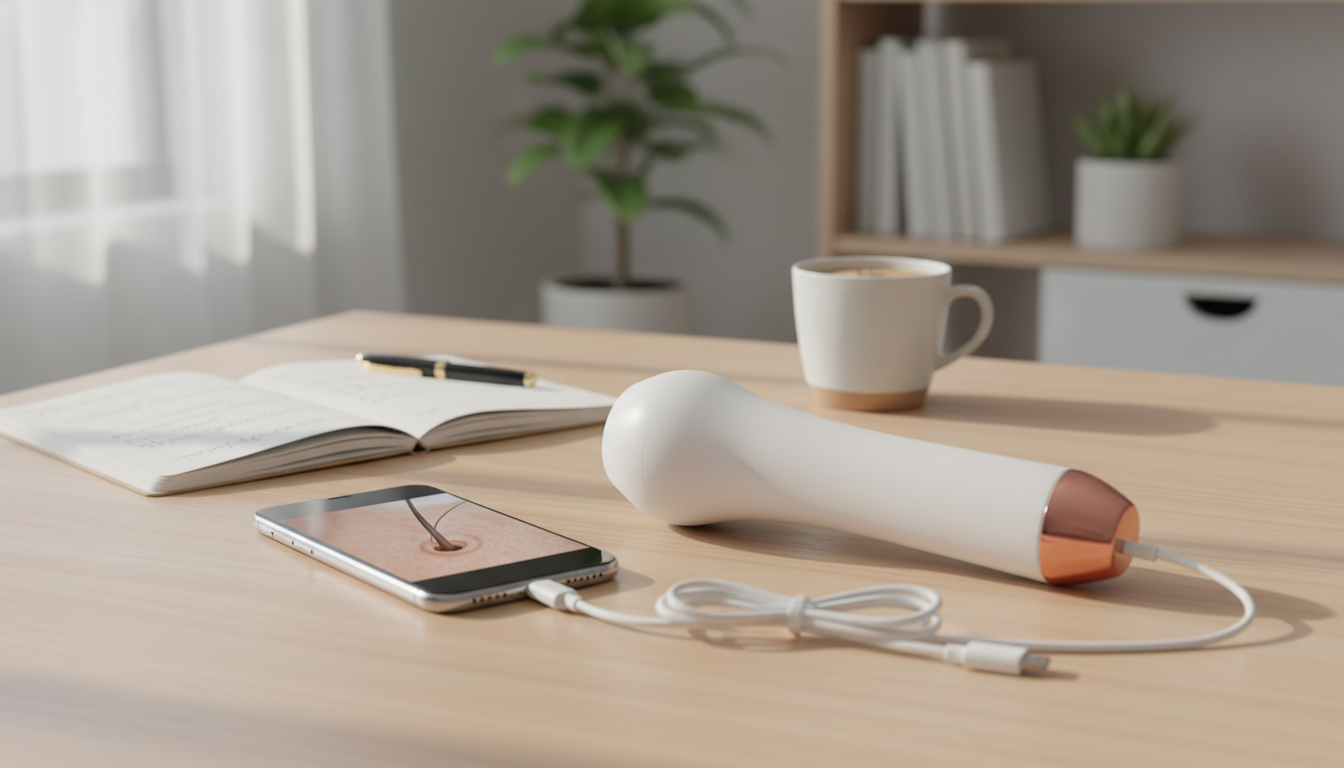
A wireless HD dermatoscope that connects to a phone makes it easier to view the scalp and skin up close, capture photos, and track changes over time. It can be helpful for checking dryness, buildup, redness, flaking, follicles, and hard-to-see areas—while still recognizing when professional evaluation is the safer choice.
A wireless skin and scalp analyzer (often described as a dermatoscope-style camera) is a handheld device that combines magnification with bright built-in lighting to show fine surface detail that’s hard to see in a mirror. When paired with a smartphone, you can watch a live view on a larger screen, then save photos or videos for later comparison.
Common day-to-day uses include checking flakes and buildup, taking a closer look at irritated spots, observing follicle openings and hair density, and documenting changes after routine adjustments (like switching shampoos or scaling back heat styling). It’s best used as an observation and tracking tool—not as a stand-alone way to diagnose a condition. If something looks suspicious, painful, infected, or persistent, a clinician should evaluate it.
Phone connection is more than a convenience—it can make checks more consistent and less frustrating.
With consistent lighting and a steady hand, a phone-connected dermatoscope can highlight patterns that are easy to miss. The goal isn’t to label what you see, but to note changes and bring clearer observations to your routine or to a professional.
Fine, powdery flakes can behave differently than thicker, adherent scale that seems “stuck” to the scalp or clings to hair shafts. Noting whether scale is loose vs. adherent, localized vs. widespread, and dry vs. greasy can help guide gentler care choices.
Diffuse redness may line up with sensitivity, over-scrubbing, or a reactive scalp. Sharply bordered patches, pronounced swelling, or areas that crack or ooze should be documented and checked by a clinician. For general guidance on common skin concerns, the American Academy of Dermatology Association is a reliable resource.
Oil, product residue, and keratin debris can sometimes show up as rings, clumps, or plugs near follicle openings. Tracking whether buildup improves after changing wash frequency, switching products, or adjusting styling routines can be useful.
When you take repeat photos in the same zones, you may notice differences in hair shaft thickness, empty-looking follicles, breakage patterns, or changes in density. If shedding or loss seems sudden or patchy, it’s a good reason to seek professional guidance.
On non-scalp skin, you can document dryness, rough texture, clogged pores, and post-inflammatory marks. If you’re tracking a pigmented spot, remember that close-ups don’t replace screening; the National Cancer Institute provides helpful information on melanoma signs and evaluation.
Specs matter, but usability matters more. A device that pairs quickly and produces repeatable, clear images will be used more consistently than a “higher spec” tool that’s finicky or uncomfortable.
| Feature to check | Why it matters | What to look for |
|---|---|---|
| Resolution & focus | Determines whether flakes, follicle openings, and fine texture are actually visible | Clear detail without constant refocusing; sharp still photos |
| Lighting control | Reduces glare and improves contrast on different skin/scalp conditions | Even LEDs; adjustable brightness |
| Magnification range | Helps balance detail vs usability | Useful close-up detail while maintaining comfortable working distance |
| App reliability | Prevents lost images and makes tracking consistent | Simple pairing; stable live view; easy photo/video saving |
| Cleaning design | Supports safer repeated contact with skin/scalp | Wipeable surfaces; optional contact caps; easy maintenance |
For a general overview of dandruff symptoms and causes, the Mayo Clinic is a helpful reference.
Soften it first with gentle washing and a few minutes of scalp contact time (avoid aggressive scrubbing), then rinse thoroughly and moisturize the scalp; if appropriate for you, products with ingredients like salicylic acid or urea can help lift scale. Don’t pick or scrape—especially if there’s pain or bleeding. If scale is thick and adherent, or if you have oozing, tenderness, or no improvement after gentle care, get medical advice.





Leave a comment