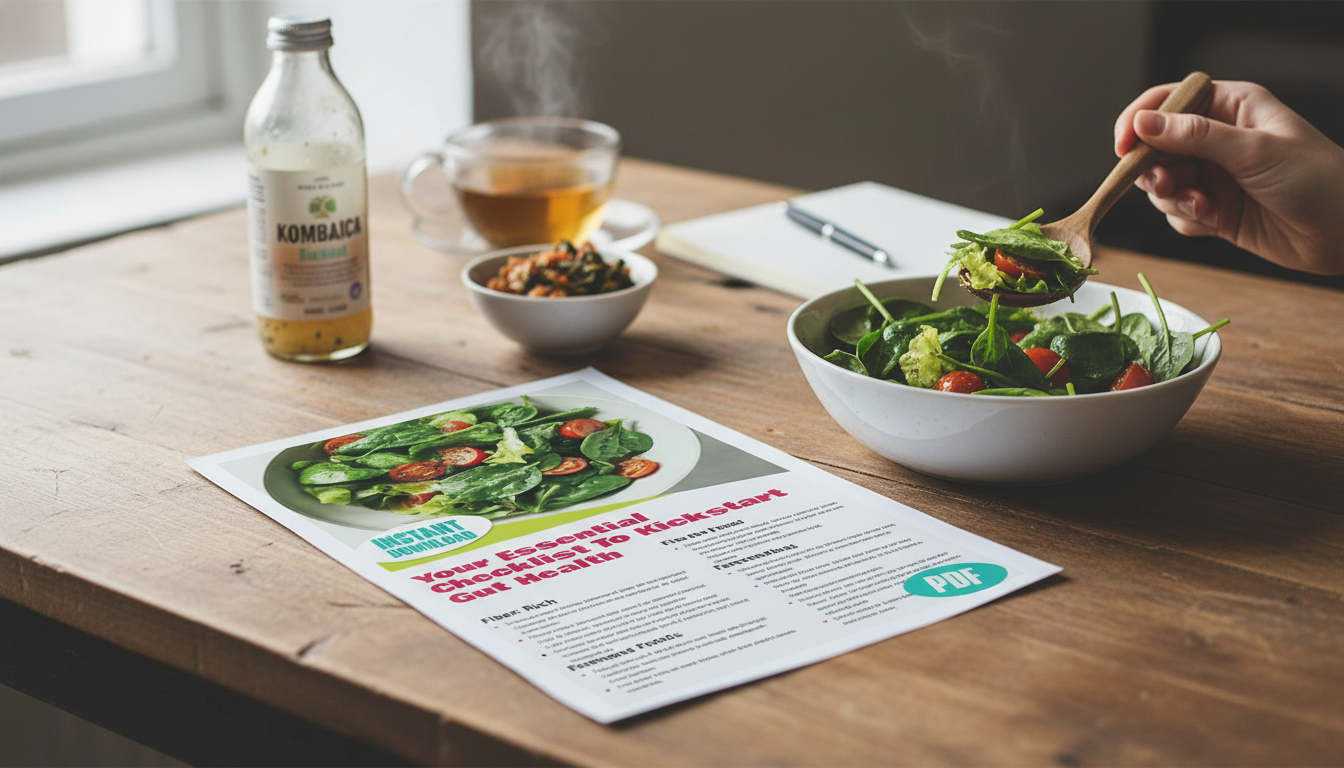
Your Essential Checklist to Kickstart Gut Health: A Simple Digital Guide for Daily Habits
A healthier gut is built through small, repeatable actions: food choices, fiber variety, fermented foods, sleep, stress support, and a few consistency checkpoints. This guide organizes those steps into a practical checklist format so it’s easier to start, track progress, and adjust without overcomplicating the process.
What “Gut Health” Covers (and What It Doesn’t)
“Gut health” is often used as shorthand for how well digestion feels day to day, but it also reflects what’s happening in the wider ecosystem inside the digestive tract.
- Gut microbiota basics: The gut microbiota is a community of microorganisms that interacts with digestion, immunity, and metabolism. Research initiatives like the NIH Human Microbiome Project helped clarify how complex—and individualized—this ecosystem is.
- Common signs that can overlap with gut issues: Bloating, irregular bowel habits, food sensitivities, and low energy can all show up when digestion is off, but they aren’t diagnostic on their own.
- Core goal: Support microbiota diversity and a resilient gut lining through diet and lifestyle foundations (especially fiber variety, steady routines, and stress/sleep support).
- Important boundaries: Persistent pain, blood in stool, unexplained weight loss, or severe symptoms warrant medical evaluation.
For an evidence-based overview of how diet patterns interact with gut microbes, see Harvard’s primer on the microbiome.
The 7-Day Kickstart Checklist (Small Steps, High Consistency)
This is designed to be doable, not perfect. Each day adds one “gut-positive” lever while keeping the overall plan simple enough to repeat.
Daily focus by day
- Day 1: Add one high-fiber plant serving (beans, lentils, berries, oats, chia) and drink water alongside it.
- Day 2: Include a fermented food serving (yogurt with live cultures, kefir, sauerkraut, kimchi, miso) if tolerated.
- Day 3: Aim for a “plant variety” target: 10+ different plant foods across the day (herbs and spices count).
- Day 4: Build a balanced plate: fiber + protein + healthy fat to support steady digestion and appetite.
- Day 5: Set a regular meal window that fits your schedule; avoid constant grazing if it triggers symptoms.
- Day 6: Support the gut-brain axis: 10 minutes of stress reduction (walk, breathing, stretching).
- Day 7: Sleep checkpoint: consistent bedtime, reduced late caffeine, and a simple wind-down routine.
Quick-start checklist overview
| Focus |
Daily action |
Easy examples |
| Fiber foundation |
Add 1 extra fiber-rich plant food |
Oats + berries; lentil soup; chia pudding |
| Microbe-friendly foods |
Include fermented food if tolerated |
Kefir; yogurt; kimchi; miso soup |
| Plant diversity |
Increase variety of plants |
Leafy greens + beans + whole grains + herbs |
| Meal balance |
Pair carbs with protein/fat |
Apple + nut butter; rice + salmon + veg |
| Rhythm |
Keep meals consistent |
Similar breakfast time; planned snacks only |
| Stress support |
10 minutes calm movement/breathwork |
Walk; box breathing; gentle yoga |
| Sleep support |
Protect 7–9 hours opportunity |
Wind-down; lower late-night screens |
How to Improve Gut Microbiota With Food (Practical Priorities)
Food is the most consistent “input” your gut ecosystem receives. The goal isn’t to chase a perfect menu—it’s to build a pattern your body can handle most days.
- Prioritize fiber: Increase gradually to avoid discomfort, and spread fiber across meals rather than piling it into one “mega salad.”
- Aim for diversity: Rotating plants week to week broadens the range of substrates available for microbes. If you always eat the same two vegetables, the next best step is simply adding a third and fourth.
- Include prebiotic-rich foods: Onions, garlic, leeks, asparagus, oats, bananas (especially less ripe), and legumes are classic options. If some are gassy for you, start with smaller portions or try cooked forms.
- Fermented foods: Start small and monitor tolerance; responses vary. For a science-forward explanation of probiotics and fermented foods, the International Scientific Association for Probiotics and Prebiotics (ISAPP) is a helpful resource.
- Limit ultra-processed foods when possible: Focus on swaps rather than perfection—e.g., add fruit to breakfast, switch one snack to nuts, or pick a whole-grain option you genuinely like.
- Hydration: Water supports bowel regularity, especially as fiber increases. If stools become harder as fiber climbs, fluids are often the missing piece.
Lifestyle Habits That Quietly Shape the Gut
Digestive comfort isn’t only about what’s on the plate. The nervous system, daily rhythms, and baseline recovery all influence how the gut behaves.
- Sleep: Disrupted sleep is associated with changes in microbiome patterns and appetite regulation, which can indirectly affect cravings and meal timing.
- Stress: The gut-brain axis can influence motility, sensitivity, and symptom flares. A short daily downshift (10 minutes) can be more sustainable than an occasional long session.
- Movement: Regular, moderate activity supports bowel regularity and overall metabolic health. Even a post-meal walk can help some people feel less “stuck.”
- Alcohol and smoking: Both can negatively influence gut barrier function and microbiota balance, particularly when intake is frequent.
- Medication awareness: Antibiotics and some other medications may alter gut flora; discuss concerns with a clinician, especially if symptoms change after starting or stopping a medication.
How to Choose a Gut Health Checklist or Wellness eBook
Troubleshooting: If Fiber or Fermented Foods Make Symptoms Worse
FAQ
How long does it take to notice changes when improving gut habits?
Some people notice better bowel regularity or less bloating within 1–2 weeks, especially after improving hydration and meal rhythm. Broader changes (tolerance, steady energy, consistency) often take several weeks of gradual fiber increases and repeatable routines.
Do probiotics help, or is food enough?
For many people, fiber variety and fermented foods can meaningfully support the microbiome. Probiotic supplements may help in specific situations with specific strains, but they’re not universally necessary—targeted guidance from a clinician can help match a product to a goal.
What’s the easiest first step if everything feels overwhelming?
Add one fiber-rich plant food per day and drink water with it. Once that feels normal, build toward more plant variety and a consistent meal schedule.
Recommended for you






Leave a comment