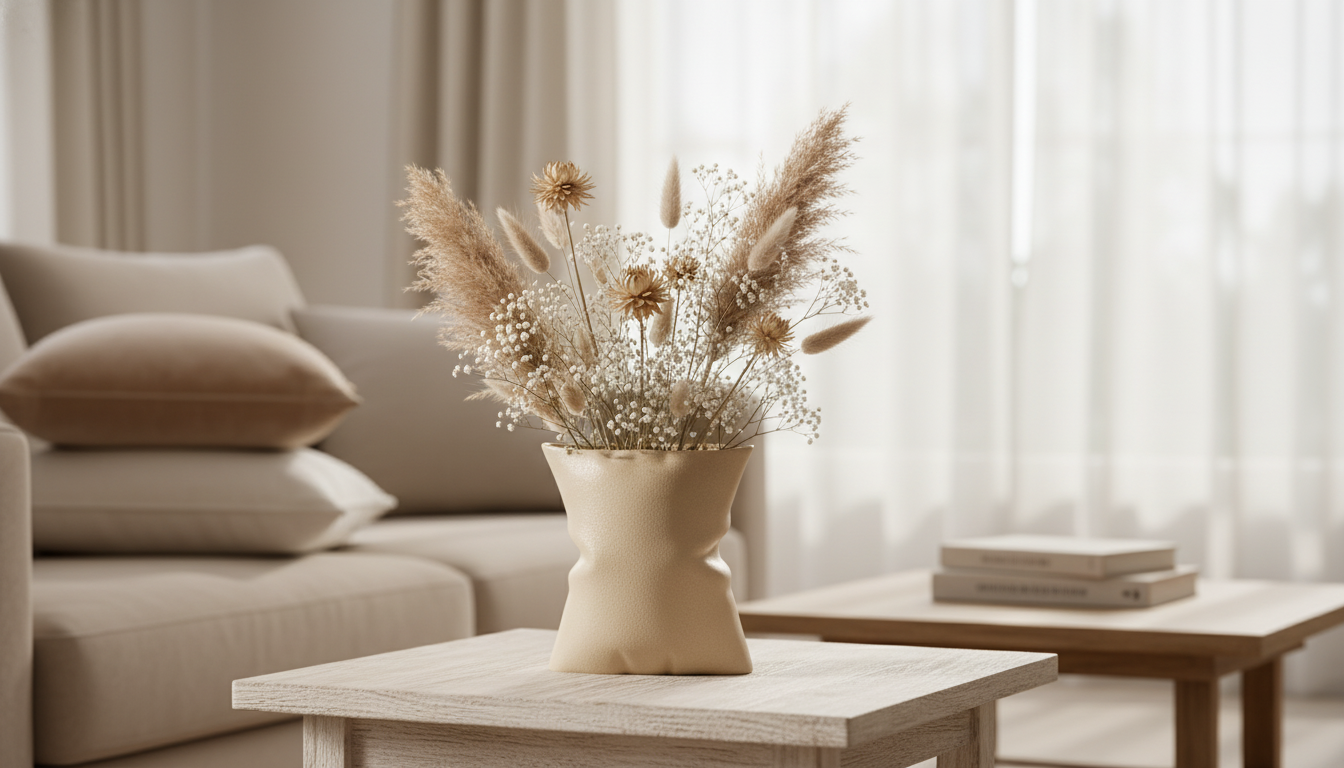
A sculptural beige ceramic vase with a soft “pillow” silhouette brings calm texture to tabletops, shelves, and consoles. Its rounded form suits modern, minimalist, and warm neutral interiors, adding a gentle statement whether styled with dried stems or displayed on its own. For more guidance, see Textured Ceramic Jar Vase for Living Room and Home Decor ….
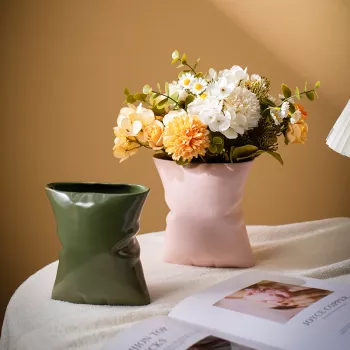
The pillow silhouette is a design shortcut to softness. Where many rooms lean on straight edges—rectangular tables, squared sofas, boxy cabinetry—this cushioned profile relaxes the scene and balances angular furniture without adding visual noise. For further reading, see Four Piece Vase Accessory Set, Decorative Vase Filler Accent Set ….
Because the shape feels almost textile-like, it can make a space look more lived-in and intentional—especially in warm minimal or modern neutral homes where every object needs to earn its place.
Ceramic décor has a long history as both functional craft and decorative art, and contemporary forms borrow that sense of permanence while keeping styling simple. If you enjoy pieces that look “collected” rather than temporary, ceramic is an easy yes.
For a little context on the material itself—why it’s durable, versatile, and so common in design—authoritative references like Britannica’s overview of ceramic art and the Met’s art history timeline on ceramics are helpful grounding reads.
A beige pillow vase is most impactful when it’s given a clear role: either the sculptural focal point or the soft connector in a vignette. Keep the surrounding items simple, and let the silhouette do the heavy lifting.
| Style Direction | Best Companion Items | Recommended Stem Types |
|---|---|---|
| Warm Minimal | Linen runner, light oak tray, matte candle | Dried pampas, bunny tails, eucalyptus |
| Modern Contrast | Black metal accents, stone coaster set | White tulips, branches, protea (dried) |
| Coastal Calm | Woven seagrass, soft blue glass, driftwood tones | Dried palms, baby’s breath, grasses |
| Earthy Rustic | Terracotta dish, handmade ceramics, textured textiles | Olive branches, dried wheat, cotton stems |
For dried stems, aim for a restrained bundle rather than a dense bouquet. The goal is to echo the vase’s soft geometry—light, airy movement on top with a grounded, rounded base below.
Because this vase reads as a small sculpture, placement matters. A few inches of breathing room can be the difference between “intentional” and “cluttered.”
One reliable trick: place the vase near a contrasting texture—ribbed glass, woven fiber, or a stone coaster—so the smooth ceramic finish feels even more elevated.
A great decorative vase fits the surface and the way it will be used. Before choosing, consider scale, opening size, and finish so styling feels effortless day to day.
Yes, if the vase is water-safe—typically indicated by a fully glazed interior. If you’re unsure or the interior is unglazed, use a small glass insert or water tube, and always rinse and dry after using water to prevent residue or odor.
Beige works like a neutral bridge: it warms up modern spaces, softens minimalist rooms, and complements natural textures in coastal or boho settings. Pair it with warm woods and linen for cozy minimalism, black metal for modern contrast, or woven elements for relaxed, beachy balance.
Treat it like a small art object: give it breathing room, place it near contrasting shapes like a tray or stacked books, and repeat a similar tone elsewhere nearby (cream textile, light wood) so it feels intentionally anchored.



Leave a comment