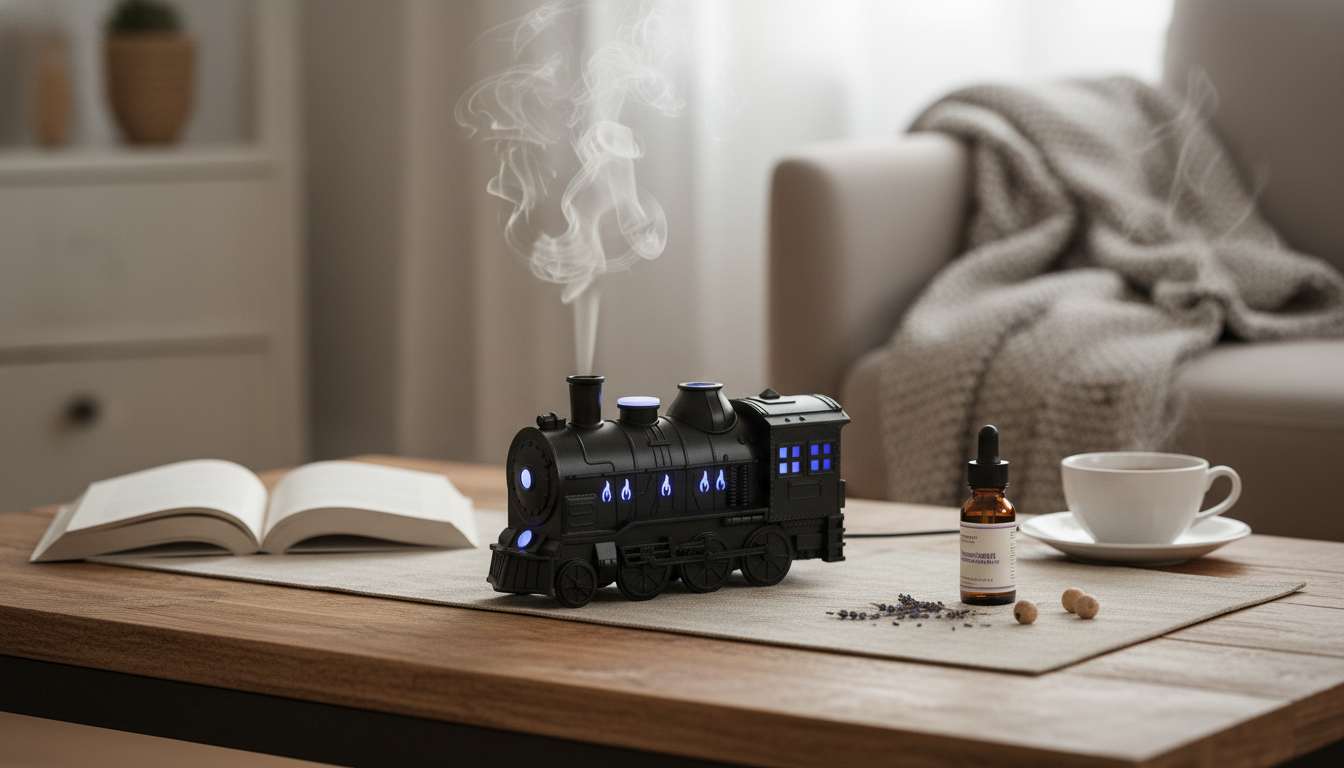
A train-shaped ultrasonic diffuser can add gentle cool mist and a touch of aromatherapy to a bedroom, nursery, office, or reading nook while doubling as décor. This guide breaks down how it works, what to expect day to day, and how to choose settings, oils, and maintenance habits for consistent performance and comfortable humidity.
This type of device blends two popular functions: an ultrasonic cool mist humidifier that adds moisture to the air, and an aromatherapy diffuser that can lightly scent the space (depending on the model). The mini train silhouette turns a practical appliance into something that feels intentional on a shelf, nightstand, or desk—especially in kids’ rooms, themed nurseries, playrooms, or as a gift.
Cool mist operation is commonly chosen for sleep areas because it’s typically quiet and doesn’t use hot steam. That makes it a comfortable fit for warm climates and year-round bedroom routines. Most train-shaped units are designed for personal-space use—think bedside, desktop, or a small corner of a room—rather than whole-home humidification.
Ultrasonic humidifiers use a small vibrating plate (often called a diaphragm) to break water into an ultra-fine mist. A fan or natural airflow then carries that mist out into the room. Because the mist is cool, it won’t warm the space and usually uses relatively low energy compared to heat-based humidification.
Aromatherapy depends on the device’s oil system. Some units allow essential oils to be added into the water reservoir, while others keep oils separate with an aroma pad or tray. The separation approach can reduce residue in internal parts, but it may produce a subtler scent. Mist output and runtime will vary based on tank size, mist mode (continuous or intermittent), and your room’s baseline humidity, temperature, and airflow.
For overnight use, place the diffuser on a stable, water-safe surface with a few inches of clearance around the outlet. That small step helps the mist disperse instead of collecting as condensation on nearby walls, headboards, or furniture.
When indoor air feels dry—often during heating season or in arid climates—added moisture can improve comfort for skin and for the nose and throat. Many people find that a light, steady cool mist feels especially pleasant at night or while reading and working.
Aromatherapy can also support routines when used thoughtfully. A gentle scent can pair well with bedtime wind-down, stretching, meditation, journaling, or post-work decompression. The train-themed styling has a practical upside: if the unit looks like décor instead of medical equipment, it’s more likely to stay out on a nightstand where it actually gets used (and cleaned) consistently.
Cool mist is generally preferred around kids and pets compared with warm mist, provided you keep the unit out of reach, avoid slippery floors from over-misting, and clean it regularly to prevent odors and buildup. For guidance on moisture and indoor air concerns, resources like the EPA’s mold and moisture information can be helpful.
Comfortable indoor humidity is typically around 30%–50% relative humidity. Below that range, the air can feel dry; above it, condensation can form on windows and surfaces, and higher moisture can contribute to mold or dust-mite issues. A small hygrometer takes the guesswork out—especially in nurseries or tightly sealed bedrooms.
To reduce damp spots, position the diffuser about 2–4 feet away from bedding, books, electronics, and wood furniture. If you notice window fogging, damp surfaces, or a musty smell, reduce mist output, shorten runtime, or improve ventilation. The American Lung Association’s humidifier guidance is a useful reference for maintaining healthy indoor moisture levels.
| Room situation | Suggested approach | What to watch for |
|---|---|---|
| Bedroom overnight use | Low/steady mist; place on nightstand with clearance | Window condensation; damp pillowcases |
| Nursery/kids room | Short cycles; keep out of reach; fragrance-free if sensitive | Coughing/irritation; slippery floors |
| Office/desk | Intermittent mist; keep away from keyboard/monitor | Moisture near electronics |
| Dry winter heating | Longer runtime; monitor humidity with hygrometer | Humidity over 50% |
Plan to clean weekly (and more often if using oils). Many users rely on a diluted vinegar rinse to help dissolve mineral buildup, but always follow the manufacturer’s care instructions for the safest method. Keep the unit level on a water-safe surface, wipe any moisture rings promptly, and avoid adding non-approved substances such as perfume, extracts, or thick oils that can clog or damage ultrasonic parts. For additional care guidance, the CDC’s humidifier care information is a helpful starting point.
Many people prefer ultrasonic cool mist because it’s typically quiet, energy-efficient, and doesn’t involve hot water. The best choice depends on room size, your humidity goals, and how consistently you can clean and monitor humidity.
The train design adds décor value, feels kid-friendly, and can make a practical device more giftable and fun to keep on display. The styling doesn’t automatically change performance, but it can encourage consistent placement and routine use.
They can be safe when used as directed: choose a stable surface, avoid over-humidifying, and rely on auto shutoff if the water runs low. Keep it out of reach of children, be cautious with essential oils around pets or sensitive individuals, and clean regularly to prevent buildup.






Leave a comment