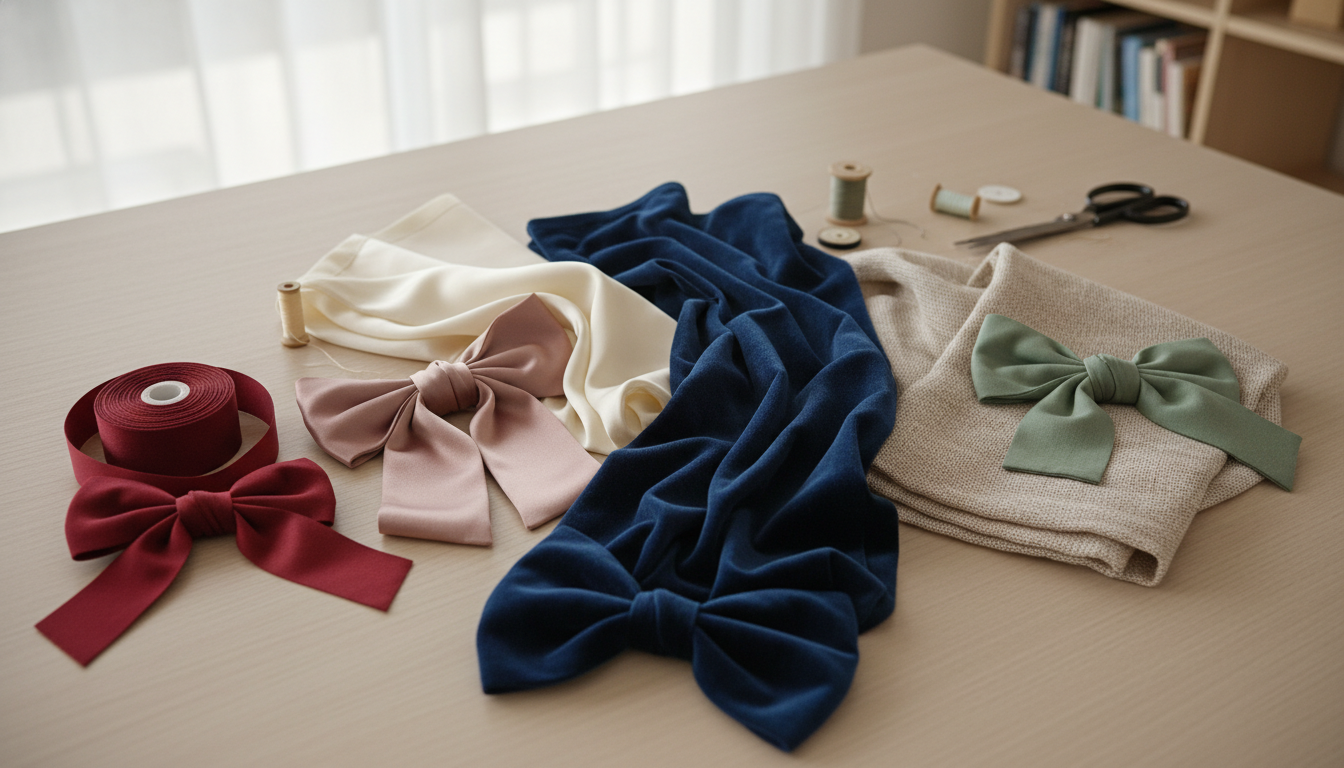
The best fabric for a bow depends on where it’s going, how structured you want it to look, and how much wear it needs to handle. For crisp, picture-perfect shape, grosgrain ribbon is a top choice. For soft, romantic volume, satin and velvet shine. And for everyday comfort—especially on hair hoops or headbands—cotton blends and lightweight fabrics can be easier to wear for long stretches.
If the goal is a bow that holds its loops and tails without constantly collapsing, grosgrain is hard to beat. Its subtle ribbed texture adds grip, which helps bows stay tied and look neat. It’s also durable, making it a practical pick for hair accessories that get handled a lot.
Satin creates a polished, dressy bow with a high-sheen surface that catches the light beautifully. It works especially well for special occasions, but it can be slippery—so using a secure center wrap and good stitching helps the bow keep its shape.
Velvet bows look rich and dimensional, especially in deeper colors. They tend to be slightly heavier than satin or grosgrain, which can help a bow drape elegantly, but may require stronger attachment points on clips or headbands.
Cotton fabrics are comfortable and breathable, making them a smart option for daily wear. They can be shaped into cute, relaxed bows, though they may need interfacing if you want a more structured silhouette.
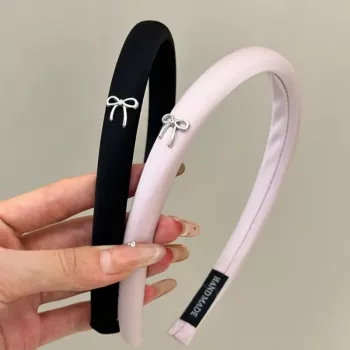
For hair hoops and headbands, fabrics that sit comfortably against the head and don’t slip easily tend to perform best. For a deeper look at how fabric choice affects fit, style, and wearability, visit this guide to bow fabrics and hair hoop styling.
Choose a structured material like grosgrain or add interfacing to softer fabrics. Tight center wraps, secure stitches, and clean heat-sealed or hemmed edges also help the bow keep crisp loops and tails.



Leave a comment