
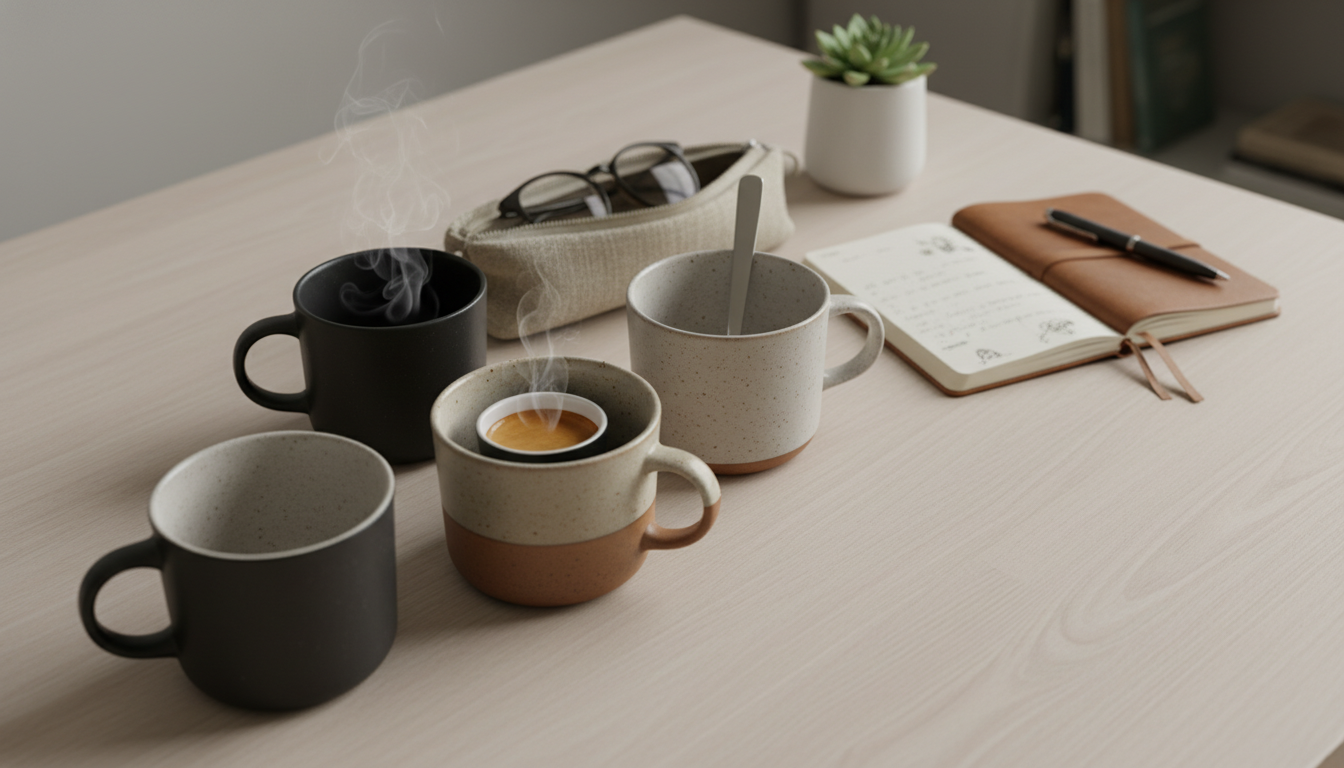
Ceramic coffee mugs are generally a good choice for everyday coffee and tea. They’re comfortable to drink from, keep flavors tasting clean, and come in countless shapes and finishes. That said, “good” or “bad” depends on how you use them: ceramics can chip or crack if dropped, and not every glaze is made the same.
Ceramic is non-reactive, which helps preserve the taste and aroma of coffee. Unlike some metals, it won’t add a metallic note, and unlike certain plastics, it’s less likely to hold onto odors over time. Ceramic also tends to feel pleasant in the hand, and the thicker walls of many mugs can help slow down heat loss so your drink stays warm a bit longer.
The biggest downside is durability. Ceramic can break if it hits a hard floor, and small chips around the rim can make a mug uncomfortable—or unsafe—to use. Some ceramic mugs can also get uncomfortably hot on the outside if the walls are thin, and certain decorative finishes may not be ideal for daily dishwasher use.
Look for a smooth, even glaze and a rim that feels comfortable. If you plan to microwave your coffee, avoid mugs with metallic paint or gold/silver accents. For easy maintenance, confirm the mug is dishwasher-safe and check whether it’s described as lead-free and cadmium-free, especially for brightly colored or heavily decorated pieces. If you like a classic café vibe, a cup-and-saucer set can be a practical upgrade for daily sipping; see this retro 250ml ceramic cup and saucer guide for a closer look: https://splendona.com/guide-retro-250ml-ceramic-cup-saucer-daily-coffee/.
Ceramic mugs are a solid, everyday option: great taste neutrality, comfortable drinking experience, and plenty of style choices. Choose a well-glazed, microwave/dishwasher-appropriate mug and replace any that develop chips or cracks.
Often, yes—especially if the ceramic is thicker. Ceramic generally insulates better than thin glass, but the exact heat retention depends on wall thickness, mug shape, and whether the mug is pre-warmed.





Leave a comment