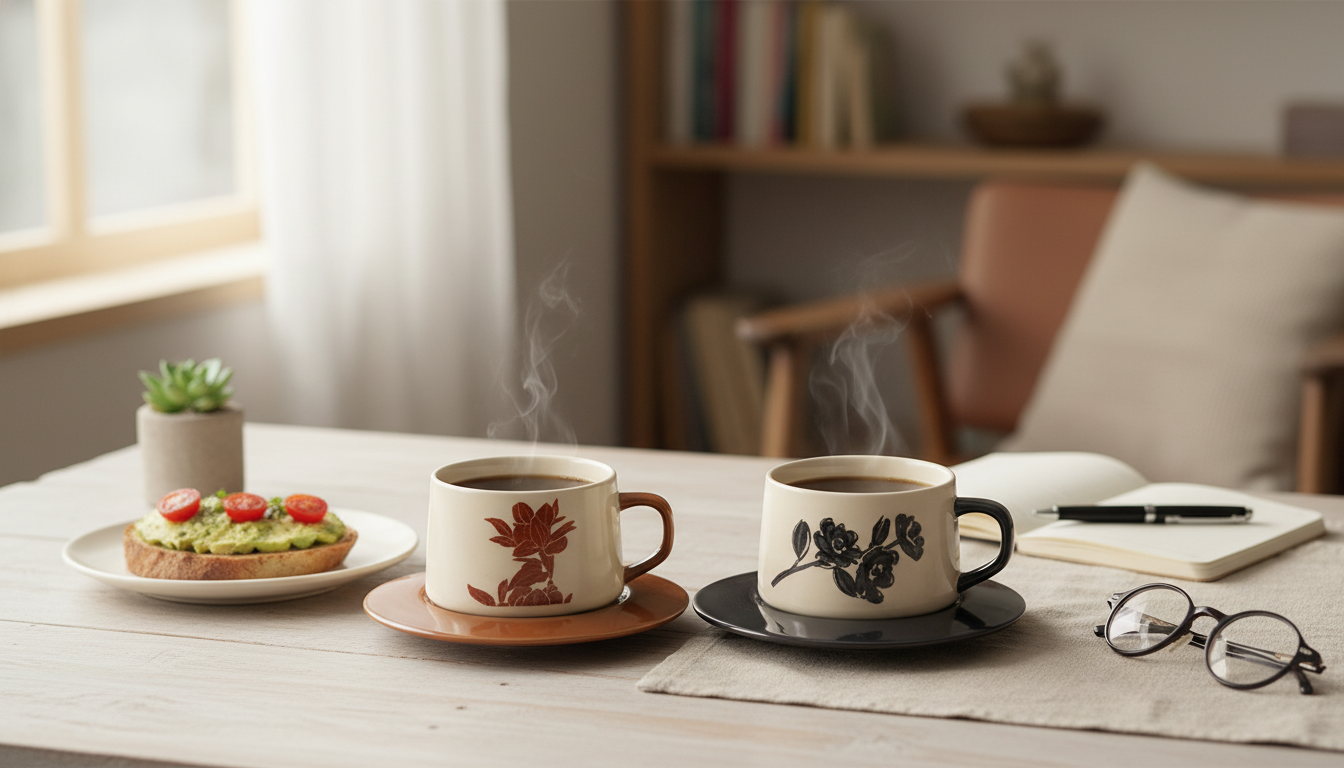
A retro-style ceramic cup and saucer set sized for everyday coffee, tea, and breakfast drinks. The 250ml capacity suits lattes, cappuccinos, and hot chocolate, while the saucer helps keep drips off tables and makes serving feel more intentional.
This 250ml ceramic cup and saucer set is designed for the kinds of drinks and moments that happen most days—quick pours, slow sips, and easy set-downs that still feel a little special.
Retro drinkware tends to be about more than just looks. The appeal is the combination of familiar curves and a shape that fits naturally into everyday routines, whether your kitchen leans classic or contemporary.
At 250ml, this cup sits in a practical middle ground: roomier than an espresso cup, but more controlled than a large café mug. That makes it easier to keep milk ratios consistent, avoid overfilling, and carry the cup on its saucer with fewer spills.
| Drink | Typical Pour in a 250ml Cup | Notes for Serving |
|---|---|---|
| Cappuccino | Comfortable fill with foam | Leaves space for foam dome and easy carry |
| Latte (small) | Near-full | Use less milk or smaller ice-free pours to avoid overflow |
| Americano | Mid-to-high fill | Adjust water to taste and leave room for stirring |
| Hot chocolate | Mid-to-high fill | Space for whipped topping or marshmallows |
| Tea with milk | Mid fill | Saucer holds teaspoon and lemon slice |
Ceramic is popular for coffee and tea because it generally keeps flavors clean and the experience comfortable. It also pairs well with milk foam: a smooth rim feels gentle on the lips and helps you sip without “catching” bubbles.
For the most comfortable routine, pour hot drinks with a little headroom, and let boiling water rest briefly before adding it to the cup—especially for tea—so the rim is less intensely hot and the drink is easier to sip right away.
Eco-friendly choices often come down to what gets used repeatedly. A reusable ceramic cup and saucer can replace a long stream of disposable cups, lids, and sleeves, especially for breakfast drinks that happen at home or at a home office desk.
For any drinkware, safety depends on materials, glaze quality, and manufacturing controls. New retail ceramic cups are typically produced with food contact in mind, while older or unknown pieces deserve more caution—especially if they’re chipped, cracked, or heavily worn.
For additional guidance, see the FDA’s overview on lead in ceramicware and the WHO background on lead poisoning and health.
Ceramic mugs are generally “good” for everyday use because they’re taste-neutral, reusable, and retain heat well. The tradeoffs are that ceramic can chip or break if dropped and may feel hot to hold with very hot drinks, so using the saucer and leaving headroom can help.
New ceramic mugs sold for beverage use are typically made with food-contact use in mind, and ceramic itself is generally non-reactive. For best practice, avoid drinking from chipped or cracked glazed ceramics, and be cautious with unknown or vintage pieces where glaze safety may be uncertain.
Yes—ceramic is commonly used for coffee because it’s comfortable to sip from, helps keep coffee warm, and usually won’t add metallic flavors. Glaze quality and gentle cleaning help maintain a smooth surface that stays pleasant over time.






Leave a comment