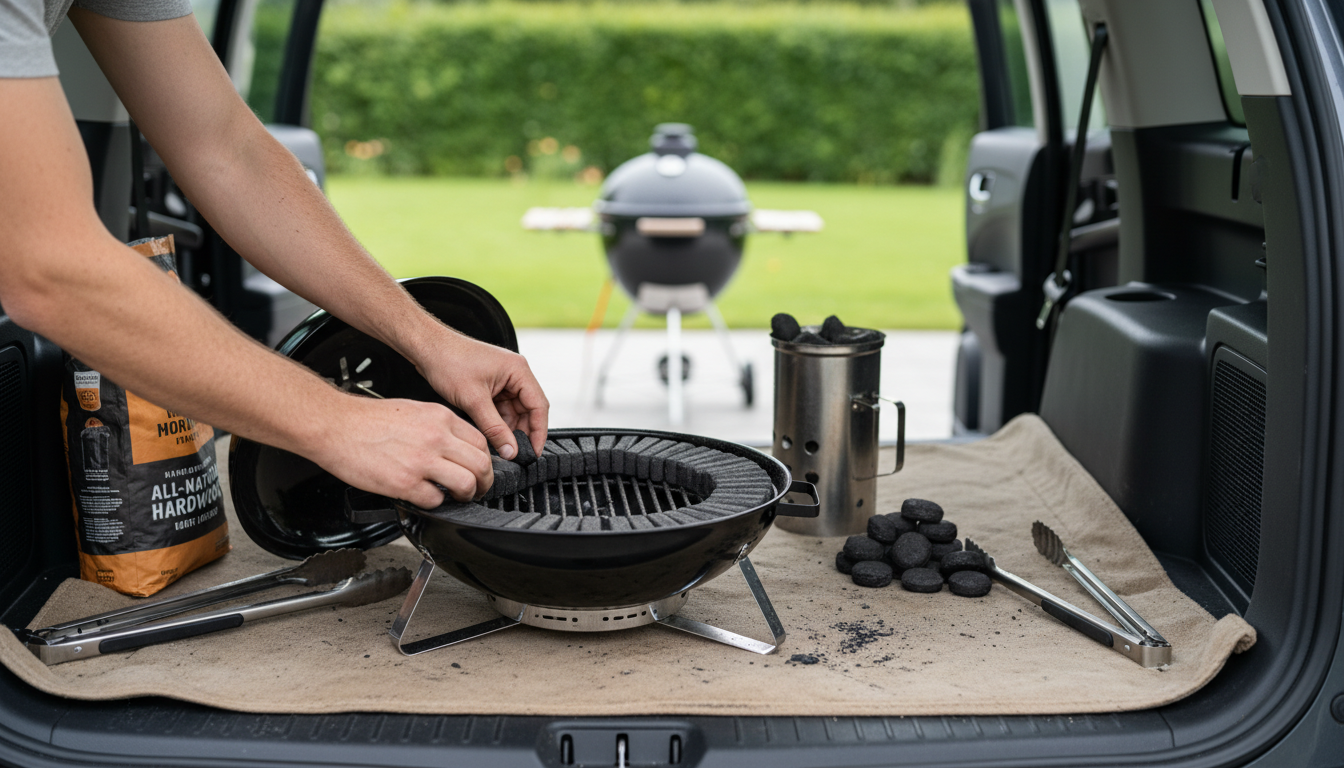
Charcoal arrangement controls three things: how hot your grill gets, how evenly it cooks, and how easy it is to manage flare-ups. The best setup depends on what you’re grilling and how long it needs to cook.
Two-zone fire (most versatile): Pile lit coals on one side and leave the other side empty. Sear over the hot zone, then finish over the cooler side with the lid on.
Single-zone (fast, high heat): Spread coals in an even layer across the bottom for burgers, hot dogs, thin steaks, and quick vegetables.
Snake/fuse (long, steady heat): Arrange unlit briquettes in a C-shape or ring around the edge, two briquettes wide and one to two high, then light one end. Great for ribs or low-and-slow cooks.
Start with a clean charcoal grate and open the vents. If using briquettes for direct grilling, spread them into a mostly even layer once they’re ashed over. For lump charcoal, use slightly larger pieces on the bottom and smaller pieces on top to help airflow.
Even if you want high heat, leave a small area with fewer coals to move food away from flare-ups. Use the bottom vent to control the fire (more open = hotter). Use the lid and top vent to stabilize heat and direct smoke away from the food.
For two-zone cooking, set a disposable drip pan on the empty side to catch fat and reduce flare-ups. For longer cooks, add a little water to the pan to help moderate temperature swings.
In compact barrel-style charcoal grills, a two-zone arrangement is often easiest: bank coals toward one end for a hot “sear zone,” then cook indirectly on the other end. For more setup ideas tailored to this style, see this portable barrel charcoal grill guide.
Cook when the coals are mostly covered in gray-white ash and glowing underneath—usually 10–20 minutes depending on the charcoal and how it was lit.





Leave a comment