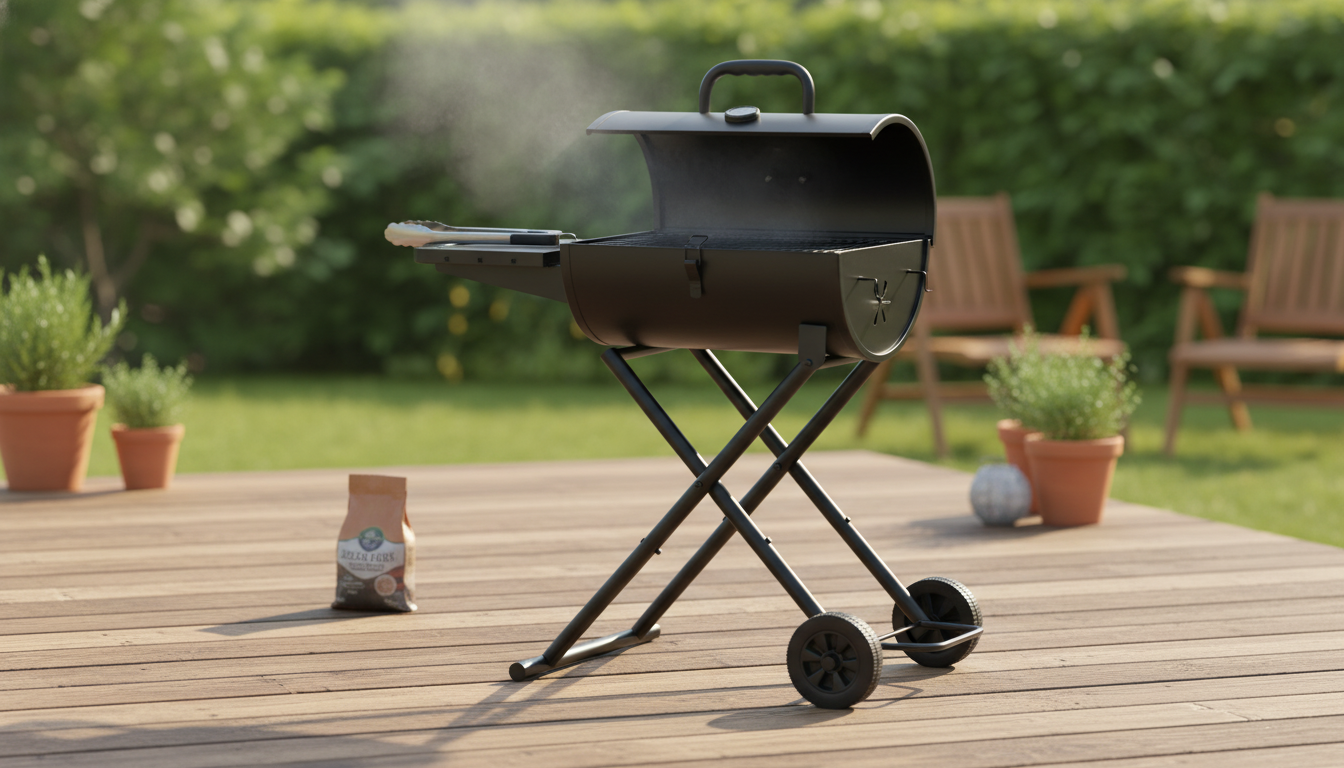
A barrel-style charcoal grill built for easy transport can deliver real charcoal flavor without the bulk of a full-size backyard setup. Folding legs and rolling wheels make it simpler to load, move, and store, while a lidded barrel helps manage heat for both direct grilling and longer cooks. For tailgates, campsites, and compact outdoor spaces, this style hits a sweet spot between “tiny travel grill” and “heavy backyard pit.”
What Makes a Barrel-Style Portable Grill Different
Barrel-style portable grills stand out because the shape and lid act like a small cooking chamber rather than an open pan of coals. That difference shows up quickly once you start cooking.
- Lidded barrel design retains heat, which can help reduce flare-ups compared with more open, brazier-style grills.
- A longer chamber often fits more food than many small round travel grills, especially for items like skewers, sausages, and multiple burgers at once.
- Airflow control is typically better when there are adjustable intake and exhaust vents, helping temperatures stay steadier as conditions change.
- Zone cooking is easier to maintain, with one side set up hot for searing and the other side calmer for finishing or holding.
Folding Legs and Wheels: Why They Matter
Portability isn’t only about weight—it’s also about how easily a grill fits into real-life spaces and how safely it can be moved and stored.
- Folding legs reduce the storage footprint in a garage, shed, closet, or vehicle trunk.
- Wheels make short moves more manageable on patios and driveways once the grill is fully cool, and they can help when repositioning for wind or smoke direction.
- Stability is a must when deployed: a wide leg spread and solid locking points help prevent wobble while flipping food or opening the lid.
- Wheel size and handle placement matter if you expect to roll over grass, gravel, or uneven campsite ground.
Cooking Performance: Heat Zones, Lid Cooking, and Smoke Control
A portable barrel grill can do more than quick hot dogs if you use the lid and vents thoughtfully. The goal is to control heat intensity, heat location, and airflow.
- Two-zone cooking: bank charcoal to one side for direct heat and leave the other side clear for indirect cooking. Sear over the coals, then finish on the cooler side.
- Lid cooking: close the lid to roast thicker cuts, finish burgers without burning the outside, or melt cheese evenly.
- Vent adjustments: more airflow generally raises heat; restricting airflow calms the fire for steadier, longer cooking.
- Charcoal baskets/dividers help if included, because they keep coals grouped for consistent zones and make refueling less messy.
For food safety when cooking away from home, use a thermometer and follow safe minimum internal temperatures from the USDA FSIS.
Portability for Tailgates, Camping, and Small Patios
This style of grill is popular because it adapts to different “small-space” scenarios without feeling disposable.
- Tailgates: wheels and a fold-down footprint speed up parking-lot setup. Plan for a stable surface so the grill doesn’t rock when you open the lid.
- Camping: think through ash handling and charcoal transport. A lidded body can help contain sparks, but you still need a safe, designated spot for hot ash.
- Balconies and patios: confirm local rules and fire codes, and keep ample clearance from railings, siding, and overhangs.
- Transport planning: pack heat-resistant gloves, a small lidded ash container, and a drip/heat mat for surfaces that can stain or scorch.
Setup Basics: Where the Charcoal Goes and How to Light It
Simple setup habits make portable grilling cleaner, faster, and more predictable—especially when you’re cooking somewhere unfamiliar.
Cleaning, Ash Management, and Storage
For general grilling fire prevention guidance, review the NFPA grill safety recommendations.
How to Choose the Right Portable Barrel Charcoal Grill
Quick Checklist for Comparing Options
| Feature |
What to Look For |
Why It Helps |
| Legs and locks |
Secure locking points and wide stance |
Reduces wobble and improves safety |
| Wheels |
Larger wheels and a sturdy handle |
Easier rolling on uneven ground |
| Vent control |
Adjustable intake/exhaust |
More consistent temperatures |
| Charcoal access |
Basket/tray or roomy fire area |
Simplifies two-zone setups and refueling |
| Cleanup |
Easy ash removal and durable grates |
Faster maintenance, better airflow |
Safety Notes for Charcoal Grilling Away From Home
- Use outdoors only; never operate charcoal grills inside tents, vehicles, garages, or enclosed patios due to carbon monoxide risk. The CDC guidance on carbon monoxide explains why ventilation is critical.
- Keep distance from combustibles and consider a heat-resistant mat on sensitive surfaces.
- Allow a full cool-down before moving; metal and ash can stay hot longer than expected.
- Follow local park and campground rules, including requirements for ash disposal.
FAQ
Does Dollar General sell portable grills?
Selection varies by location and season, so it’s best to check local availability before making a trip. Budget portable grills can work for occasional use, but durability and heat control can differ significantly from model to model.
Where to put charcoal in a round grill?
Place charcoal in the lower fire bowl area beneath the cooking grate, keeping vents clear for airflow. Pile coals for higher heat or bank them to one side to create a two-zone setup with direct and indirect cooking.
Are mini charcoal grills worth it?
They can be worth it for solo meals, quick trips, or very small patios because they’re easy to carry and fast to set up. The tradeoff is a smaller cooking area and less heat stability, where a portable barrel grill may feel more capable for groups.
Recommended for you





Leave a comment