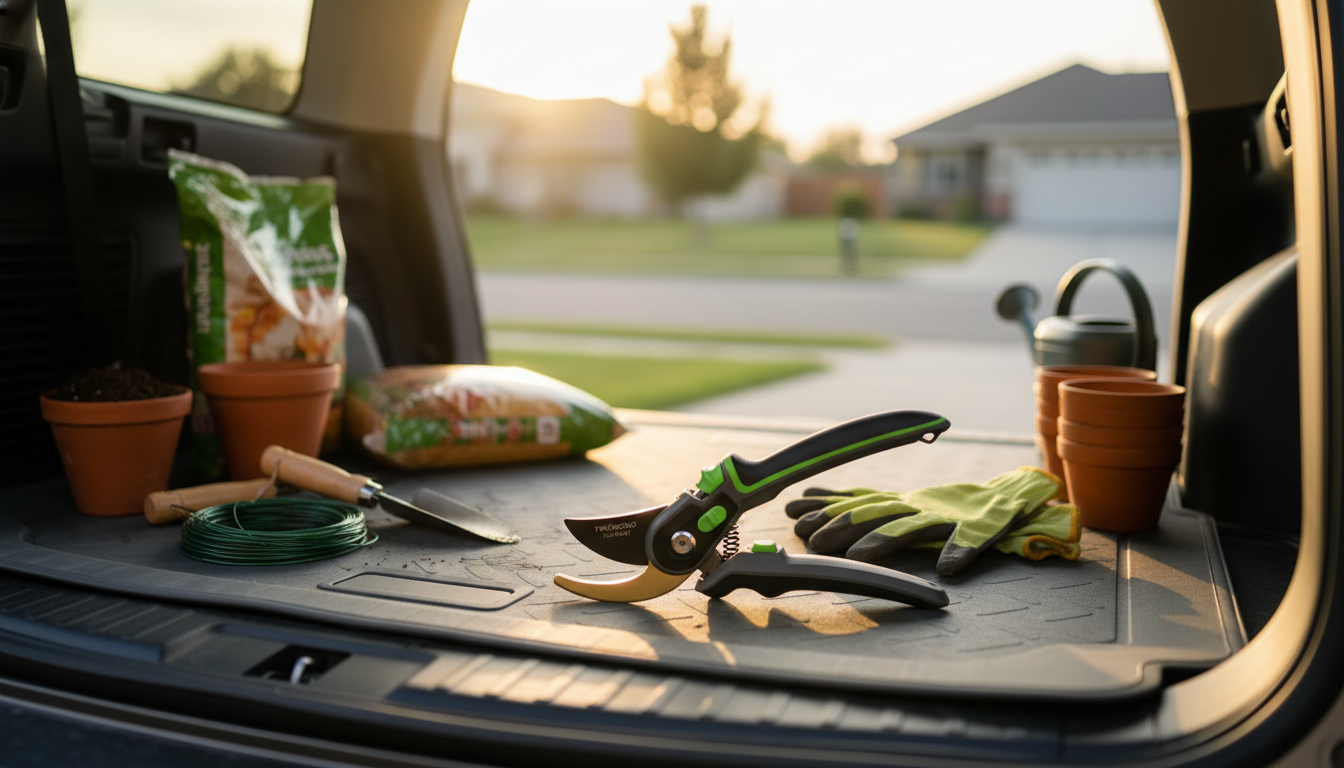
The best pruning shears for small hands are compact, lightweight bypass pruners with an adjustable (or reduced) grip span, a non-slip handle, and a sharp, corrosion-resistant blade. A smaller handle opening reduces hand strain, especially during repetitive cuts on roses, herbs, and thin woody stems.
Reduced handle span: Look for “small,” “compact,” or “women’s” sizing, or models with an adjustable grip. A narrower opening lets your fingers wrap fully around the handle, improving control and cutting power.
Lightweight build: Lighter shears (often with aluminum or reinforced composite handles) fatigue your wrist and forearm less during long pruning sessions.
Bypass blade style: Bypass pruners (two blades that pass each other) make cleaner cuts on live stems than anvil styles, which is especially helpful when you’re using less hand force.
Sharp, stainless or coated steel blades: Sharp blades reduce effort. Stainless steel or a quality anti-rust coating helps keep the edge cleaner and improves longevity, particularly if your tools are stored in a humid shed.
Comfort features: Soft grips, ergonomic curves, and a smooth spring action matter more with smaller hands. A safety lock that’s easy to operate with your thumb is also a big usability win.
Compact bypass pruners: Ideal for most gardens and everyday trimming. They’re typically easier to control and less tiring for small hands.
Micro-tip snips: Great for herbs, flowers, and precision deadheading. They’re not meant for thicker branches, but they excel at frequent light cuts.
Ratchet pruners (for extra leverage): If grip strength is limited, ratcheting mechanisms can help you cut thicker stems with multiple squeezes instead of one hard squeeze.
For a deeper breakdown of blade materials, handle comfort, maintenance, and what to expect from stainless steel models, see the full guide here: https://splendona.com/guide-stainless-steel-garden-pruning-shears-guide/.
Bypass shears make cleaner cuts on live plants because the blades slice past each other. Anvil shears press a blade into a flat surface, which can crush softer, green stems but works well for dry or dead wood.





Leave a comment