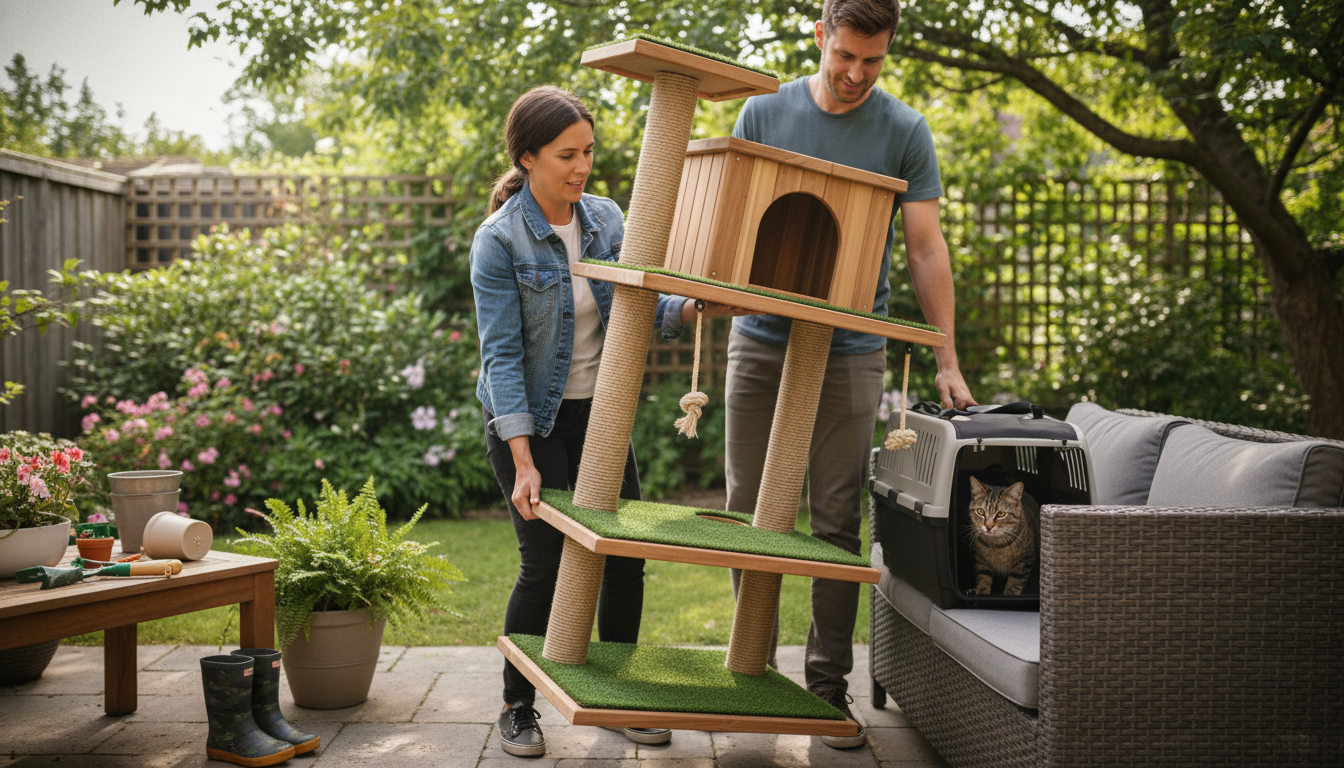
Yes. Outdoor cat trees exist, but they’re built differently from typical indoor models. An outdoor cat tree is designed to handle moisture, sun exposure, temperature swings, and heavier wear—while still giving cats the climbing, scratching, and perching opportunities they crave.
The main difference is materials and construction. Outdoor versions often use weather-resistant wood (sealed or treated), composite materials, stainless or coated hardware, and platforms covered with outdoor carpet or textured, quick-drying surfaces. Instead of plush fabric that holds water and odors, outdoor models prioritize drainage and easy cleaning.
Outdoor cat trees work well on covered patios, screened porches, balconies, or inside a secure catio. Fully exposed yards are tougher—wind, rain, and intense sun can shorten the life of any structure—so placement under an awning or roofline usually helps. If the tree will sit on concrete or decking, adding non-slip feet or a stable base can reduce wobble and tipping.
Cats tend to return to structures that feel stable and rewarding. Look for multiple levels, a comfortable top perch, and a scratching surface that stands up to claws (sisal or durable scratch panels). Platform spacing matters: too far apart can discourage climbing; too close can feel cramped. For a deeper look at what makes a climbing structure functional—especially double platforms and scratch-friendly features—see this guide: cat climbing tree and scratch board guide.
Even the best outdoor cat tree should be part of a safe setup. Use it in an enclosed area when possible, check surfaces for splinters or loose fasteners, and avoid placing it where a cat could jump from it into unsafe spaces. If your area has extreme weather, bring cushions and removable parts inside and inspect the frame seasonally.
Sealed or treated wood, composite boards, and rust-resistant hardware tend to last longest outside. For scratching, sisal or replaceable scratch panels are usually more durable than plush coverings.


Leave a comment