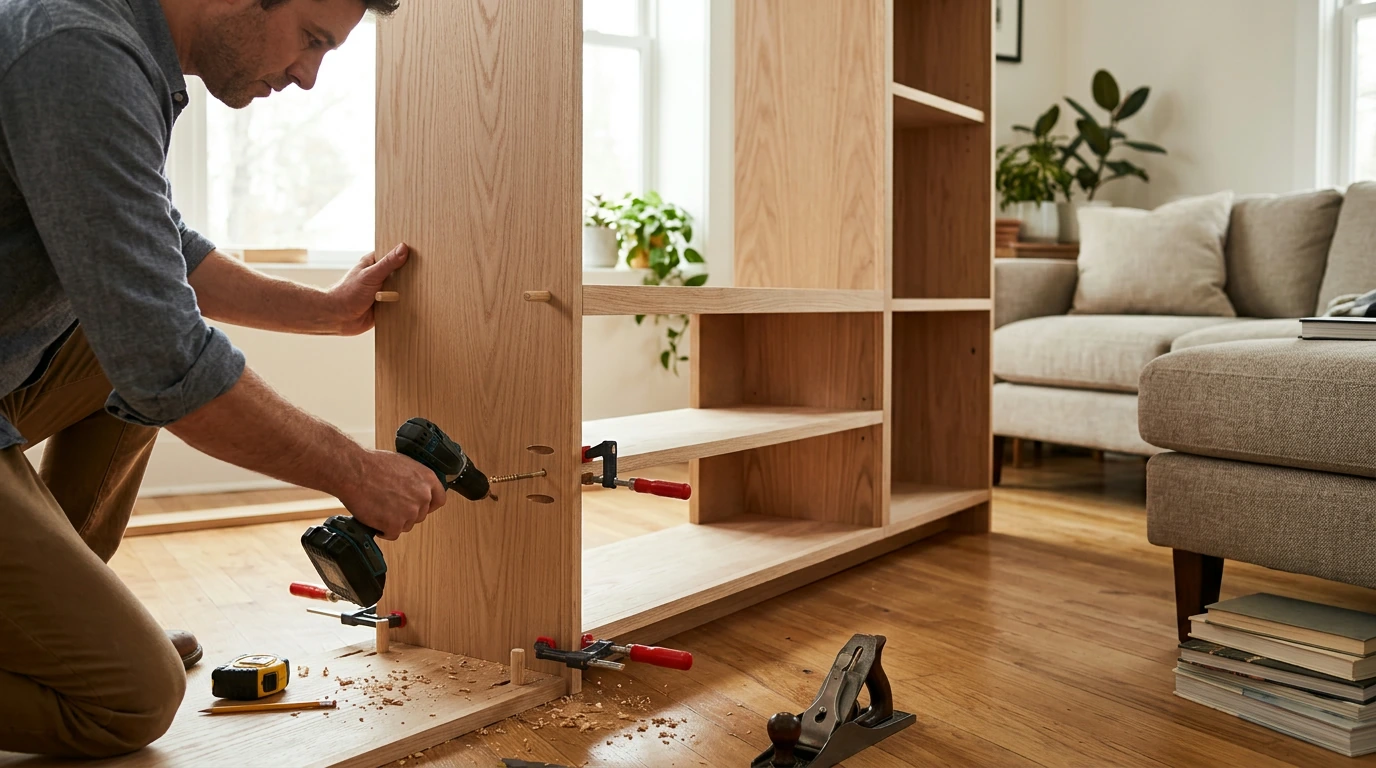
Build an entertainment center by combining sturdy cabinets or shelves with a top, then securing the assembly to the wall. Start with your TV and equipment measurements, plan storage around the way you use the room, and choose materials that can support the weight of your electronics.
A cabinet-based design is a practical place to start: it gives you closed storage without requiring you to build every box from scratch. For more ideas for a creative night in, explore our guide to DIY entertainment.
Measure the available wall space, including the distance to outlets and any doors or vents. Note the width and depth of your TV, speakers, game consoles, and other components. Leave room behind equipment for plugs and cables, and provide ventilation around devices that produce heat.
Sketch a layout with the TV at a comfortable viewing height. Decide which items need open shelves and which can go behind doors. If you plan to wall-mount the TV, position the cabinet so it does not obstruct the screen or access to the mount.
Keep power strips accessible and avoid enclosing heat-producing equipment in a tight, unventilated compartment. If electrical work is needed, our team recommends hiring a qualified electrician.
Measure your room and equipment, sketch a storage layout, and assemble cabinets or plywood boxes to fit. Add a secure top and shelves, provide cable access and ventilation, and anchor the unit to wall studs.
Start with a level cabinet base, join the units, and secure them to the wall. Add a top, shelves, and cable openings, then finish the surfaces to suit your room.
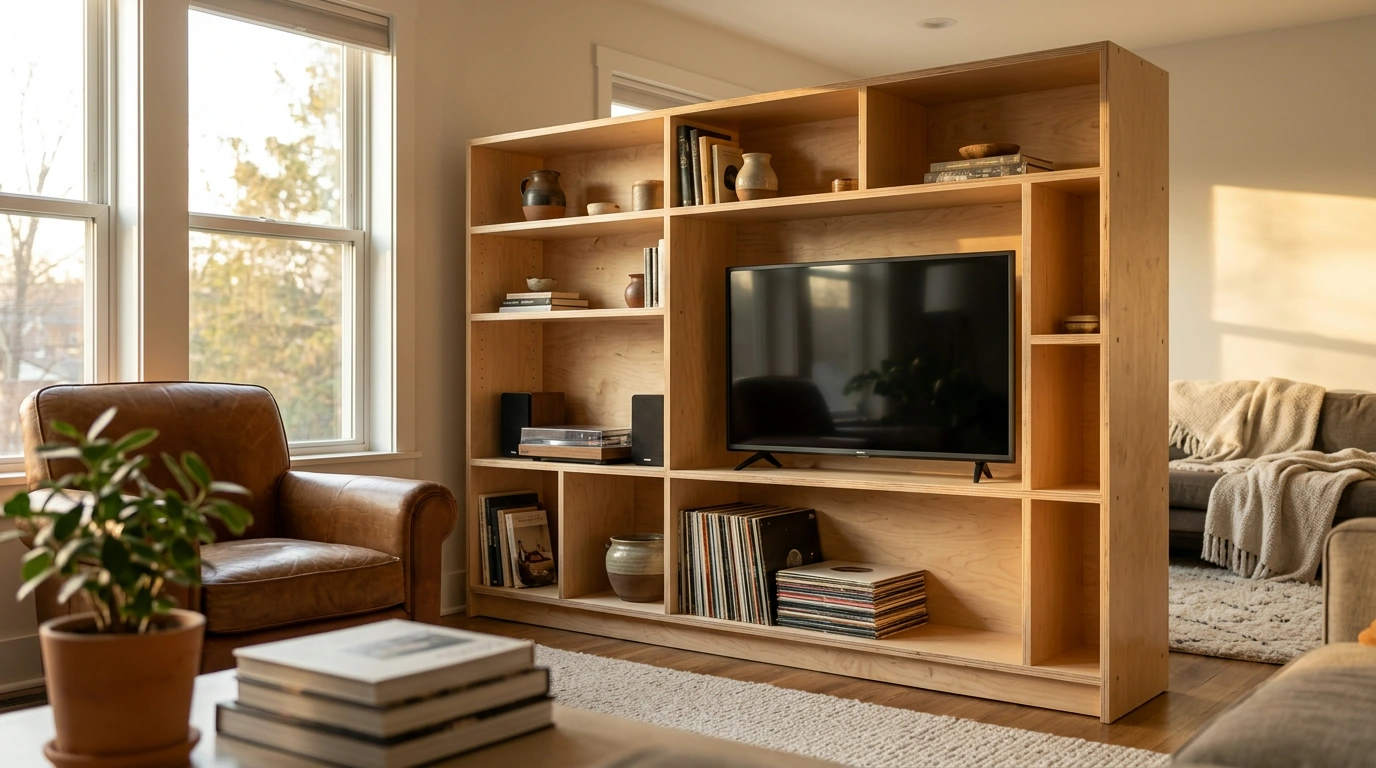
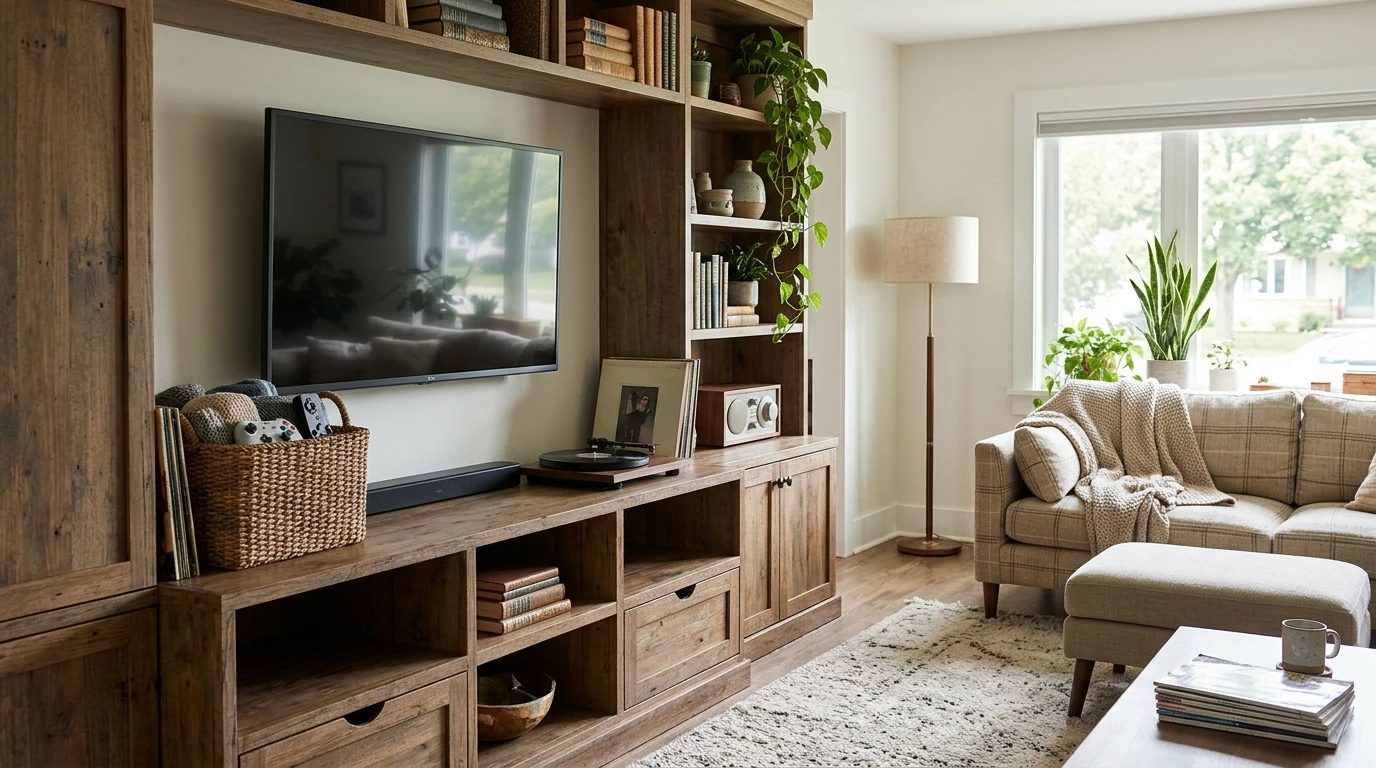
Use sturdy base cabinets, media cabinets, or plywood cabinet boxes with enough depth and load capacity for your equipment. Open shelving works well for ventilated components, while doors can conceal accessories and other stored items.




Leave a comment