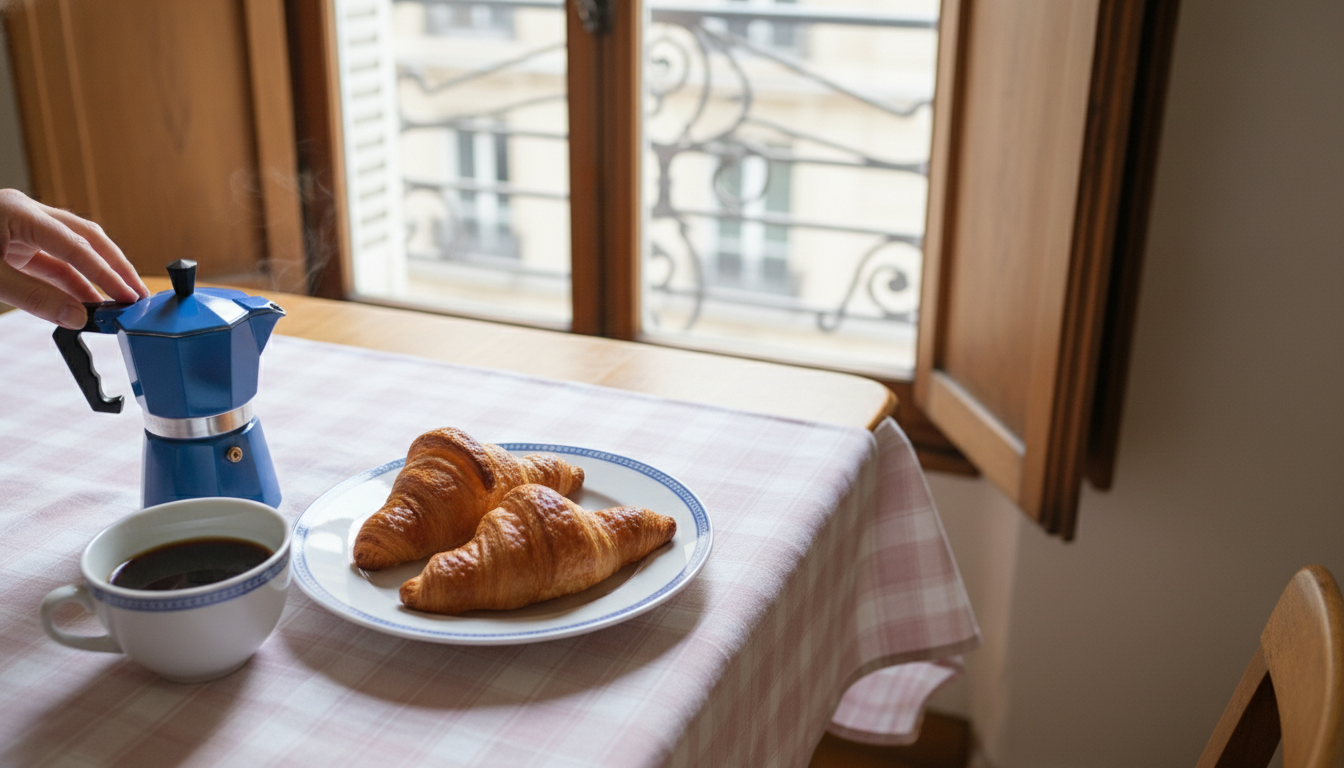
Yes—many French people do eat croissants with coffee, especially at breakfast or during a mid-morning pause. A croissant paired with a hot drink is a familiar café order, and it’s also common at home when someone wants something quick, warm, and comforting.
In everyday life, coffee is often taken as an espresso (“un café”) or a longer coffee (“un allongé”). Some people prefer a milky coffee, like a café crème or café au lait, particularly in the morning. The croissant might be eaten plain, warmed slightly, or occasionally spread with a little butter or jam—though many enjoy it just as it is.
Dipping (tremper) is something plenty of people do at home, especially with café au lait or hot chocolate. In a café, it’s less of a “rule” and more about personal habit—some do it, some don’t. Either way, the pairing works because the coffee’s bitterness balances the croissant’s buttery richness.
Not necessarily. French breakfasts can be simple and varied: tartines (bread with butter and jam), yogurt, fruit, cereal, or just coffee. Croissants are popular, but they’re also seen as a treat—more common on weekends, on the way to work, or when stopping at a bakery.
If the croissant-and-coffee ritual feels like your kind of morning, setting up a cozy kitchen corner can make it more enjoyable. For ideas on styling a warm, French-inspired breakfast nook—especially with croissant and coffee-themed décor—visit this croissants & coffee breakfast wall art guide.
For Croissants and Coffee in France: What’s Typical?, the best answer depends on fit, material, care instructions, and how the product will be used day to day.
Coffee is the most common, often as espresso, café crème, or café au lait. Tea and hot chocolate are also popular, especially for kids or anyone who prefers a sweeter drink.






Leave a comment