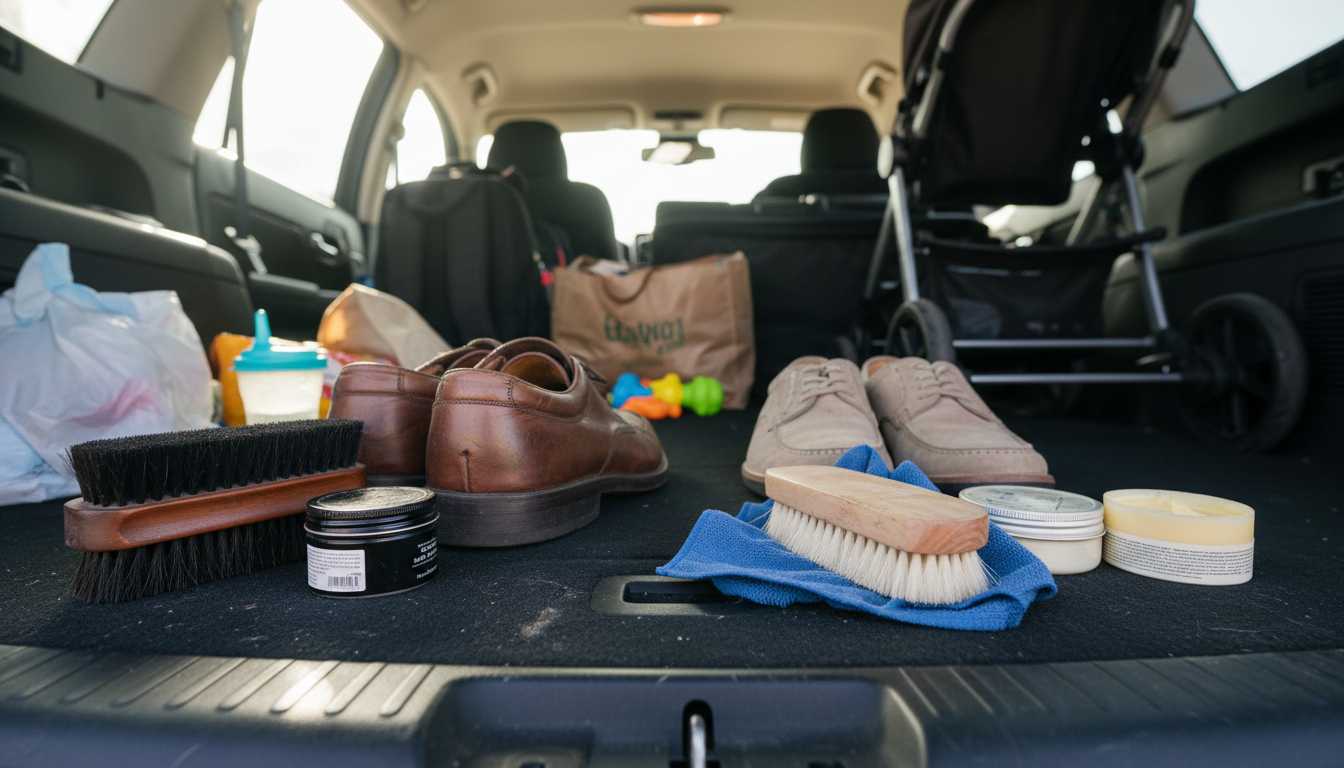
Use a soft brush for polishing shoes in most cases. A soft horsehair-style brush spreads polish evenly, buffs to a shine, and is far less likely to scuff leather finishes. A hard brush is better reserved for earlier steps—like knocking off dried mud, cleaning textured welts, or scrubbing soles—rather than for the final polish.
For smooth leather dress shoes and boots, a soft brush is the go-to tool once the surface is clean and dry. It helps work polish into the leather without leaving brush marks, and it creates friction for a quick, even glow. Soft bristles are also gentler around creases, where aggressive brushing can dull the finish or lift wax unevenly.
A hard brush can be useful for rugged materials and dirt-heavy cleanup—think pebble-grain leather, heavy-duty work boots, or the stitching and edges around the welt where grime collects. It’s also handy on outsoles and midsoles. However, on smooth finished leather, hard bristles can create micro-scratches, haze up a high-gloss wax layer, or push debris into the leather if the shoe wasn’t cleaned first.
Start by removing loose dust with a soft brush or cloth. If there’s stubborn dirt, use a harder brush only where needed, then wipe clean and let the shoe dry fully. Apply polish in thin layers with a cloth or applicator, let it set briefly, and finish by buffing with a soft brush. This sequence keeps the leather looking sharp while minimizing wear from over-aggressive brushing.
For a deeper walkthrough on tools and technique, see the full guide here: https://splendona.com/do-you-polish-shoes-with-a-hard-or-soft-brush/.
Let polish haze over—usually about 5 to 10 minutes—then buff with a soft brush. If it still feels tacky, give it a few more minutes so it shines instead of smearing.




Leave a comment