
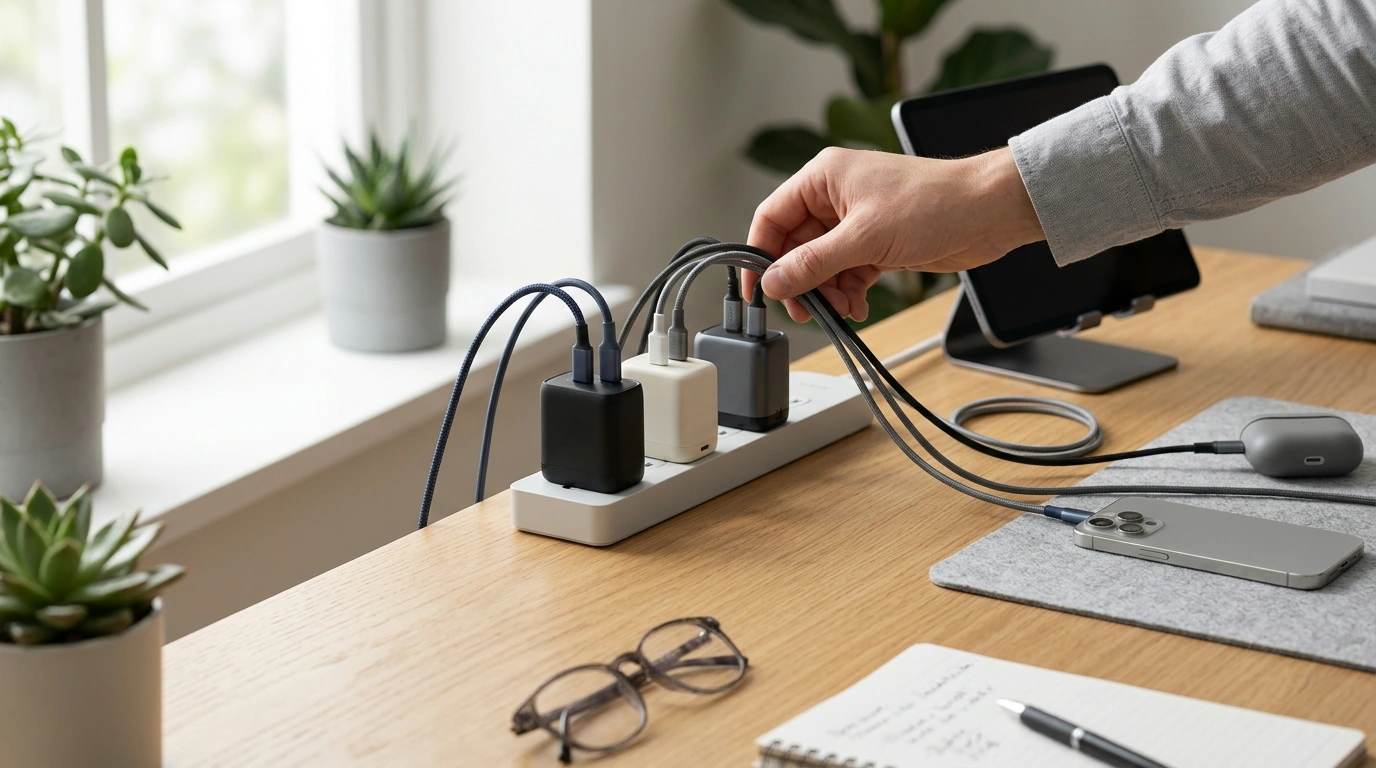
A compact 65W wall charger built with GaN technology can replace a drawer full of bulky adapters while still delivering the fast, device-safe power modern electronics expect. Whether you’re topping off a phone before heading out, keeping a tablet alive for streaming, or powering a USB‑C laptop at a desk, a 65W class charger hits a practical sweet spot: strong enough for many laptops, small enough for travel, and efficient enough to stay steadier during longer sessions.
A 65W GaN USB‑C wall charger with Quick Charge support is meant to be an all-purpose power upgrade for everyday devices. Rather than forcing a single “one-size” voltage, it negotiates with your device and supplies only what that device requests.
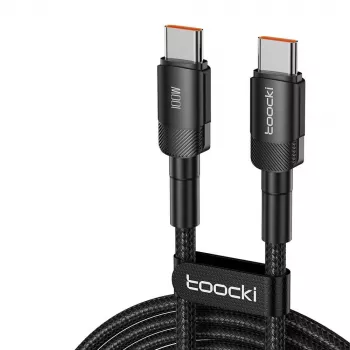
If you want to maximize performance, pair a 65W charger with a cable that won’t bottleneck power delivery, such as a 5A-rated USB‑C cable like the 100W USB-C to USB-C Fast Charging Cable with PD 3.0 & QC 4.0 – 5A Power.
GaN (gallium nitride) is the semiconductor technology inside the charger, not the charging “standard” your phone or laptop uses. Its main advantage is efficiency: less energy gets wasted as heat during the AC-to-DC conversion that makes USB charging possible. For a 65W charger that may run near its upper range with laptops, those efficiency gains can be the difference between “warm but fine” and “uncomfortably hot.”
For background on USB‑C power standards and how devices request power profiles, the USB Implementers Forum is a helpful reference: USB Power Delivery information (USB‑IF). For a broader overview of GaN as a technology, see IEEE Spectrum.
A 65W charger can feel “instant” for phones and tablets and “solid” for many USB‑C laptops—assuming your device actually supports USB‑C charging and the cable is rated appropriately. Keep in mind that charging is always a negotiation: your device decides what it can safely accept, and it will often slow down near 80–100% to protect long-term battery health.
| Device type | What to look for | What 65W typically covers |
|---|---|---|
| Phone | USB‑C fast charging support (PD/QC varies by brand) | Fast charge on many modern models when supported |
| Tablet | USB‑C PD support is common | Often near full-speed charging |
| USB‑C laptop | USB‑C charging input; wattage accepted (often 45–65W) | Good for many thin-and-light laptops |
| Accessories | USB‑C input (earbuds, controllers, power banks) | Works well at lower negotiated power |
“Quick Charge” and “USB‑C” often get lumped together, but they describe different pieces of the charging puzzle. USB‑C is the connector shape; Power Delivery (PD) and Quick Charge (QC) are fast-charging protocols that decide how much power can be sent safely.
For an overview of Quick Charge generations and compatibility, Qualcomm provides a clear starting point: Qualcomm Quick Charge (overview).
For a compact desktop or nightstand setup, a small USB-powered accessory can share the same cable ecosystem (not the same port at the same time, but the same style of cables and adapters). If you want a simple add-on for a work area, consider the Mini USB Aroma Humidifier & Essential Oil Diffuser with Soft LED Light.
| Item | Details |
|---|---|
| Product | 65W GaN USB C Fast Wall Charger with Quick Charge |
| Price | 8.51 USD |
| Typical use | Fast charging for compatible phones, tablets, and many USB‑C laptops |
| Tip | Use a high-watt USB‑C cable to reach top speeds where supported |
GaN describes the charger’s internal component technology, which can improve efficiency and reduce size. “Quick Charge” describes a fast-charging protocol; a charger can be GaN, support Quick Charge, support USB‑C PD, or combine multiple protocols.
Yes—GaN chargers deliver normal USB power and, when compatible, negotiated fast charging. Real-world speed depends on what your device supports, whether the charger supports the same protocol (PD/QC), and whether your cable is rated for the needed wattage.
It’s often worth it for portability, lower heat during higher-watt charging, and the convenience of covering multiple device types with one compact adapter. The payoff is biggest when it replaces several older bricks or when you want laptop-capable USB‑C power in a travel-friendly size.




Leave a comment