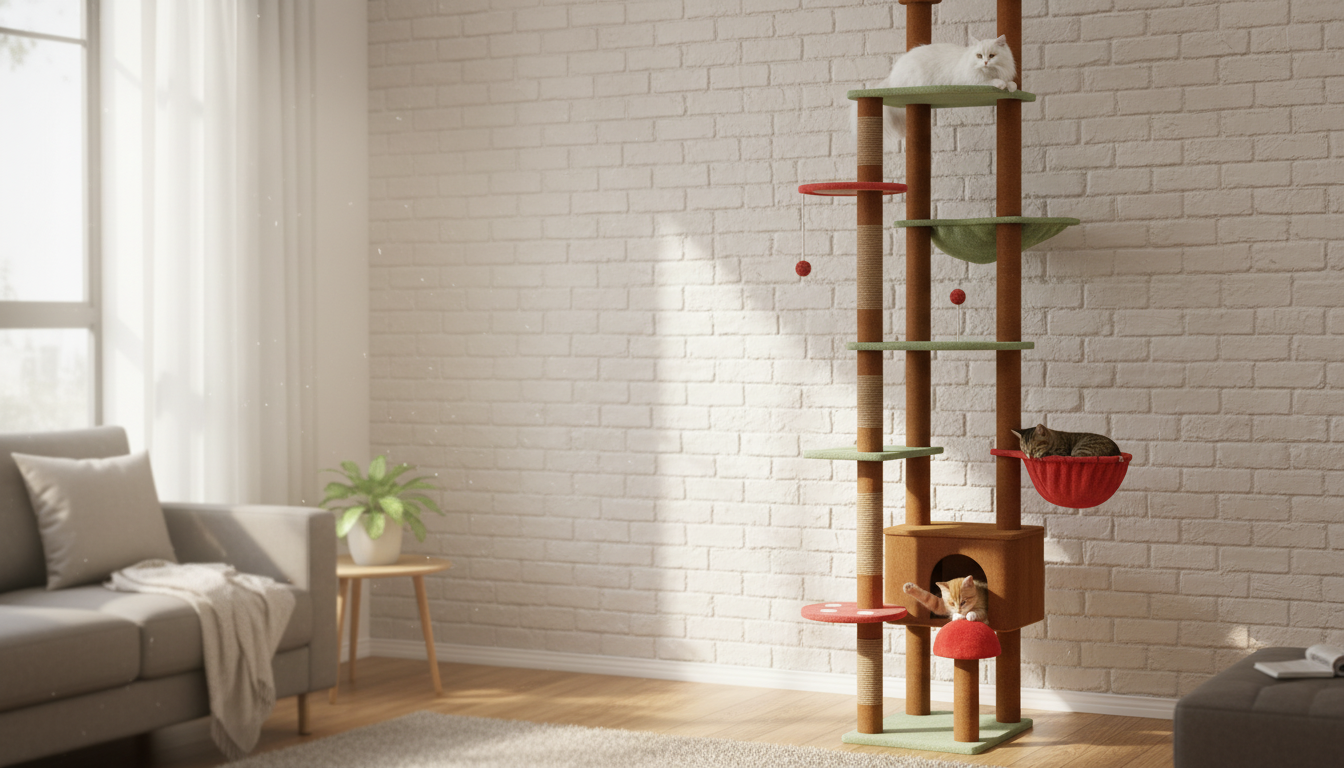
A floor-to-ceiling cat tower turns unused vertical space into climbing, scratching, and lounging zones while keeping the footprint small. A cactus-style design adds a playful look, but the real value comes from height range, stability, scratch-friendly materials, and platform spacing that matches a cat’s size and confidence. When those details are right, a tall tower can become the “home base” that encourages daily movement and gives indoor cats a satisfying place to perch, observe, and decompress.
Vertical territory matters for many cats, especially in apartments or shared households. Environmental enrichment—like climbing options, scratching outlets, and observation perches—can help support healthy behavior and activity levels (see guidance from International Cat Care and the ASPCA).
Cactus-inspired towers often use plush green covers and “arm” posts to create a sculptural look. Treat the style as a bonus; prioritize build fundamentals first. A great-looking tower that twists under a running jump won’t stay popular with the cat—or safe for daily use.
Think about the “launch path.” Cats tend to approach a tower at speed, especially when chasing each other. A clear zone reduces slips and helps keep the base from getting bumped. If you’re placing it by a window for bird-watching, double-check that hardware, cords, and drafts won’t interfere with the top perch.
| What to measure | Target | Why it matters |
|---|---|---|
| Ceiling height | Within the tower’s adjustable range | Ensures the tension mechanism can lock in firmly |
| Base footprint area | Fits the intended spot with clearance | Reduces tripping hazards and improves stability |
| Perch/platform width | Large enough for the cat to curl and stretch | Prevents awkward perching and improves comfort |
| Step spacing | Comfortable for the cat’s jump ability | Supports safe climbing, especially for bigger or older cats |
| Scratch surface placement | At shoulder height on multiple levels | Encourages use and protects furniture |
A practical way to judge platform size: if your cat likes to sprawl, the perch should support the body without the hips or shoulders sliding off the edge. For curl-sleepers, a slightly smaller perch can still work, but it should never force a “tight tuck” that looks uncomfortable.
If your cat ignores the scratch areas at first, try a light sprinkle of catnip (if your cat responds to it) or place the tower near an existing favorite scratch spot for a week or two. Keeping nails in good condition and providing appropriate scratching outlets are part of routine cat care (see general recommendations from the American Veterinary Medical Association).
Pick a base size that fits your space without squeezing walkways, then choose platform widths and step spacing that match your cat’s body size and mobility. Larger cats need wider perches and sturdier posts, while seniors do best with shorter jumps and more intermediate steps. In multi-cat homes, add more resting spots instead of only adding height.
Selection can change by season and location, and online inventory may differ from in-store. Compare any option by stability, perch size, and scratch materials rather than focusing only on the retailer. If a specific model is unavailable, use your measurements and must-have features to find an equivalent style.
No—window placement can increase use because it adds bird-watching and sunlight, but a quiet corner can work just as well if the tower offers height and comfort. If you do place it near a window, secure blind cords and ensure the top perch is safely clear of hardware and drafts.





Leave a comment