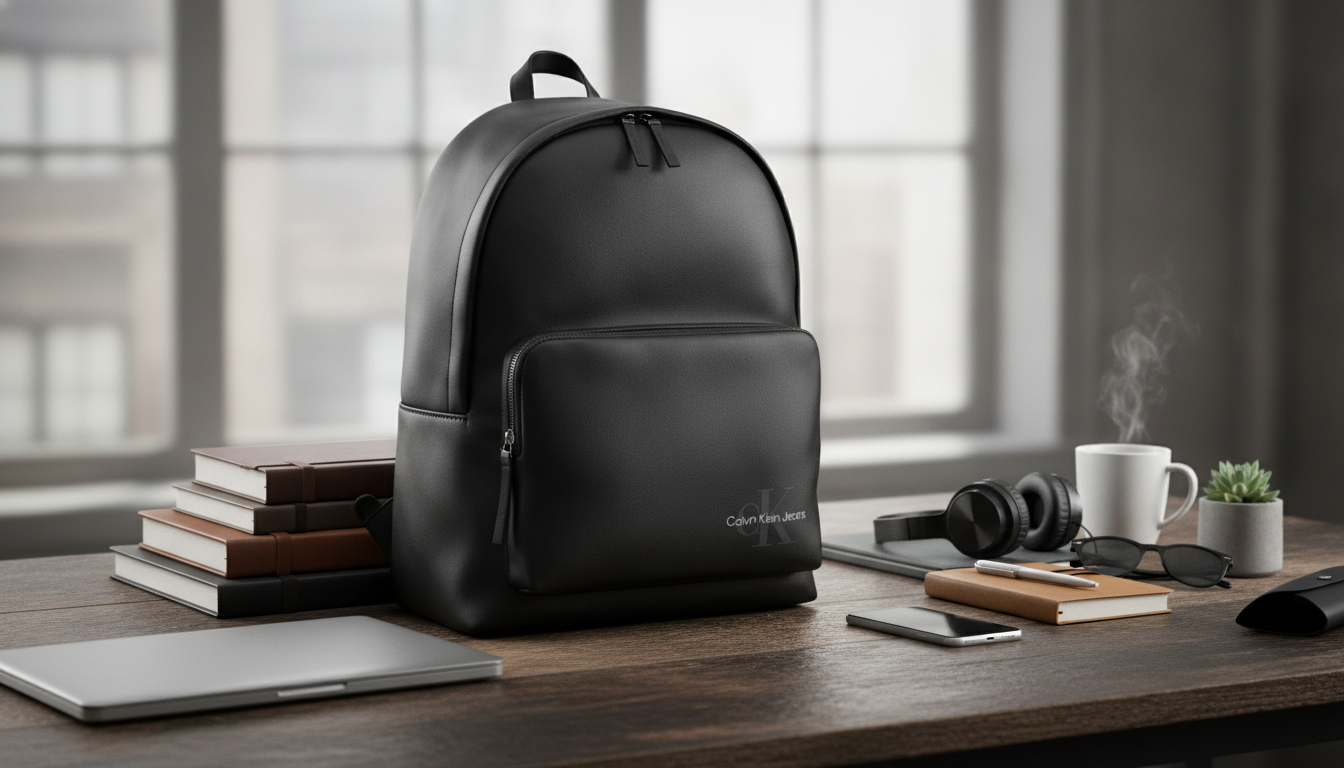
A black men’s backpack from Calvin Klein typically leans into streamlined styling, practical compartments, and easy-to-wear proportions for commuting, travel days, and daily errands. The best picks feel polished without being precious: simple enough for business casual, sturdy enough for daily use, and organized enough to keep small essentials from disappearing into the main compartment. Below is a clear breakdown of what to look for, how to judge comfort and capacity, and how to keep a minimalist backpack looking sharp over time.
Calvin Klein backpacks are known for a modern, pared-back look that doesn’t fight with the rest of your outfit. That clean design tends to translate well from weekday commutes to weekend plans.
- Minimalist silhouette: Easy to pair with casual and business-casual outfits, especially when the lines are structured and uncluttered.
- Neutral black finish: Black hides scuffs better than lighter shades and looks appropriate year-round.
- Subtle branding: Typically more office-friendly than loud logos or heavily patterned designs.
- Everyday function: A main compartment for bulk items plus smaller pockets for organization, so you can separate tech, keys, and personal items.
Quick Facts to Check Before Buying
Two backpacks can look nearly identical online and wear completely differently in real life. Before committing, confirm the dimensions, how the compartments are built, and whether the materials match your routine.
- Capacity: Make sure it fits your usual load (laptop, charger, water bottle, and possibly a light jacket).
- Device fit: Check laptop/tablet sleeve measurements instead of relying on “fits up to” labels.
- Carry comfort: Padded straps and a breathable back panel matter for longer commutes.
- Materials: Compare nylon/polyester vs. faux leather vs. leather for weight, durability, and care needs.
- Zippers and hardware: Smooth, sturdy components outlast decorative trim.
- Organization: More pockets aren’t always better—look for pockets you’ll actually use without cramping the main space.
Backpack Checklist (At-a-Glance)
| Feature |
Why it matters |
What to verify |
| Laptop sleeve |
Protects devices during commutes |
Actual sleeve size and padding thickness |
| Main compartment |
Holds bulkier items |
Opens wide enough; internal divider if needed |
| Front/quick-access pocket |
Speeds up grab-and-go |
Key clip or small slots for cards/earbuds |
| Water bottle pocket |
Prevents spills inside the bag |
Elastic or structured pocket depth |
| Straps/back panel |
Reduces shoulder fatigue |
Padded straps; breathable mesh; stitching quality |
| Base and corners |
Most wear occurs here |
Reinforcement and scuff resistance |
How to Choose the Right Size and Layout
The “right” size isn’t about max capacity—it’s about carrying what you need without overstuffing. Overfilled bags look sloppy, strain zippers, and feel heavier than they should.
Match the bag to your main use case
- For commuting: Prioritize a dedicated laptop sleeve, a stable base that stands up when set down, and quick-access space for a transit pass or phone.
- For gym-to-office: Choose a layout that can separate clean items from shoes or damp gear, or plan to use a shoe bag/packing pouch to keep the interior fresh.
- For travel days: A luggage sleeve (trolley strap) helps when rolling a carry-on; a main compartment that opens wide is also useful for security checks. For general screening rules and packing guidelines, reference the TSA’s official “What Can I Bring?” resource at tsa.gov.
- For light carry: Smaller, slimmer profiles look sharper and feel less bulky, but still confirm they fit your daily essentials without forcing the zipper.
Dial in depth and support
- Depth vs. sleekness: Slim bags look modern, but can become awkward if overpacked—especially around the zipper track and corners.
- Stability for heavier loads: If you carry a full laptop setup plus water daily, a sternum strap (when included) can improve balance and reduce shoulder pull on longer walks.
Materials and Durability: What Ages Well
Black is forgiving, but material choice still determines how the backpack looks after months of use. Focus on surfaces that handle friction, corners that resist scuffing, and seams that don’t pucker.
For brand-specific material notes and care recommendations, check Calvin Klein’s official site: calvinklein.us.
Comfort and Fit for Daily Wear
Styling: Making a Black Backpack Look Intentional
Care and Maintenance Tips
- Empty and shake out debris: Grit and crumbs can wear lining and seams over time.
- Spot clean gently: Use a soft cloth and mild soap; avoid harsh chemicals that can dull finishes or damage coatings.
- Air dry fully: Especially after rain exposure—moisture trapped in pockets can cause odor and material breakdown.
- Avoid overpacking: Constant tension on seams and zippers is a common cause of early wear and misaligned zipper tracks.
- Store to maintain shape: Keep it upright or lightly stuffed, away from direct heat sources.
- Follow care instructions: For fabric, coated trims, or leather, use the care guidance on the label and follow recognized labeling standards. For more on care labeling expectations, see the FTC’s resource at ftc.gov.
FAQ
Will a men’s Calvin Klein backpack fit a laptop?
Many styles include a padded laptop sleeve, but fit depends on the sleeve’s actual dimensions. Measure your laptop (screen size and thickness) and compare it to the backpack’s stated sleeve size, including how much padding reduces usable space.
Is a black backpack appropriate for work or business casual?
Yes—if the shape is clean and structured and the branding is subtle, a black backpack can look professional in business-casual settings. Avoid overly sporty silhouettes and keep the bag clean and scuff-free for the sharpest look.
How can a backpack be kept looking new over time?
Spot clean regularly, don’t overload it, and let it dry fully after rain. Store it upright (or lightly stuffed) to hold its shape, and use material-specific care for leather or coated trims to prevent cracking and premature wear.
Recommended for you



Leave a comment