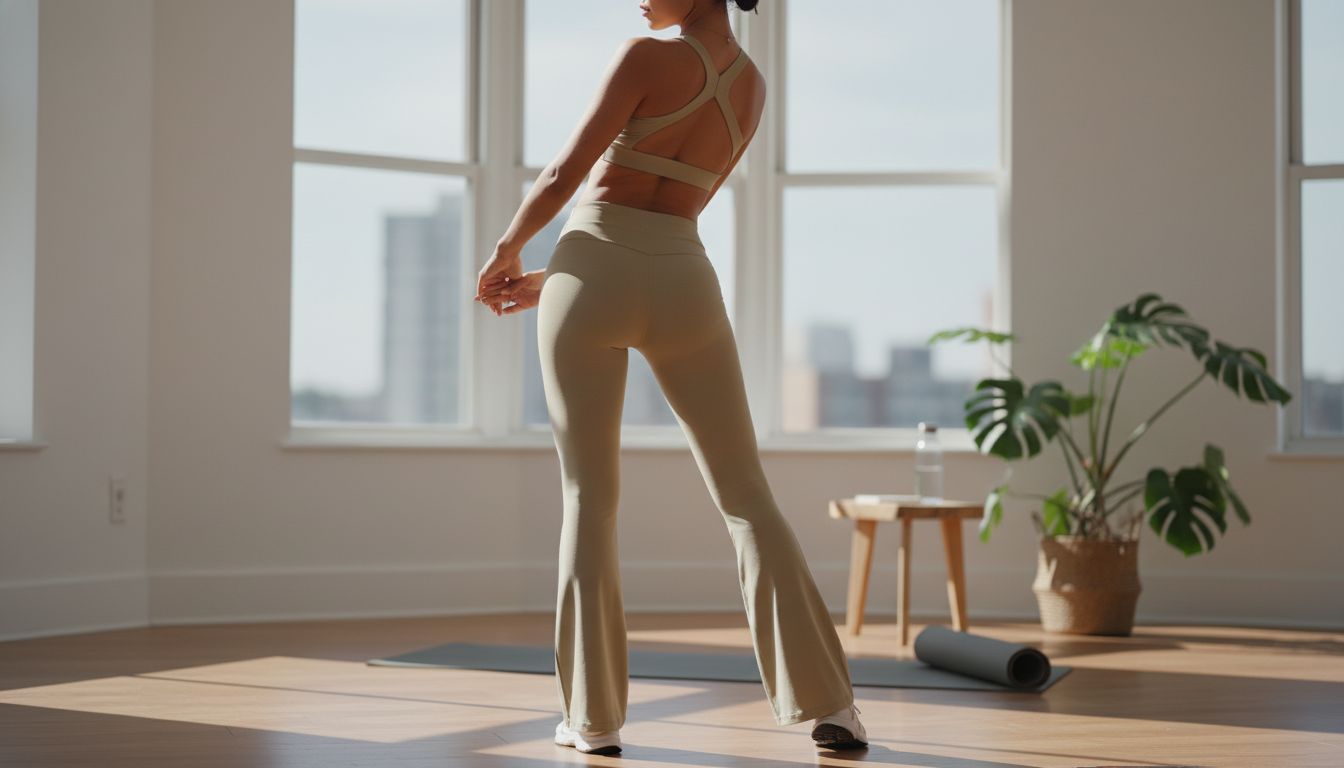
High-waist bell-bottom workout leggings blend a supportive waistband with a flared hem that changes both comfort and styling. The right pair stays put through squats, feels smooth against skin, and keeps the flare from getting in the way. This guide breaks down what matters most—fabric, compression, rise, flare shape, and practical details—so choosing a pair is straightforward for gym sessions, yoga, and athleisure wear.
What Makes Bell-Bottom Workout Leggings Different
Bell-bottom workout leggings (often called flare leggings) aren’t just a fashion twist—they behave differently once you start moving.
- Flared hem = more room around the lower leg. Compared with tapered leggings, the extra space around the calf and ankle can feel less restrictive and can change how the fabric swings during walking, lunges, and transitions.
- High-rise waist = more coverage and perceived stability. A taller waistband can feel more secure during hinges, deep squats, and forward folds—especially when it’s built with strong stretch recovery.
- Balanced silhouette. The best-performing pairs stay snug through the hips and thighs, then open into a controlled flare from the knee or mid-calf down for movement without excess fabric.
- Best for specific training days. Many people reach for flares for low-to-moderate impact workouts, warm-ups, stretching, yoga, Pilates, and everyday wear where comfort and styling both matter.
How to Choose the Right Pair
Choosing flare leggings is mostly about matching the waistband, fabric, and flare width to how (and where) you’ll wear them.
Start with rise and waistband structure
- True high-waist placement: look for a rise that sits above the navel without rolling. Waistbands are often about 4–6 inches tall, but height alone isn’t enough—recovery matters more.
- Recovery test: gently stretch the waistband and see if it snaps back. Strong recovery helps reduce sliding and constant readjusting.
Match fabric to your workout intensity
- Sweat-heavy sessions: prioritize moisture-wicking and quick-dry finishes so fabric doesn’t feel heavy mid-workout.
- Yoga and lounge: prioritize softness and four-way stretch for comfort in long holds and floor work.
Pick your compression level
- Light compression: best for comfort, flexibility, and a “barely there” feel.
- Medium compression: better for a held-in feel and reduced bounce during strength work and brisk walking.
Confirm squat-proof coverage
- Opacity basics: darker colors and slightly heavier fabrics are often more opaque.
- Real-world check: do a deep squat in bright light. If the fabric gets shiny or noticeably lighter when stretched, consider sizing up or choosing a denser knit.
Set the flare for function (not just style)
- Subtle flare: typically more gym-friendly and less likely to brush equipment or floors.
- Dramatic flare: more fashion-forward, but it can catch on rowers, bikes, or moving machine parts if the hem is wide and long.
Mind inseam, hem, and seams
- Inseam length: a slightly shorter inseam can reduce tripping and prevent hems from dragging outside.
- Hem finish: a clean, reinforced hem helps the flare keep its shape and resist curling.
- Seam construction: a gusseted crotch improves mobility; flatlock seams reduce chafing on longer wears.
Quick selection guide
| Priority |
What to look for |
Why it helps |
| No-slip waist |
High-rise band with strong elastic recovery |
Reduces rolling and readjusting during bends and squats |
| Comfort stretch |
Four-way stretch + gusset |
Improves range of motion and reduces seam stress |
| Coverage |
Opaque fabric; darker shades; adequate weight |
Helps avoid see-through when stretched |
| Flare control |
Flare starting near knee; moderate width |
Less interference with machines and faster transitions |
| Sweat management |
Moisture-wicking and quick-dry finish |
Keeps fabric from feeling heavy during training |
Fit Check: Waistband, Seat, and Flare
A quick try-on routine can reveal most fit issues before you commit.
- Waistband: it should stay anchored during a deep squat and a forward fold. If it slides, the rise may be too short, the waistband may be too soft, or sizing may be off.
- Seat and thighs: fabric should lie smooth without sharp pulling lines. Excessive stretching across the seat can signal a size up for better opacity and seam longevity.
- Knee area: avoid fabric that bags behind the knee—often a sign of weak recovery or a flare that starts too low for your leg shape.
- Flare length: the hem should skim the top of the shoe rather than dragging. Dragging hems wear faster and can become a trip hazard.
- Movement test: squat, lunge, hip hinge, and lateral step. The flare should move freely without twisting around the calf.
Performance Details That Matter in Training
For general apparel guidance and fit considerations, the American College of Sports Medicine (ACSM) offers educational resources that cover performance basics. For care and labeling expectations, the FTC’s care labeling guidance is a helpful reference point.
Styling and Footwear Pairing Without Losing Function
Care Tips to Preserve Stretch and Shape
FAQ
Are bell-bottom workout leggings practical for the gym?
Yes for many routines—warm-ups, strength training, yoga, and walking—especially with a moderate flare and a hem that doesn’t drag. For machines with moving parts or high-intensity intervals, a smaller flare and correct inseam help avoid catching or bunching.
How should a high-waist waistband fit during squats?
It should stay above the hips without rolling down, feel snug but not restrictive, and return to shape after movement. A tall waistband with good elastic recovery typically stays put better during deep bends.
How can opacity be checked before wearing them to a workout?
Test in bright light using a deep squat and forward fold while checking in a mirror. If the fabric looks shiny or lightens significantly when stretched, choose a darker color, a heavier fabric, or a different size.
Recommended for you






Leave a comment