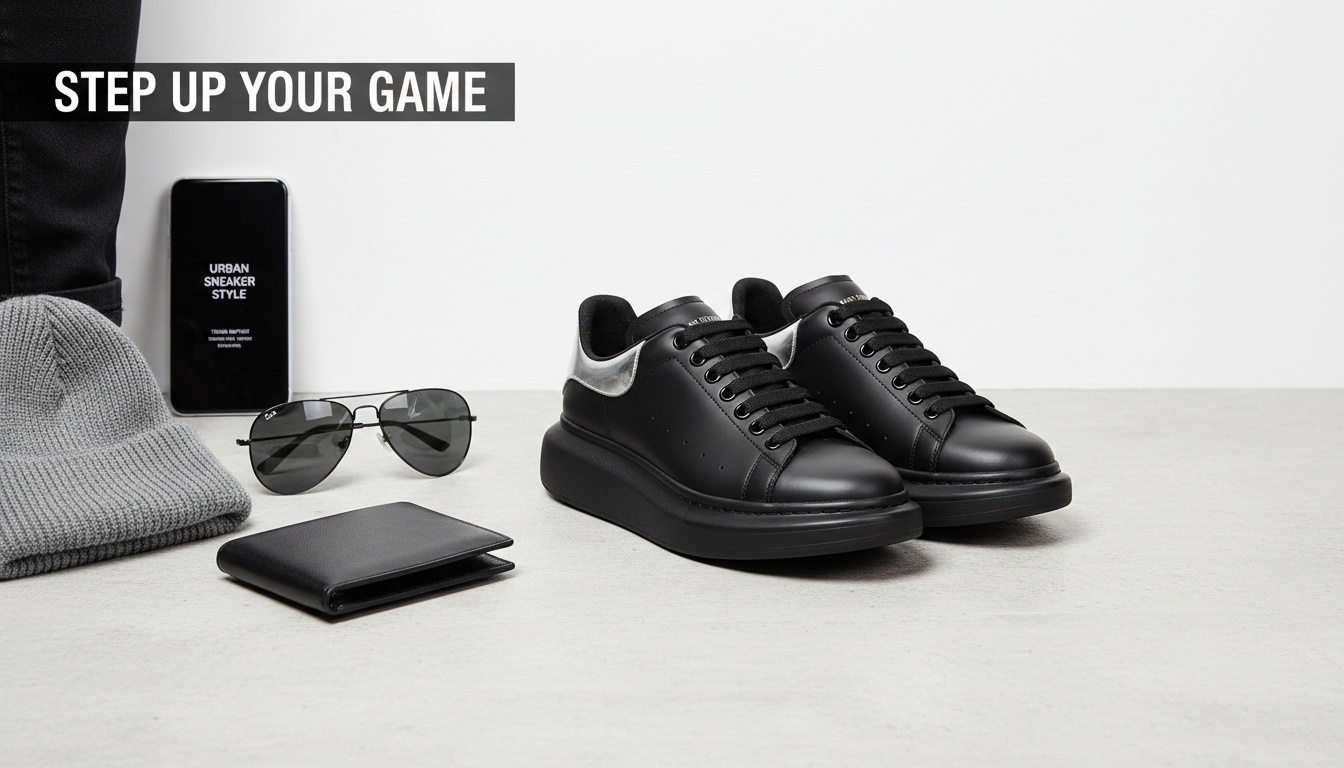
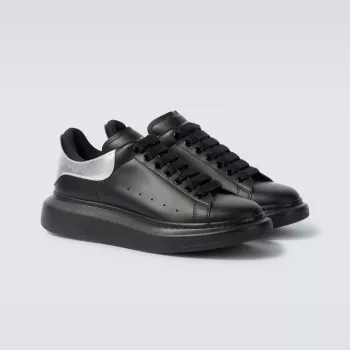
Minimal uppers and a bold platform outsole make this calfskin sneaker an easy way to add height and structure without leaning into loud branding. The smooth leather reads polished enough for smart-casual outfits, while the chunky sole brings balance to wide-leg denim, tailored trousers, and modern streetwear layers. Below is a practical breakdown of materials, fit, comfort, styling, and care so it’s easier to decide if this pair suits day-to-day wear and how to keep the leather looking crisp.
If you’re ready to compare options available now, these items are currently in stock:
Calfskin leather is often chosen for its smooth, uniform look—especially in monochrome colorways where texture differences can make a sneaker read “busy.” With a cleaner surface, the silhouette feels more architectural: the upper stays visually quiet, letting the outsole do the talking.
| Area | What to check | Why it matters |
|---|---|---|
| Upper (calfskin) | Even finish, minimal wrinkles, consistent color | Maintains a sharp look and ages more predictably |
| Stitching | Straight lines, no loose threads, reinforced stress points | Durability in high-bend areas |
| Collar & tongue | Smooth lining contact, no hard seams rubbing | Reduces heel and instep irritation |
| Outsole | Clean join to upper, stable feel underfoot | Helps with long walks and daily wear |
For brand reference details and official product context, the Alexander McQueen Official Website can be a helpful benchmark. If sustainability and sourcing standards matter, the Leather Working Group is a widely recognized industry organization associated with leather supply chain initiatives.
Chunky-sole leather sneakers usually wear differently than lightweight knit runners. Even if the length is correct, the structure can make the shoe feel “more present” on foot—especially at the collar and along the sides of the forefoot.
A practical test: lace them up as you would for a full day, then walk indoors for a few minutes on a clean surface. Your heel should feel anchored, and your toes should have breathing room without the upper folding harshly into the front of your foot.
Platform-style sneakers can be surprisingly walkable when the base is wide and the foot sits securely on the footbed. The tradeoff is flexibility: they typically won’t bend like performance trainers, and you may notice extra weight compared to minimal cupsole sneakers.
If you’re planning on heavy daily mileage, pay close attention to friction points at the heel and the top line of the collar. A small adjustment in lacing tension can reduce rubbing, and a gradual break-in schedule typically keeps the leather from fighting your stride.
For general consumer guidance around product labeling and care considerations, the FTC is a helpful reference point for U.S. shoppers.
They can relax slightly in width and at common flex points as the leather breaks in, but the length won’t meaningfully change. Aim for a secure heel and avoid buying a pair that already feels painful at the toes.
They can be comfortable for city wear when the fit is secure and the base feels stable, though they may feel heavier and less flexible than running shoes. A short break-in period and, if needed, a thin cushioned insole can improve long-day comfort.
Wipe them down after wear with a soft dry cloth, then use a slightly damp cloth for small spots—without soaking the leather. Let them air-dry away from heat, and condition lightly only when the leather looks dry to avoid softening the structure or attracting dirt.





Leave a comment