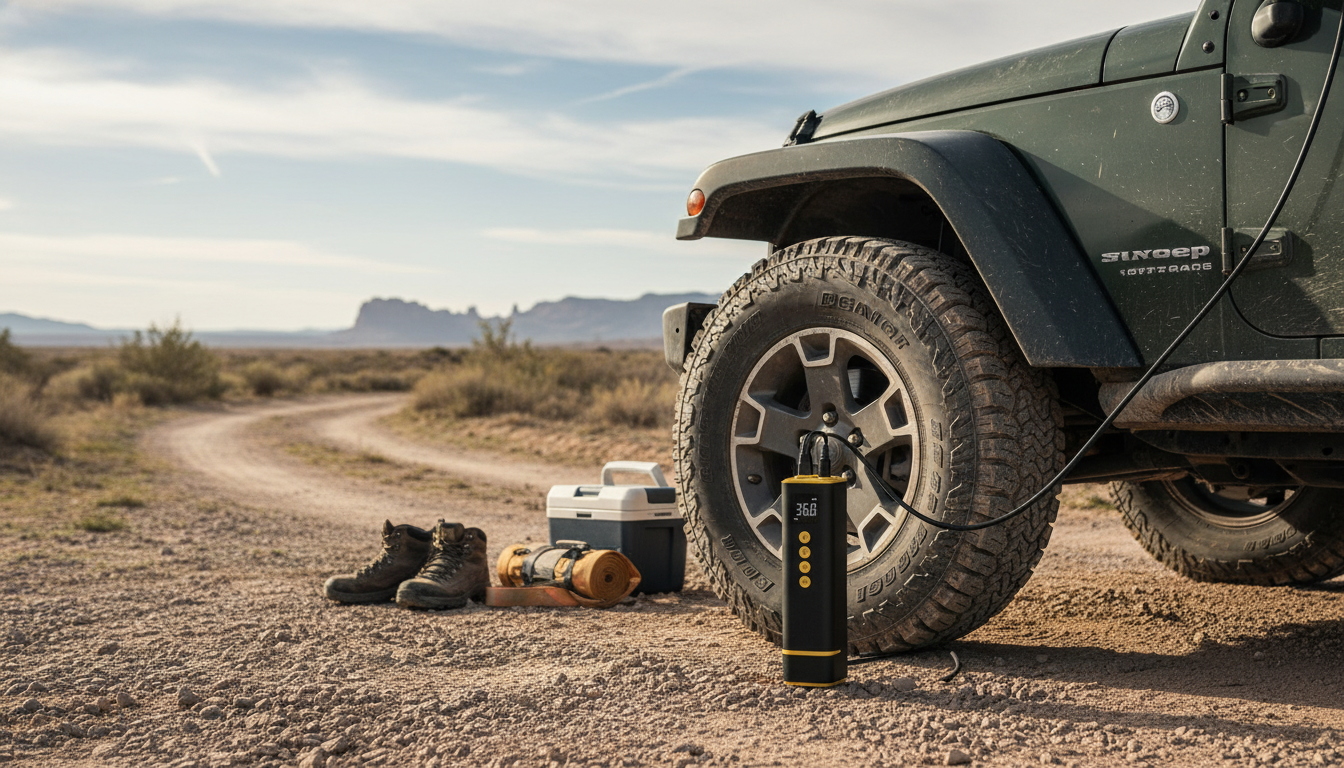
Off-road driving rewards traction and durability, but it punishes improper tire pressure. A compact digital pressure monitor paired with a portable inflator helps dial in PSI for sand, rocks, mud, and pavement transitions—reducing sidewall damage, improving grip, and keeping the drive home safer.
Tire pressure is one of the fastest “traction adjustments” available on the trail. Lower PSI can increase the tire’s contact patch, letting the tread conform to loose sand, slick rock, and uneven ruts. When it’s time to return to pavement, higher PSI is typically needed for stable handling and cooler highway operation.
Problems show up when pressure is wrong for the surface. Underinflation on-road increases heat buildup, which can weaken internal structure and make sidewall damage more likely—especially at speed. Overinflation off-road can reduce grip and increase puncture risk because the tire becomes less compliant over sharp edges.
Because terrain can change quickly, frequent pressure checks are part of safe airing-down and airing-up routines. A digital monitor reduces guesswork when making small PSI changes, helping keep tires even side-to-side and consistent across all four corners.
A digital tire pressure monitor makes it easier to hit repeatable PSI targets during quick stops. Instead of estimating by feel, you can record a setup that works for your vehicle and adjust in small increments when conditions shift.
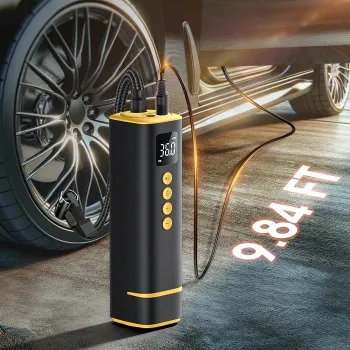
A portable inflator rated up to 150 PSI is designed to cover typical passenger vehicles, ATV/UTV tires, and many light-truck applications. For off-roaders, that rating is often most useful for topping up after airing down rather than filling an empty tire from scratch. The practical differences come down to speed, heat management, and how comfortable the tool is to use repeatedly.
Pay attention to the basics: a stable hose connection, a chuck that seals cleanly on the valve stem, and a display that’s readable in bright sun and low light. Helpful extras include auto-stop at a set pressure, a built-in light for dusk repairs, and a storage-friendly shape that won’t get crushed under recovery gear.
Measure pressure when tires are cool so you have a consistent reference point. If you start after a long highway drive, expect a higher reading and treat it as a “warm baseline” instead of a cold spec.
Lower pressure in steps, rechecking frequently. Aim for even pressure side-to-side to reduce pulling, uneven traction, and unpredictable steering feel. If one tire consistently reads low, inspect the valve core and bead area sooner rather than later.
Inflate in short bursts and recheck between bursts to avoid overshooting your target PSI. Overshooting wastes time because you’ll need to bleed air back out, and repeated bleeding can make it harder to keep all four tires matched.
On multi-vehicle trips, recheck after the first few miles at road speed. Heat can raise pressure and also reveal slow leaks that weren’t obvious at lower trail speeds.
Don’t keep inflating a tire that won’t stabilize. Check for punctures, bead seating issues, or a damaged valve stem before continuing, and use a safe pull-off area away from traffic.
Portable inflators are generally lighter and easier to pack for occasional adjustments and topping off. Dedicated compressors often provide faster airflow for larger tires and repeated fills, but they take more space and can require more setup (or mounting). The best choice depends on tire size, how far you air down, and how often you need to air up.
| Scenario | Portable inflator | Dedicated compressor |
|---|---|---|
| Occasional airing up after mild airing down | Usually sufficient; easy to store | May be more than needed |
| Large tires or frequent full refills | Can be slower; may run longer per tire | Typically faster and more consistent |
| Limited cargo space | Compact and lightweight | Bulkier; needs mounting or a dedicated bag |
| Multiple vehicles on a group trip | May require longer runtimes | Often better suited for repeated use |
For general tire care and safety guidance, review resources from NHTSA and the U.S. Tire Manufacturers Association. If you like digging into technical standards, SAE International is a long-standing source for engineering references.
Many digital inflators are accurate enough for off-road and daily driving, but readings can vary due to temperature, connection leaks at the chuck, and calibration tolerances. For the most reliable results, measure under similar conditions, hold the chuck straight and firmly, and keep the batteries fresh.
Accuracy depends more on the specific model than the brand name. Look for published accuracy specs, consistent repeatability, solid build quality at the chuck and hose connection, and verify performance by comparing it to a trusted reference gauge.
A portable inflator is usually the better fit for occasional airing up and limited cargo space, while a dedicated compressor is often faster and more consistent for large tires, deeper airing-down, and group trips. Your tire size, how often you air up, and how quickly you need to get back on the road should drive the choice.




Leave a comment