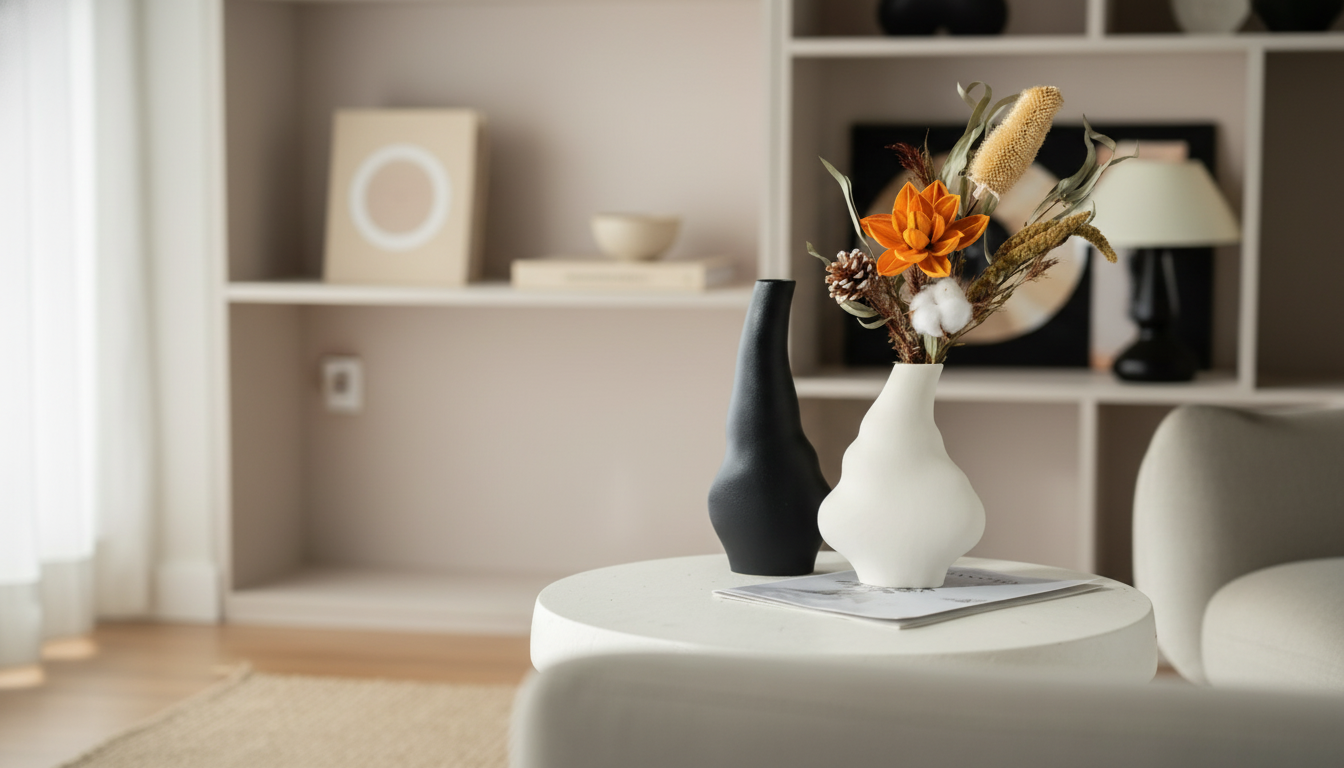
A matte white ceramic vase with an abstract wavy silhouette adds structure without visual clutter. Soft curves create a sense of movement, while the neutral finish blends easily into modern, minimalist, Scandinavian, Japandi, and contemporary interiors. Whether styled with a few fresh stems, a small bundle of dried botanicals, or displayed empty as a sculptural object, it can anchor a console, dining table, shelf, or bedside vignette with a clean, calming presence.
Modern decor often relies on strong shapes, quiet finishes, and purposeful restraint. A wavy matte white ceramic vase checks each of those boxes while still feeling warm and livable.
The appeal of an abstract ceramic vase is flexibility. It can look finished in a room even when it’s not part of a large arrangement—ideal for everyday styling.
A wavy vase looks best when the styling supports the shape rather than hiding it. Think of it as a design object first—and a flower vessel second.
The “right” vase depends on where it will live and how you plan to use it day to day. A few practical considerations help ensure it looks proportional and styles easily.
Match the vase height and width to the surface. Larger silhouettes suit consoles and dining tables; smaller ones feel natural on shelves and bedside tables. When in doubt, choose slightly larger for floor-to-eye-level areas (like entry consoles) and slightly smaller for eye-level shelves to avoid crowding.
Narrow openings support a few stems upright and keep arrangements minimal. Wider openings work for fuller bunches or airy branch arrangements where you want a broader spread.
Matte looks softer and more contemporary, especially in bright rooms where glossy pieces can read as more formal. If the goal is calm, matte usually feels more settled and less attention-seeking.
White is versatile: use it to quiet a busy palette, brighten darker rooms, or unify mixed materials (wood, metal, stone) into one cohesive scene.
Wavy forms soften angular furniture. Rooms dominated by straight lines—think rectangular coffee tables, boxy sofas, grid shelving—often benefit most from stronger curves.
| Surface | Recommended visual weight | Best botanical choice | Styling tip |
|---|---|---|---|
| Bookshelf | Light to medium | Single stem or small dried bundle | Place near books to add curvature |
| Coffee table | Medium | Low arrangement or short stems | Keep height low to preserve sightlines |
| Console table | Medium to bold | Branches, eucalyptus, mixed stems | Anchor with a tray or stacked books |
| Dining table | Medium | Seasonal stems | Center it; add candles for evening warmth |
| Bathroom vanity | Light | Dried sprigs | Keep minimal to avoid visual clutter |
Matte ceramic is durable for daily decorating, but it looks best with gentle care—especially because low-sheen finishes can show scuffs if cleaned too aggressively.
For more general object-care guidance, museum conservation resources can be helpful, including The Metropolitan Museum of Art’s conservation overview and the Smithsonian’s object care guidance.
Yes, as long as it’s intended to function as a vase. After using water, rinse it out and dry it well, and avoid leaving water standing for long periods to help prevent staining or mineral spots.
Dust with a dry microfiber cloth, then use a soft damp cloth and mild soap for smudges. Avoid abrasive pads and harsh cleaners that can scratch or burnish matte surfaces.
Minimal arrangements suit the sculptural shape best, such as eucalyptus, tulips, single branches, dried pampas, or simple seasonal greenery. Using fewer stems helps keep the wavy silhouette visible.






Leave a comment