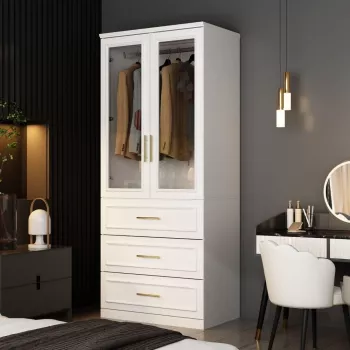
Glass wardrobes can make a bedroom feel brighter and more open, but they also demand a bit more upkeep and planning than solid-front pieces. The biggest tradeoff is visual impact versus privacy and maintenance.
Light, airy look: Glass doors reflect and transmit light, which can visually expand smaller rooms and help dark corners feel less closed in.
Easy outfit scanning: Clear or lightly tinted glass makes it simple to spot items quickly without opening every door—useful for daily rotation pieces.
Modern, high-end style: A glass-front wardrobe can read as more “built-in” and design-forward, especially when paired with clean hardware and coordinated interiors.
Helps maintain organization: When the contents are visible, it naturally encourages keeping shelves, drawers, and hanging space tidy.
Shows clutter: If the interior isn’t organized, glass can make a room look busier. Many shoppers prefer frosted or patterned glass to soften visibility.
More cleaning: Fingerprints, dust, and smudges show quickly, so the doors typically need more frequent wipe-downs than wood or laminate.
Privacy concerns: Clear glass exposes clothing and personal items. If the wardrobe faces a doorway or high-traffic space, opacity matters.
Potential for breakage: Tempered glass is durable, but impacts can still chip edges or crack panels. Homes with kids, pets, or tight walkways may want sturdier protection or thicker framing.
Cost and weight: Glass-front designs can be pricier and heavier, which may influence delivery, assembly, and long-term door alignment.
For a closer look at a white glass-door option with hanging space and drawers, visit this glass-door armoire wardrobe guide.
For Glass Wardrobes: Pros, Cons & When They Make Sense, the best answer depends on fit, material, care instructions, and how the product will be used day to day.
Frosted glass offers a cleaner look day-to-day because it disguises clutter and reduces visibility of personal items. Clear glass works best when the interior is consistently organized or styled with uniform storage.





Leave a comment