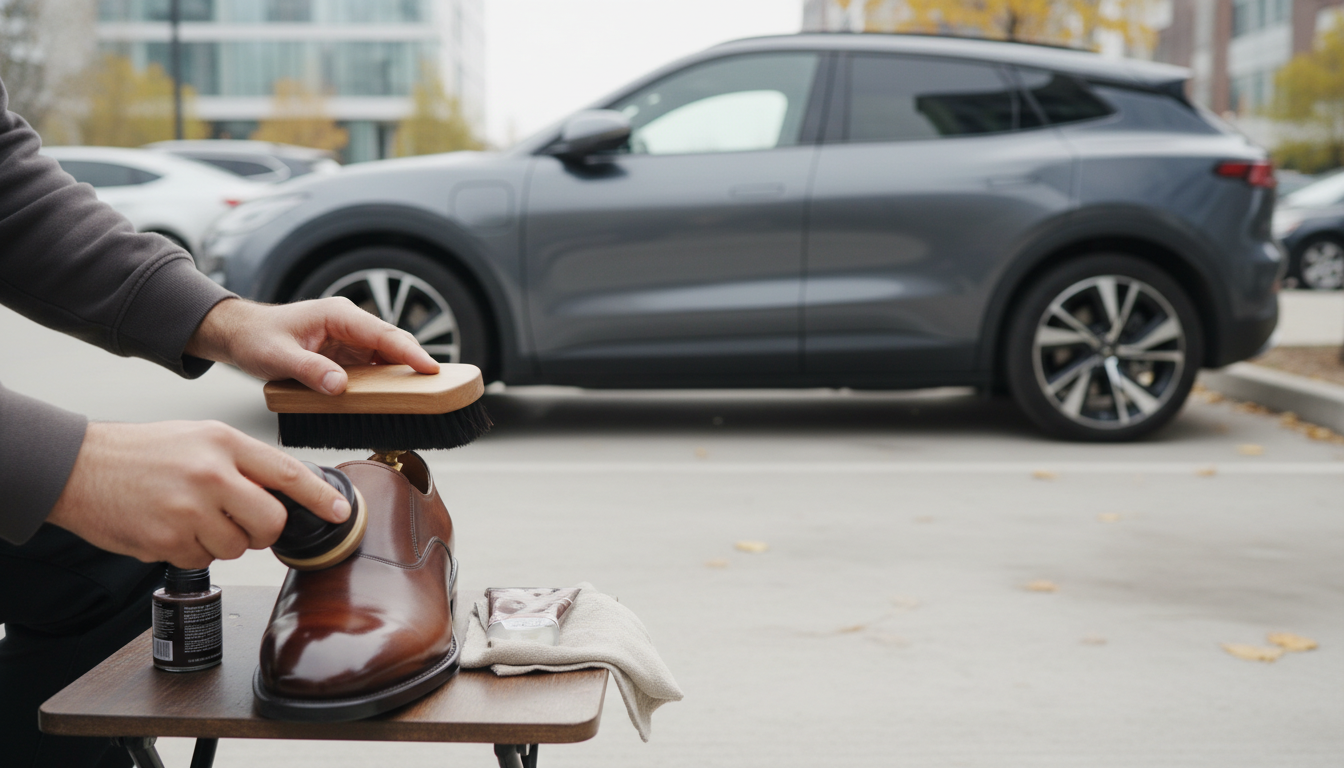
A shoe polish brush is used to spread shoe polish evenly, work it into the leather’s surface, and then buff the shoe to a smooth, glossy finish. It’s a core tool in any shoe care routine because it helps the polish bond better and prevents streaks or heavy buildup in one spot.
Most routines use two brushes: one for applying polish and another (or a clean side) for buffing. When applying, the brush bristles help push polish into the grain and around seams, welts, and creases where a cloth can miss. After the polish sets for a few minutes, buffing with quick, light strokes brings out shine by smoothing the thin polish layer and distributing it uniformly.
Brushes lay down a consistent coat, reducing dark patches or waxy clumps. This is especially helpful on textured leather and around stitching.
Buffing with a brush creates friction and smooths the surface, which is what builds that clean, finished sheen. It’s the step that makes shoes look “done” rather than merely “polished.”
The bristles reach tight areas—near the sole edge, eyelets, and toe cap—without smearing polish onto laces or leaving residue lines.
Horsehair brushes are popular because the bristles are firm enough to work polish in, but soft enough to buff without scratching. A larger brush is great for uppers, while a smaller dauber-style brush can help with precise application on edges and corners. If possible, keep separate brushes for different polish colors to avoid transferring pigment.
For a deeper look at how to use and care for shoe polish brushes, visit https://splendona.com/what-is-a-shoe-polish-brush-for/.
Wipe the bristles briskly on a clean cloth or paper towel after each use, then brush out any hardened residue. For deeper cleaning, use a small amount of mild soap and warm water, rinse lightly, and let the brush air-dry bristles-down or on its side.






Leave a comment