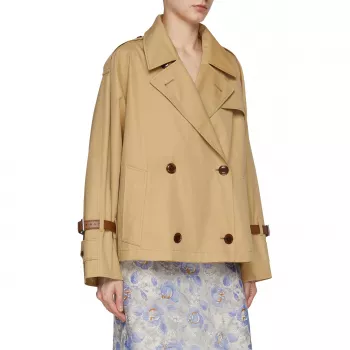
Neither is universally “more flattering”—the most flattering choice depends on body proportions, styling goals, and fabric structure. In general, a single-breasted coat or blazer tends to create a cleaner vertical line that can look longer and leaner on many frames. A double-breasted style can be extremely flattering when you want more shape and presence through the torso, especially when it’s well-tailored and the lapels sit smoothly.
Single-breasted silhouettes draw the eye up and down, which often reads as streamlined. They’re a strong pick if you prefer minimal bulk at the front, want an easy layer over chunky knits, or like a coat that closes without adding visual width. If you’re petite, short-waisted, or want a “lengthening” effect, single-breasted outerwear is often the simplest way to get it—particularly with a mid-to-long hem and clean lapels.
Double-breasted designs can flatter by adding structure across the chest and defining the waist—especially in trench coats where the belt and seaming work together. They can also balance proportions if you have narrower shoulders or want a sharper, more architectural look. The key is fit: the front should lie flat (no pulling at the buttons), the shoulders should be precise, and the lapels should sit cleanly without buckling.
For single-breasted, prioritize shoulder fit and a closure point that hits comfortably at the natural waist. For double-breasted, avoid excess ease in the midsection and check that the overlap doesn’t ride up or flare out when you move. If you’re choosing a trench, details like classic lapels, balanced button placement, and a belt that cinches without bunching can make a double-breasted option look particularly polished.
For a closer look at how double-breasted trench design elements come together in a luxury classic, visit this guide to the Prada double-breasted trench jacket with classic lapels.
A slimming trench sits neatly at the shoulders, skims the body without tight pulling, and cinches at the waist with a belt that lies flat. A hem that hits around the knee or slightly below often enhances a long, clean line.


Leave a comment