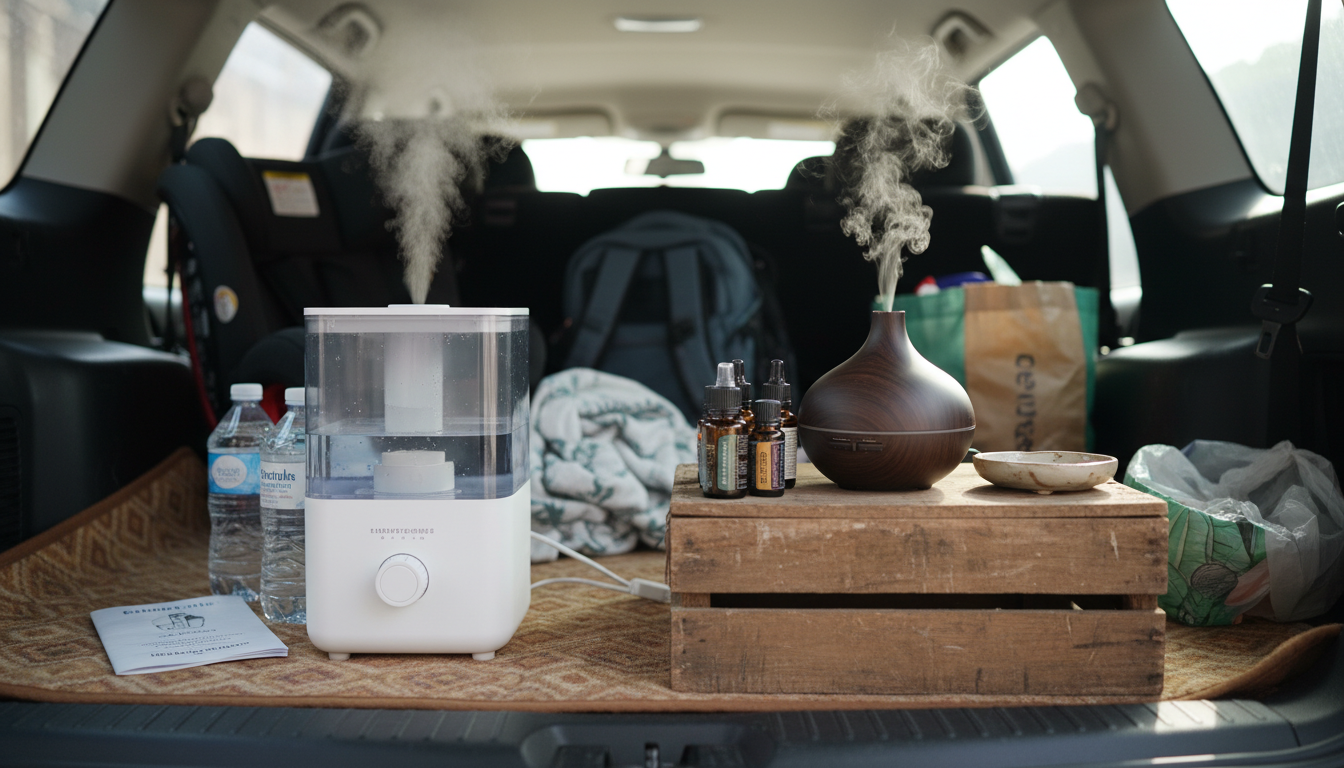
A humidifier’s main job is to add moisture to the air to help with dryness, while an aroma diffuser is designed primarily to disperse scent (often from essential oils) into a room. Some compact devices combine both functions, but the intended use, output level, and oil compatibility can be very different.
Humidifiers increase indoor humidity by releasing water vapor or a fine mist. They’re typically used when the air feels dry—common in winter or in air-conditioned spaces—and can help reduce dry throat, chapped lips, static, and irritated nasal passages. Because the goal is moisture, humidifiers usually have larger water tanks and are built to run for longer periods to noticeably change room humidity.
Aroma diffusers focus on fragrance diffusion. Many use ultrasonic vibration to create a light scented mist, while others use airflow or heat to disperse aroma without significantly changing humidity. Diffusers are often chosen for mood, relaxation, or to make a space smell fresher. The mist output is typically lower than a true humidifier, and the device may be optimized for intermittent use rather than humidity control.
Not always. Many humidifiers are not designed for oils, and adding essential oils can break down plastics, clog components, or leave residue that’s hard to clean. Diffusers (or humidifier-diffuser hybrids specifically labeled as oil-compatible) are built to handle oils more safely. Always follow the manufacturer’s instructions for your model.
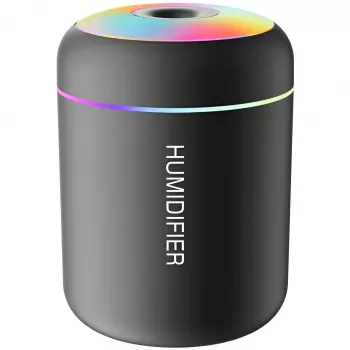
Choose a humidifier if your top priority is raising humidity in a bedroom, nursery, or office. Choose a diffuser if your main goal is scent and ambiance. If you want a small, desk-friendly option that can lightly mist and add aroma, a mini USB aroma humidifier/diffuser combo can be a practical middle ground—learn more in this guide: https://splendona.com/blog/guide-mini-usb-aroma-humidifier-oil-diffuser-soft-led-light/.
It depends on your goal: a humidifier is better for dry air and comfort, while a diffuser is better for fragrance and atmosphere. If you need measurable humidity support, pick a humidifier.
A humidifier is usually more helpful for sinus dryness because it raises moisture in the air. A diffuser may add scent, but it typically won’t provide enough humidity to meaningfully address dryness.
A humidifier can ease a dry, irritated cough by adding moisture to the air, while a diffuser mainly adds fragrance and may not change humidity much. For cough relief related to dryness, a humidifier is generally the more direct option.






Leave a comment