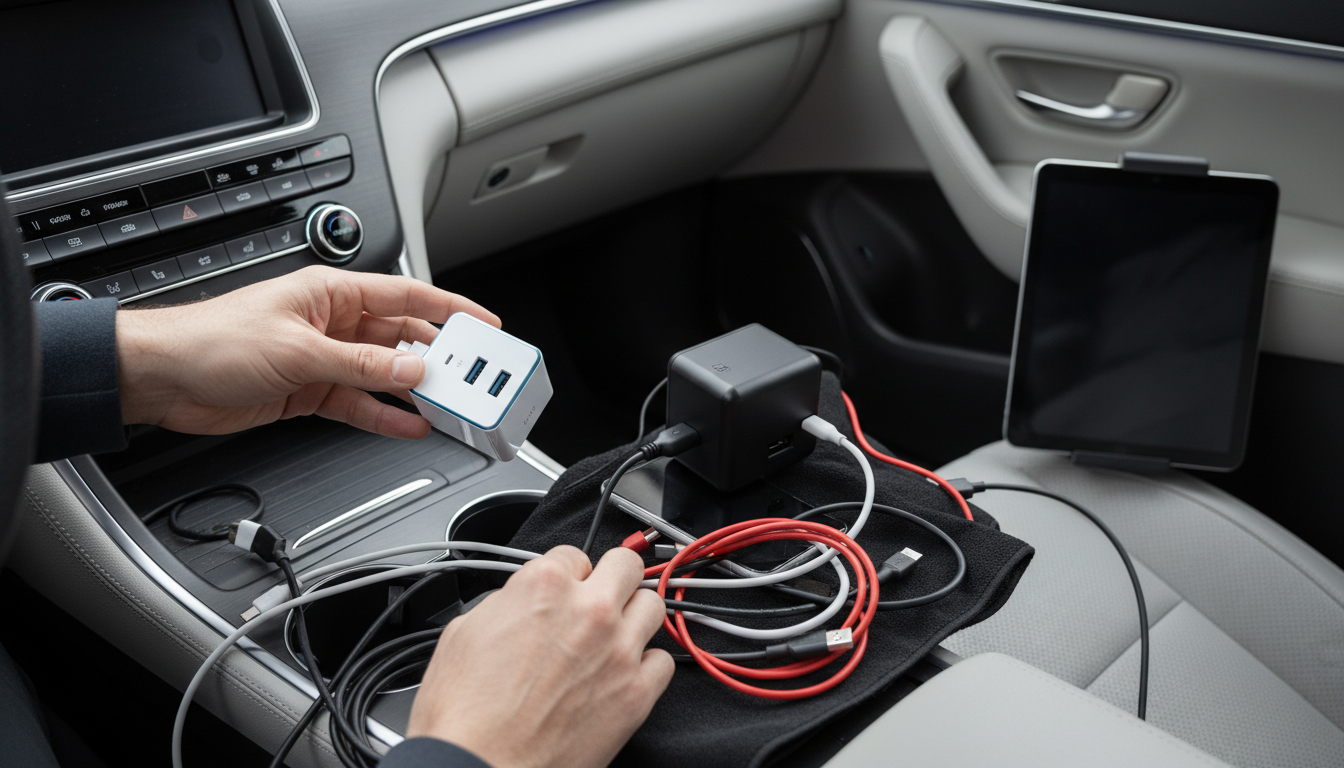
GaN and PD aren’t direct alternatives, so the “better” charger is usually the one that combines both. GaN (gallium nitride) is a charging technology that helps a charger run cooler and pack more power into a smaller body. PD (USB Power Delivery) is a fast-charging standard that negotiates the right voltage and wattage with your phone, tablet, laptop, or other USB-C device.
Choose GaN when portability, heat management, and higher wattage matter. A GaN wall charger is often smaller than an older silicon-based charger at the same power level, making it easier to toss into a bag. GaN designs also tend to handle sustained output more efficiently, which is helpful for charging laptops or running multiple ports at once without the brick getting uncomfortably hot.
Choose PD when compatibility and predictable fast charging are the priority—especially for USB-C phones, iPads, and many laptops. PD support is what allows a charger and device to “handshake” and select charging profiles like 9V, 15V, or 20V. Without PD, a USB-C charger may fall back to slower charging, even if it’s physically a USB-C port.
Look for a GaN USB-C PD charger with enough wattage for your most demanding device. For example, a 65W GaN PD charger is a versatile sweet spot for many USB-C laptops plus phones and accessories. Also check the port mix (USB-C only vs. USB-C + USB-A) and whether the stated wattage is shared across ports when charging multiple devices.
For a deeper breakdown of wattage, port behavior, and real-world use, see this 65W GaN USB-C wall charger guide.
If you want one charger for both, 60–65W is a common fit for many USB-C laptops while still fast-charging a phone. Power-hungry laptops may need 90W or more, so match the charger’s wattage to your laptop’s recommended input.






Leave a comment