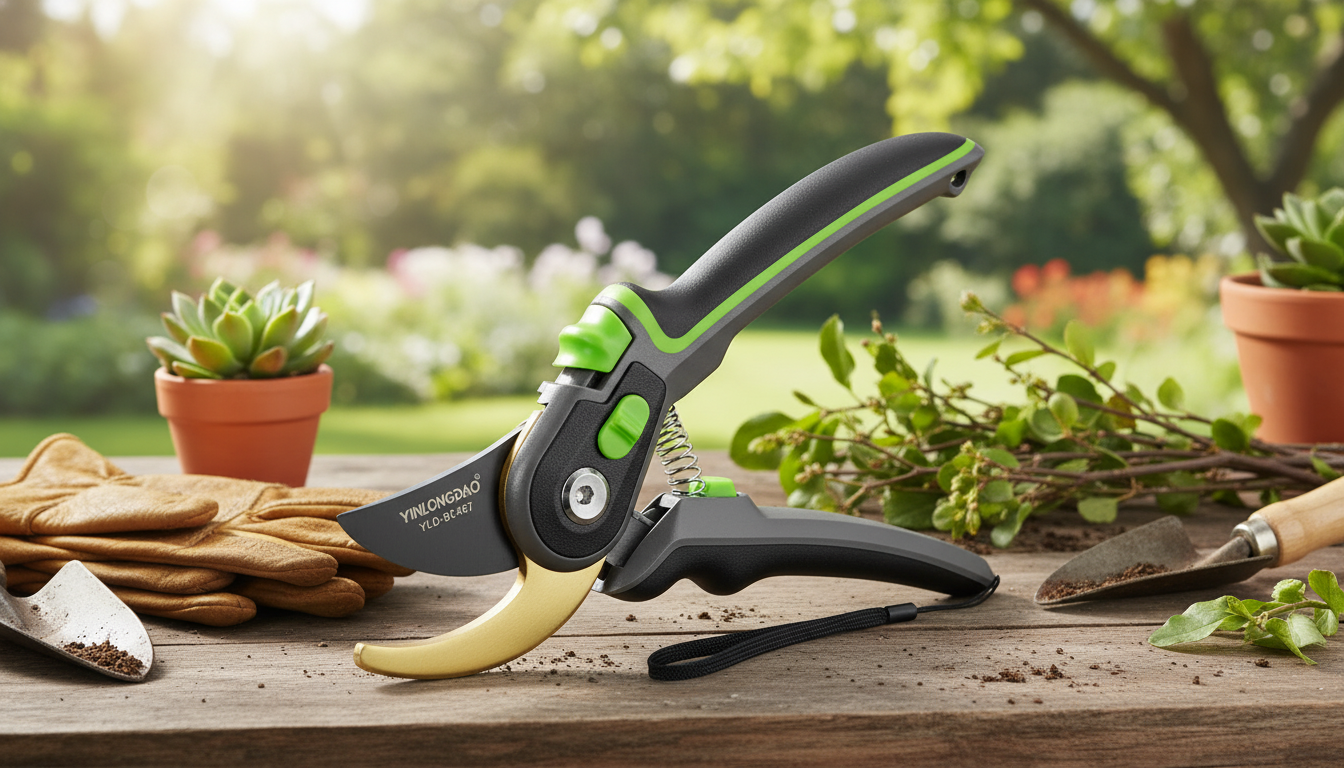
Stainless steel garden pruning shears are built for precise, plant-friendly cuts while standing up to moisture, sap, and frequent cleaning. The right pair should feel secure in the hand, slice smoothly without crushing stems, and stay easy to maintain across a season of pruning, deadheading, and harvesting.
For day-to-day garden work, stainless steel pruning shears shine when reliability and easy cleanup matter as much as sharpness. They’re a practical choice for gardeners who prune in damp mornings, rinse tools often, or sanitize between plants.
Clean cuts support faster healing and reduce entry points for pests and pathogens. For plant-specific pruning timing and technique, consult guidance from the Royal Horticultural Society (RHS) or the University of Minnesota Extension.
Stainless steel is a material advantage, but real performance comes from design details that keep the blades aligned, sharp, and comfortable to use for hundreds of cuts.
If the pivot loosens or the blades flex under pressure, even premium steel can produce ragged cuts. A stable joint and tight blade alignment are often the difference between “sharp enough” and truly clean pruning.
Both tools are “garden shears,” but they’re designed for different jobs. Pruning shears are for precision at the stem; hedge shears are for speed across many small shoots.
| Tool | Best for | Typical cut size | Cut quality |
|---|---|---|---|
| Bypass pruning shears | Live stems, flowers, softwood shrubs | Small branches and stems | Very clean when sharp |
| Anvil pruning shears | Dead/dry stems, tougher cleanup work | Small branches and stems | Can compress green stems |
| Hedge shears | Shaping hedges and soft new growth | Thin twigs and leaves | Less precise; can tear if dull |
Choosing pruning shears is mostly about matching the blade style and ergonomics to the work already happening in the yard.
A quick test before buying: open and close the shears a few times. The motion should feel smooth (not gritty), the blades should meet cleanly at the tip, and the lock should be easy to operate with the same hand that’s holding the tool.
Even excellent shears won’t help plants if cuts are placed poorly or made with a twisting motion. Focus on accuracy and control.
When pruning woody plants, positioning matters: align bypass blades so the sharp cutting blade is on the “keep” side of the cut (the part staying on the plant). This helps reduce crushing at the finished surface.
For safe handling and general disinfecting best practices, refer to the CDC’s cleaning and disinfecting guidance and always follow product labels—especially around contact time and ventilation.
Stainless steel typically resists corrosion and is easier to clean, which is helpful for garden use. Cutting performance still depends heavily on blade geometry, sharpness, heat treatment, and a stable pivot; some high-carbon steels can hold an edge longer but need more rust prevention.
Pruning shears are designed for precise cuts on individual stems and small branches (often bypass for live growth). Hedge shears have long blades meant to trim and shape many small shoots at once, which is faster but less precise on woody plants.






Leave a comment