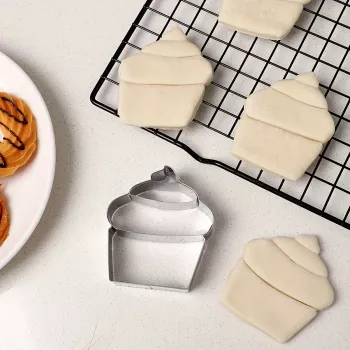
You can bake cookies on stainless steel, but expect a slightly different bake than you’d get from a typical aluminum sheet. Stainless steel doesn’t conduct heat as efficiently, so cookies may brown more slowly on the bottom and can spread a bit differently depending on dough temperature. With a few adjustments, you can still get evenly baked, great-tasting cookies.
Because stainless steel is a poorer heat conductor, it tends to warm up more gradually and can bake less aggressively from underneath. That often means paler bottoms and a longer bake time compared with aluminum. If your stainless pan is very shiny, it can further reduce browning; if it’s darker or heavier-gauge, you may see more color and a steadier bake.
Start by lining the pan with parchment paper or a silicone baking mat to reduce sticking and promote more consistent browning. Preheat the oven fully (give it a few extra minutes after it reaches temperature), and consider chilling the dough so the cookies hold their shape while the pan comes up to heat. If cookies look underdone on the bottom but set on top, add 1–3 minutes rather than raising the temperature, since higher heat can over-brown edges before the centers finish.
Stainless steel is durable, non-reactive, and easy to clean, which makes it handy for many baking tasks. It’s also a good option when you want a pan that won’t react with acidic ingredients. For more guidance on stainless bakeware and how to use it effectively, see the detailed guide here: https://splendona.com/guide-stainless-steel-cookie-ice-cream-mold-set-guide/.
It’s usually better to use parchment paper or a silicone mat instead of greasing, which can encourage extra spread. If you don’t have a liner, a very light coating can help prevent sticking, but avoid heavy grease.
You can bake cookies on stainless steel, but expect a slightly different bake than you’d get from a typical aluminum sheet. Stainless steel doesn’t conduct heat as efficiently, so cookies may brown more slowly on the bottom and can spread a bit differently depending on dough temperature. With a few adjustments, you can still get evenly baked, great-tasting cookies.
Because stainless steel is a poorer heat conductor, it tends to warm up more gradually and can bake less aggressively from underneath. That often means paler bottoms and a longer bake time compared with aluminum. If your stainless pan is very shiny, it can further reduce browning; if it’s darker or heavier-gauge, you may see more color and a steadier bake.
Start by lining the pan with parchment paper or a silicone baking mat to reduce sticking and promote more consistent browning. Preheat the oven fully (give it a few extra minutes after it reaches temperature), and consider chilling the dough so the cookies hold their shape while the pan comes up to heat. If cookies look underdone on the bottom but set on top, add 1–3 minutes rather than raising the temperature, since higher heat can over-brown edges before the centers finish.
Stainless steel is durable, non-reactive, and easy to clean, which makes it handy for many baking tasks. It’s also a good option when you want a pan that won’t react with acidic ingredients. For more guidance on stainless bakeware and how to use it effectively, see the detailed guide here: https://splendona.com/guide-stainless-steel-cookie-ice-cream-mold-set-guide/.
It’s usually better to use parchment paper or a silicone mat instead of greasing, which can encourage extra spread. If you don’t have a liner, a very light coating can help prevent sticking, but avoid heavy grease.
You can bake cookies on stainless steel, but expect a slightly different bake than you’d get from a typical aluminum sheet. Stainless steel doesn’t conduct heat as efficiently, so cookies may brown more slowly on the bottom and can spread a bit differently depending on dough temperature. With a few adjustments, you can still get evenly baked, great-tasting cookies.
Because stainless steel is a poorer heat conductor, it tends to warm up more gradually and can bake less aggressively from underneath. That often means paler bottoms and a longer bake time compared with aluminum. If your stainless pan is very shiny, it can further reduce browning; if it’s darker or heavier-gauge, you may see more color and a steadier bake.
Start by lining the pan with parchment paper or a silicone baking mat to reduce sticking and promote more consistent browning. Preheat the oven fully (give it a few extra minutes after it reaches temperature), and consider chilling the dough so the cookies hold their shape while the pan comes up to heat. If cookies look underdone on the bottom but set on top, add 1–3 minutes rather than raising the temperature, since higher heat can over-brown edges before the centers finish.
Stainless steel is durable, non-reactive, and easy to clean, which makes it handy for many baking tasks. It’s also a good option when you want a pan that won’t react with acidic ingredients. For more guidance on stainless bakeware and how to use it effectively, see the detailed guide here: https://splendona.com/guide-stainless-steel-cookie-ice-cream-mold-set-guide/.
It’s usually better to use parchment paper or a silicone mat instead of greasing, which can encourage extra spread. If you don’t have a liner, a very light coating can help prevent sticking, but avoid heavy grease.
You can bake cookies on stainless steel, but expect a slightly different bake than you’d get from a typical aluminum sheet. Stainless steel doesn’t conduct heat as efficiently, so cookies may brown more slowly on the bottom and can spread a bit differently depending on dough temperature. With a few adjustments, you can still get evenly baked, great-tasting cookies.
Because stainless steel is a poorer heat conductor, it tends to warm up more gradually and can bake less aggressively from underneath. That often means paler bottoms and a longer bake time compared with aluminum. If your stainless pan is very shiny, it can further reduce browning; if it’s darker or heavier-gauge, you may see more color and a steadier bake.
Start by lining the pan with parchment paper or a silicone baking mat to reduce sticking and promote more consistent browning. Preheat the oven fully (give it a few extra minutes after it reaches temperature), and consider chilling the dough so the cookies hold their shape while the pan comes up to heat. If cookies look underdone on the bottom but set on top, add 1–3 minutes rather than raising the temperature, since higher heat can over-brown edges before the centers finish.
Stainless steel is durable, non-reactive, and easy to clean, which makes it handy for many baking tasks. It’s also a good option when you want a pan that won’t react with acidic ingredients. For more guidance on stainless bakeware and how to use it effectively, see the detailed guide here: https://splendona.com/guide-stainless-steel-cookie-ice-cream-mold-set-guide/.
It’s usually better to use parchment paper or a silicone mat instead of greasing, which can encourage extra spread. If you don’t have a liner, a very light coating can help prevent sticking, but avoid heavy grease.




Leave a comment