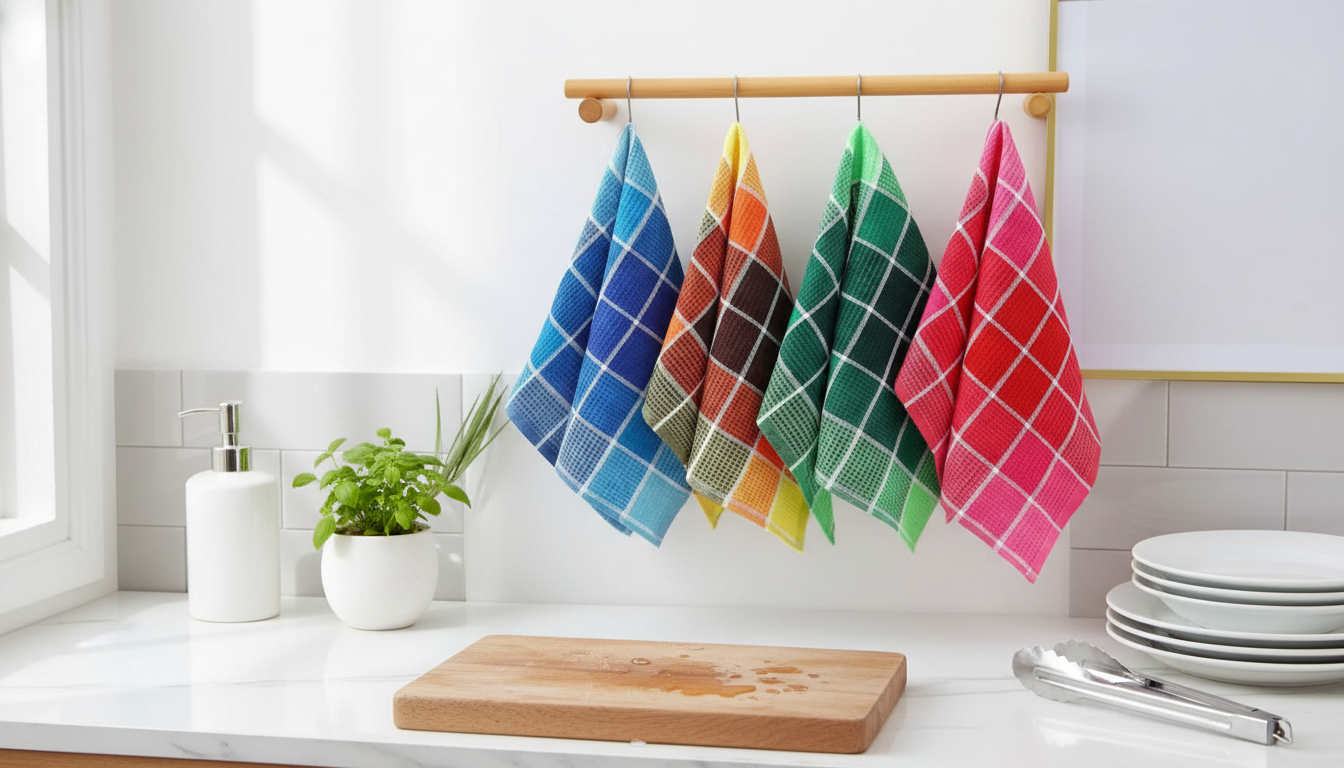
Waffle towels are designed to absorb moisture, dry relatively quickly, and feel less bulky than many traditional terry towels. Their raised, grid-like weave creates more surface area while leaving small pockets of space in the fabric. That texture makes them useful for drying dishes, wiping counters, and handling everyday kitchen spills.
A waffle towel can take on several jobs during meal prep and cleanup. You can use one to dry your hands, another to wipe a damp countertop, and a clean one to dry dishes or glassware. The textured surface also gives you a little more grip than a smooth cloth when you’re handling wet items.
Because waffle towels are typically lightweight, they’re easy to fold, hang, and keep within reach. They can be a practical choice if you want kitchen towels that do not feel heavy after routine use. For a closer look at a coordinated kitchen option, explore our guide to 4-piece waffle-weave dish towels for home.
Both, but it helps to assign separate towels to separate tasks. Keep a clean, dry towel for dishes and hands, and use a different one for counters or spills. That simple distinction helps prevent you from transferring food residue or cleaning products onto freshly washed dishes.
For bigger messes, reach for a towel you can put straight into the laundry afterward. Avoid using a dish-drying towel to handle raw meat juices; clean and sanitize that area with appropriate kitchen-cleaning supplies instead.
Let a waffle towel hang open between uses rather than leaving it bunched up on the counter. Air circulation helps it dry and keeps a fresh towel ready for your next task. Wash towels regularly according to their care labels, especially when they’ve been used for food prep or spills.
Our team recommends keeping a few towels in rotation so you can swap out a damp or soiled one without interrupting cleanup. The purpose is straightforward: waffle towels give you an absorbent, easy-to-handle cloth for the small drying and wiping jobs that happen throughout the day.
Yes. Use a clean waffle towel to dry glassware, and switch to a fresh one if it becomes damp or picks up residue.






Leave a comment