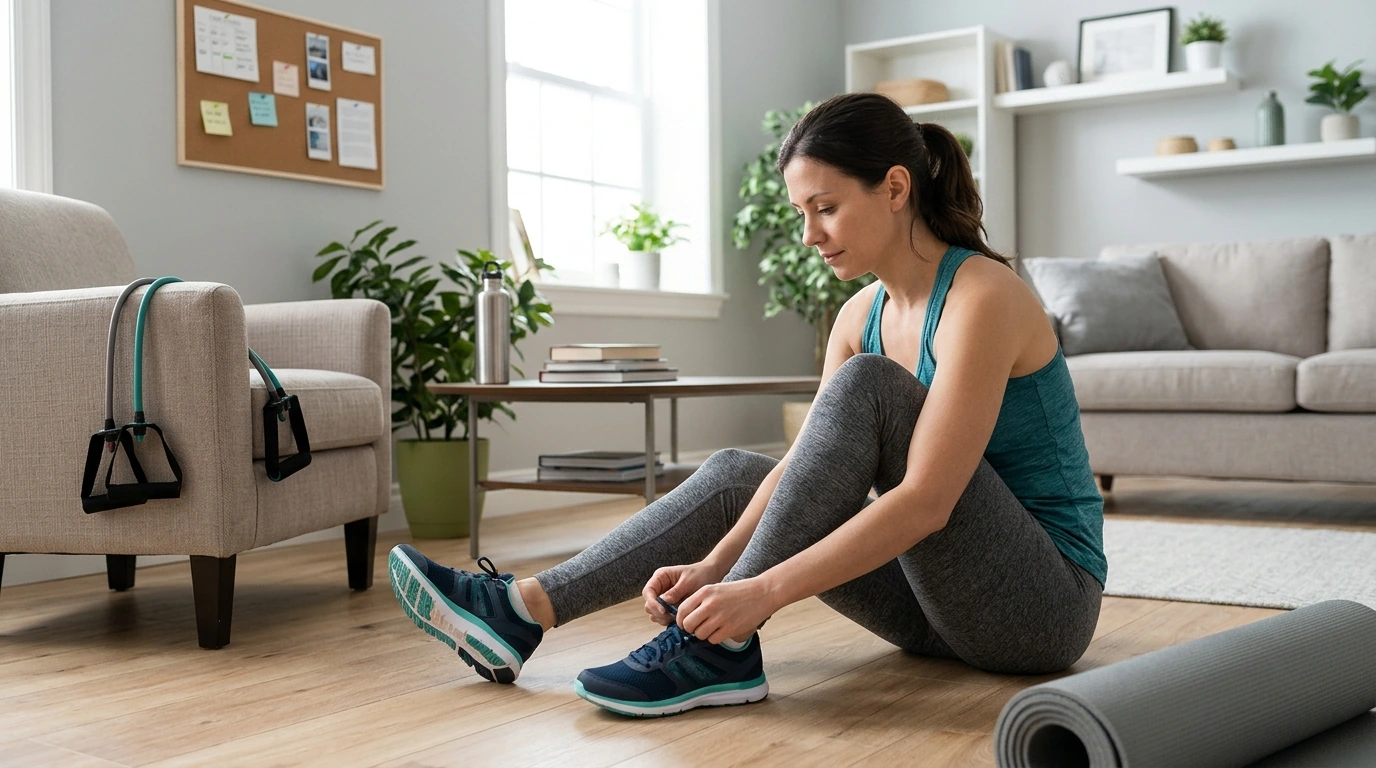
Habit stacking for exercise means attaching a movement habit to something you already do regularly. Instead of relying on motivation or finding an open spot in your day, you use an established routine as a cue: “After I brush my teeth, I’ll do five squats.”
The existing habit reminds you to start, while the short exercise makes the new routine easier to repeat. Over time, you can build on that starting point as your schedule and fitness allow.
Choose a routine that happens reliably, then pair it with a movement that fits the time and space available. A useful formula is: “After I existing habit, I will exercise action.”
Your cue and exercise should work together. A walk after lunch may be practical if you have a break, while a few stretches after a shower may suit a busy morning. If a stack rarely happens, choose a more reliable cue or make the movement shorter.
You can start without equipment. If you want variety, a resistance band can add challenge to simple strength exercises, while an exercise mat can make floor movements more comfortable. Choose a band resistance that lets you move with control, and use a mat with enough grip for your chosen exercises.
Move within a comfortable range and stop if an exercise causes pain. If you have an injury or a health condition that affects activity, ask a qualified healthcare professional which movements are appropriate.
Yes. You can use the same cue-and-action approach for practices beyond exercise. Explore our guide to habit stacking for mindfulness practice for ways to connect a mindful moment with your existing routine.
After you finish your morning coffee, put on your walking shoes and take a five-minute walk. The coffee becomes the cue for a small, specific exercise habit.






Leave a comment