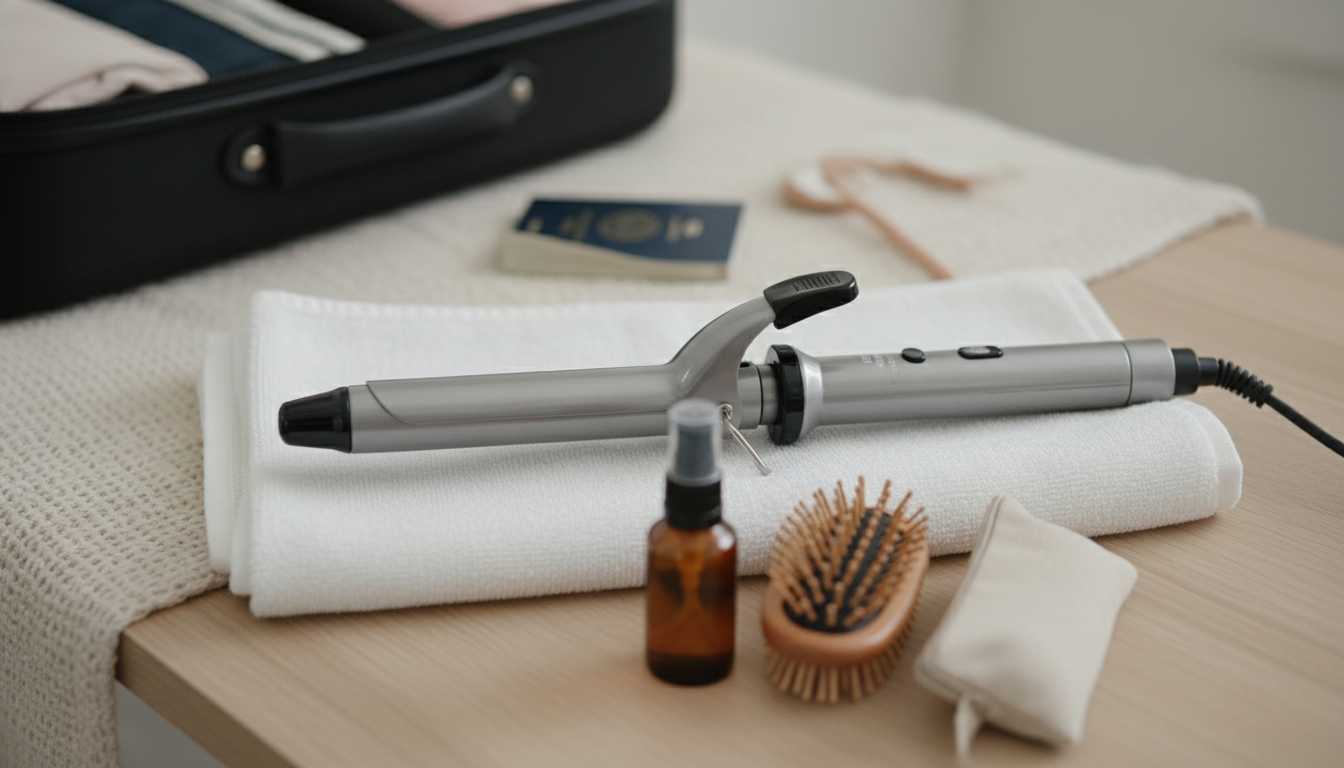
Titanium curling irons can be better for your hair in the right situations, but they aren’t automatically the “healthiest” choice for everyone. Titanium is known for heating up fast and holding a steady, high temperature, which can create smooth, long-lasting curls with fewer passes. Fewer passes can mean less repeated friction and heat exposure on the same section of hair.
If you have thick, coarse, or hard-to-curl hair, a titanium barrel often performs well because it reaches effective styling temperatures quickly and transfers heat efficiently. That efficiency can reduce the time hair spends clamped and heated. Titanium tools are also popular when speed matters—quick touch-ups, travel styling, or working with shorter sections where you want fast results.
If hair is fine, fragile, color-treated, or prone to dryness, titanium’s quick, intense heat can become a downside—especially if the tool lacks precise temperature control. High heat can increase the risk of moisture loss, dullness, and breakage. For these hair types, a lower, more forgiving heat level and careful technique are often more important than barrel material.
Look for adjustable heat settings and use the lowest temperature that still holds a curl. Always apply a heat protectant, keep the iron moving, and avoid multiple passes on the same strand. For short hair, bangs, or detail styling, a smaller barrel and shorter contact time help prevent overheating the ends.
For a closer look at a compact titanium option designed for small sections (including short hair and even beard touch-ups), see the full guide here: https://splendona.com/guide-mini-titanium-curler-straightener-short-hair-beard/.
Start low and increase only as needed: many fine or damaged hair types do better around 250–300°F, while thicker hair may need 330–400°F. The best setting is the lowest temperature that creates a curl in one controlled pass.





Leave a comment