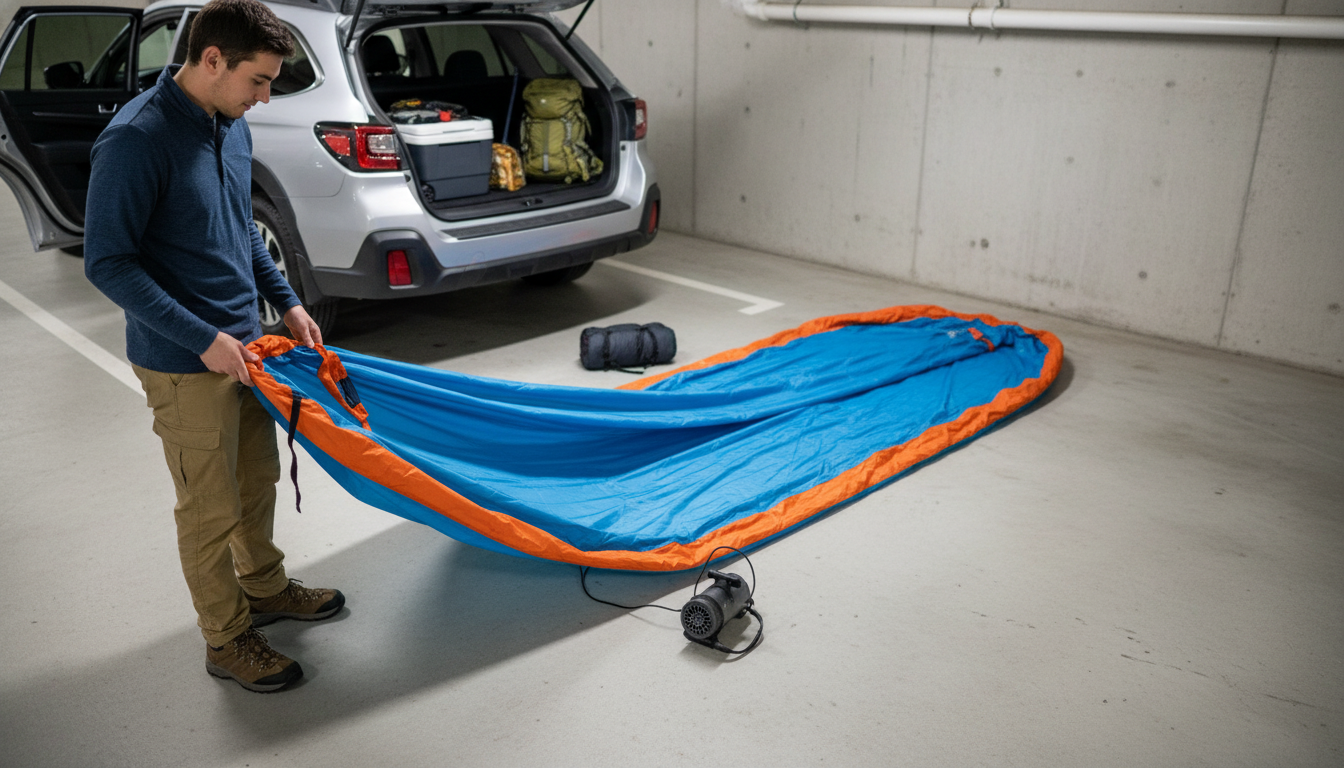
Camping threads on Reddit tend to land in the same place: water hammocks are great for specific camping setups, but they’re not a replacement for a real sleep system. If your trip includes a lake, river, or calm beach time, a water hammock can be a surprisingly useful “luxury” item—easy to pack, quick to use, and comfortable for floating and cooling off. If you’re hoping to sleep in it overnight at camp, most Reddit-style advice is to skip that idea; water hammocks are made for water lounging, not insulation, support, or all-night stability.
For warm-weather trips, campers often praise water hammocks for how little effort they take: inflate, dip in, and relax with your body supported by the mesh center while the side tubes keep you afloat. They’re also a solid option for adults who don’t want a bulky float and prefer something that folds down small. Models with features like dual handles can make it easier to steady yourself in the water or reposition without fighting the current.
The biggest complaints are about conditions and durability. Wind, waves, and cold water can turn a relaxing float into a shivery, awkward balancing act. Punctures and valve issues come up too—especially if the hammock is tossed onto rough ground, dragged over sand, or packed with sharp gear. And while it’s tempting to use one as a “camp hammock,” it won’t keep you warm or supported like a proper sleeping pad or suspended hammock setup.
Look for sturdy seams, a reliable valve, and a mesh center that feels supportive rather than saggy. Extras like cup holders are convenient at the water’s edge, and handles can help with getting on and off. For a deeper breakdown of what to look for and how the design affects comfort, see this inflatable water hammock guide.
Not really. A water hammock is designed to float with part of your body in the water, so it doesn’t provide the structure, insulation, or suspension needed for comfortable camping sleep.





Leave a comment