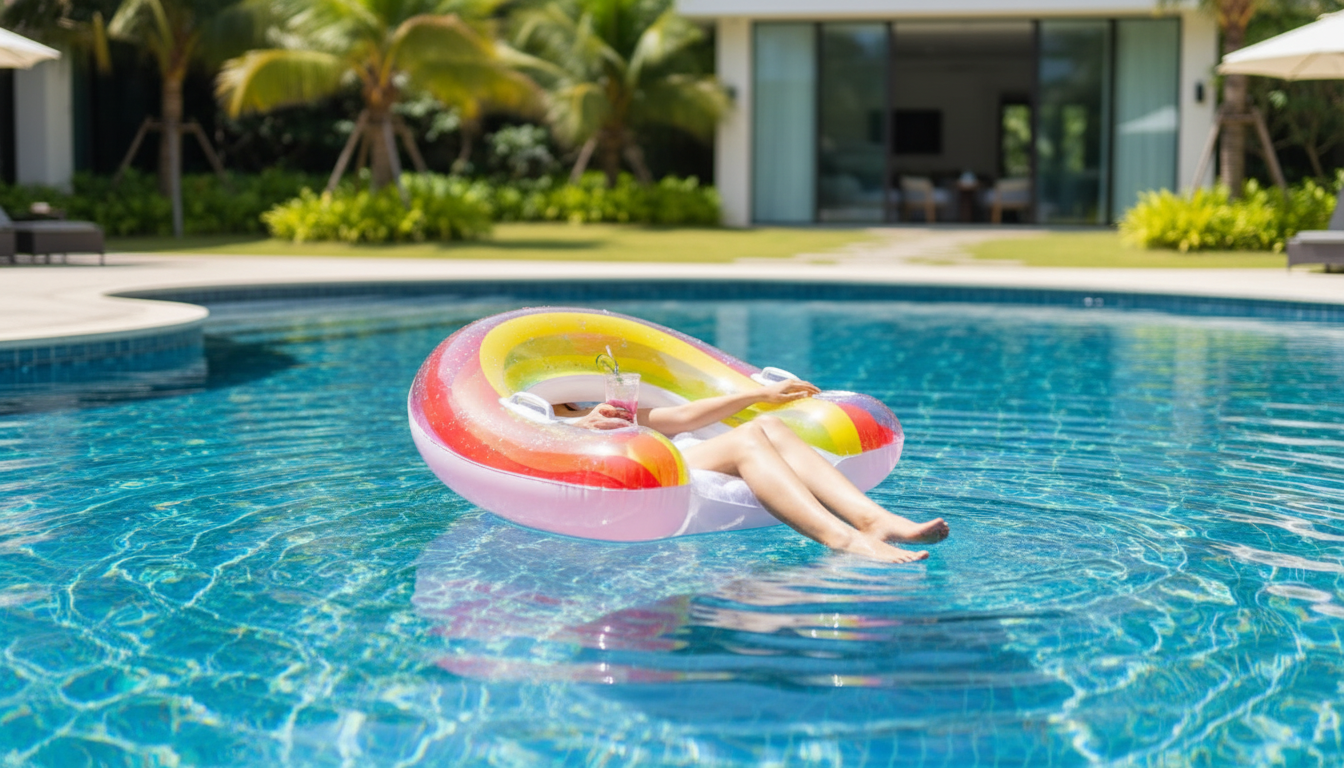
A water hammock is built for laid-back floating without the size and stiffness of a full raft. This inflatable leisure bed pairs a supportive mesh center with buoyant end chambers, then adds dual handles for steadier movement and cup holders for easy sipping. The overall feel is “floaty but anchored,” making it a go-to choice for calm pools, quiet coves, and mellow lake days—especially when used with smart, common-sense safety habits. For more guidance, see What kind of bed should I get for my dog with arthritis?.
The standout benefit of a water hammock-style lounger is its half-submerged posture: your torso rests on a breathable mesh panel while your head/shoulders and legs are supported by inflated ends. That means less overheating on hot afternoons and a more relaxed, weightless feel than a fully solid lounger. For further reading, see Introducing Charley Chau’s Luxury Anti-Microbial Memory Foam ….
Dual handles add a practical layer of control. They’re useful for steadying yourself while climbing on, pulling closer to the pool wall, or simply shifting position without rolling off. Cup holders keep a drink within reach so you’re not constantly treading water to retrieve it. When it’s time to go, the float typically deflates down to a compact size that’s easy to stash in a pool bag, suitcase, or boat compartment.
Not all inflatable loungers behave the same once they’re actually in the water. The most noticeable differences come down to cooling comfort, stability, and how easy it is to re-mount after a swim.
| Feature | Why it helps | What to look for |
|---|---|---|
| Dual handles | More control while climbing on or drifting | Comfortable grip points and secure attachment |
| Cup holders | Hands-free lounging | Placement that won’t tip the float when used |
| Mesh center | Cooling and comfort | Tight weave and reinforced seams |
| Dual air chambers | Better balance and backup buoyancy | Valves that hold pressure and are easy to access |
| Compact pack-down | Easy transport and storage | Fold-friendly design and fast deflation |
This style is designed for a reclined lounge rather than a flat, face-up raft position. Your hips and back are supported by the mesh while your head and legs float higher on the inflated ends. Because part of your body sits in the water, you often feel cooler, and sun exposure is naturally reduced on the areas below the waterline.
The handles can double as simple “trim controls.” Pulling both handles toward your torso can lift your upper body slightly—useful for sipping, chatting, or scanning the pool. Releasing tension lets you settle back into a more relaxed, reclined posture.
Inflation level matters more than most people expect. Over-inflated ends can feel bouncy and may elevate you too high, while under-inflation can cause sagging in the center. A moderate, firm-but-not-rigid fill typically delivers the best balance of support and stability. For longer sessions, comfort also depends on water temperature, sun protection, and hydration (cup holders help with convenience, but they don’t replace taking breaks).
Lounging inflatables are for recreation, not rescue. For open water, extra caution is essential—especially for kids, tired swimmers, and anyone who isn’t fully confident in deeper water. The CDC’s guidance on drowning prevention highlights how quickly incidents can occur and why layers of supervision and safety planning matter around any water setting (CDC: Drowning Facts).
For more detail on selecting and using personal flotation devices, consult the U.S. Coast Guard’s recreational boating resources (USCG: Life Jackets (PFDs)).
Yes—on calm water, a water hammock can be more comfortable than a full raft because the mesh center keeps you cooler while the buoyant ends support your head and legs. They’re also easy to pack for travel, but they’re best treated as a lounging accessory (not a safety device) and can be pushed around by wind or current.





Leave a comment