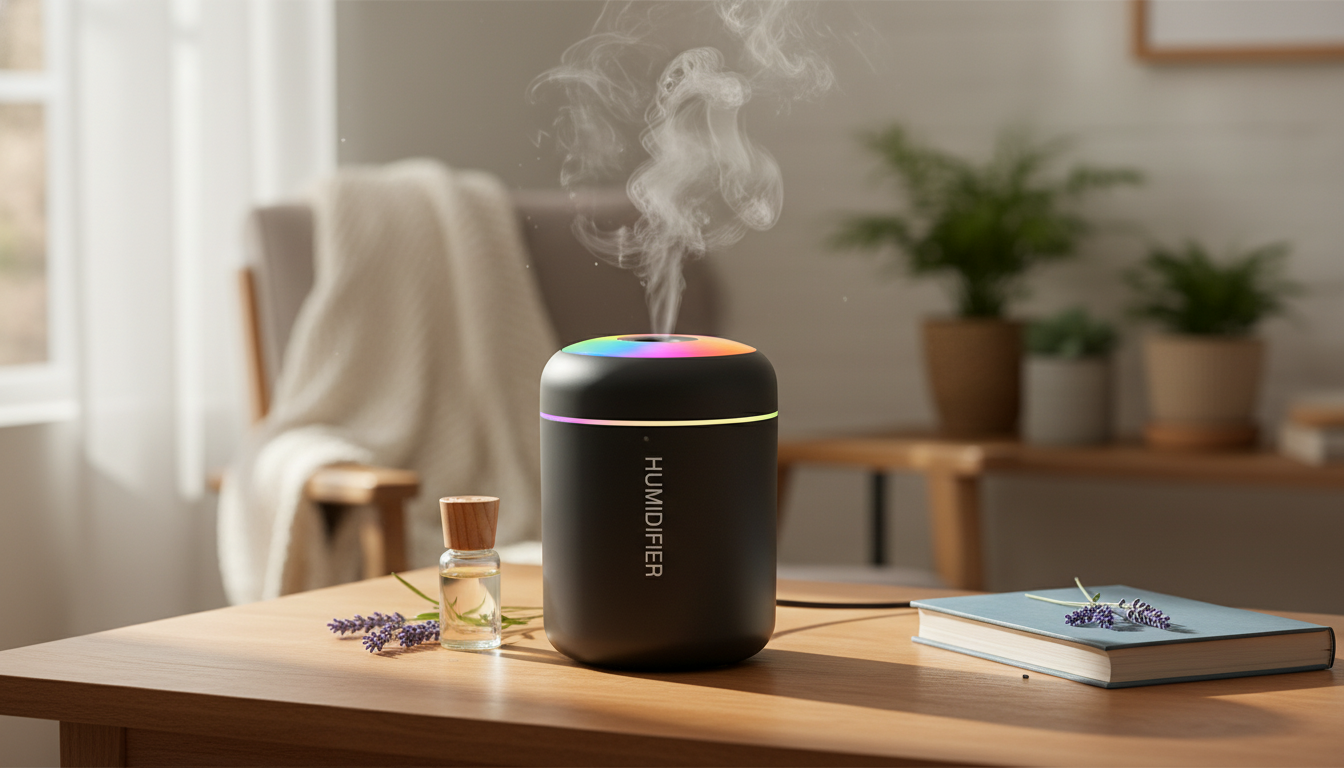
Sometimes, but it depends on what you mean by “humidifier” and what kind of diffuser you have. Many aroma diffusers (especially compact ultrasonic models) do add moisture to the air by turning water into a fine mist. That means you can get a light humidifying effect—useful for a desk, nightstand, or small bedroom area near you.
If your unit produces a visible cool mist and has a water tank, it’s essentially doing the same core action as a humidifier: dispersing water vapor. The difference is capacity and output. Diffusers are typically designed for scent-first use, so they usually have smaller tanks, shorter run times, and lower mist volume than dedicated humidifiers. For personal comfort in a small zone, they can be enough.
If you’re trying to raise humidity across a larger room, help multiple sleepers, or run for long stretches overnight without refilling, a dedicated humidifier is the better tool. Humidifiers generally move more moisture, have larger reservoirs, and are built for consistent humidity support rather than fragrance dispersion.
Essential oils aren’t required for humidifying. If your priority is moisture, run water-only most of the time and save oils for occasional aroma sessions.
Set it on a stable, water-resistant surface with a bit of open space around it. Keep mist away from electronics, books, and painted walls, and don’t aim it directly at bedding.
When you use any water-misting device frequently, residue can build up. Our team recommends routine rinsing and gentle cleaning so the mist stays clean and the unit keeps performing well.
For model-specific tips, including features like soft LED lighting and mini USB use, see our guide here: https://splendona.com/guide-mini-usb-aroma-humidifier-oil-diffuser-soft-led-light/.
Empty any remaining water, wipe the tank gently with a soft cloth, and let it air-dry between uses. If you’ve used oils, clean more often so residue doesn’t affect mist output or scent quality.



Leave a comment