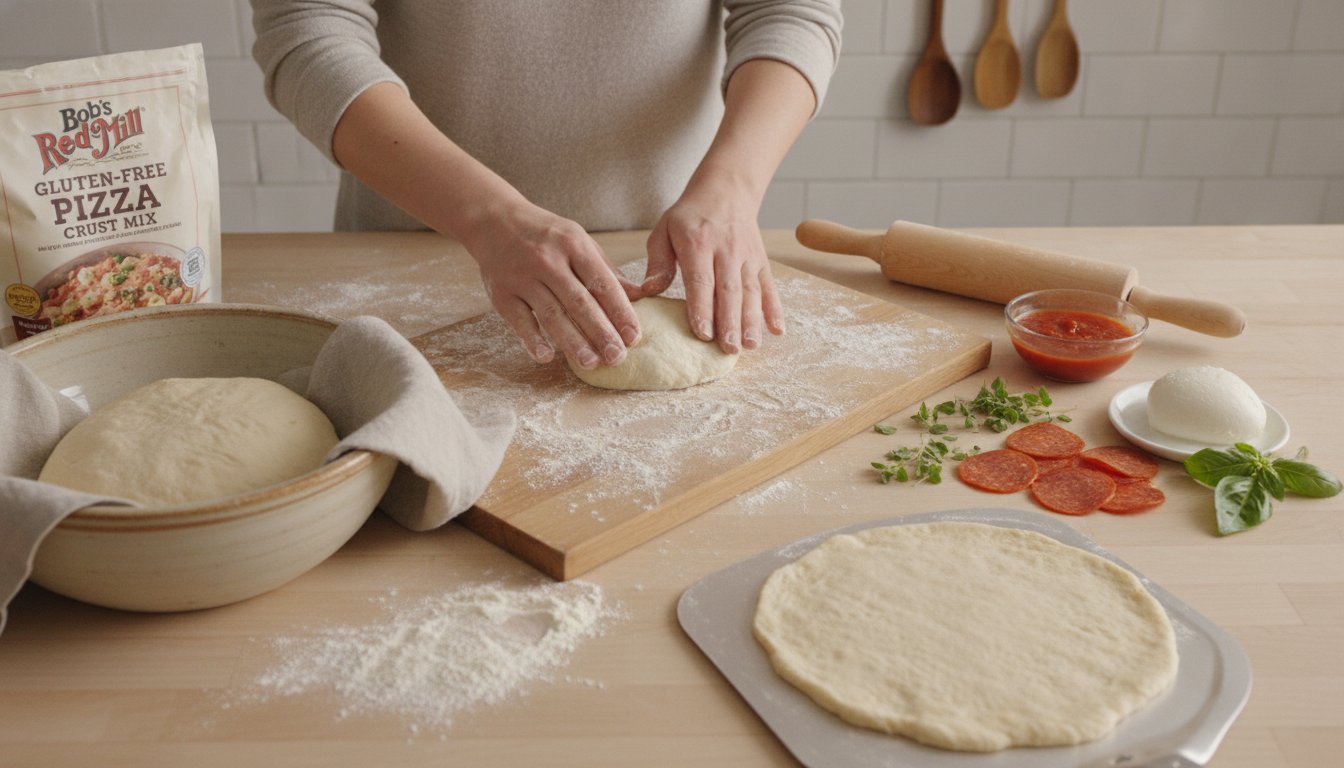
Yes—Bob’s Red Mill gluten free flour can work for pizza dough, but the results depend on which blend you’re using and how you hydrate and bind the dough. Gluten-free pizza dough needs structure from ingredients other than gluten, so a straight 1:1 swap only works reliably when the flour blend is formulated for baking and already includes a binder.
If you’re using a “1-to-1” or “measure for measure” style blend, it’s generally the easiest option because it’s designed to replace wheat flour in many recipes. If you’re using a single-ingredient flour (like brown rice flour, sorghum, or almond flour), it can still make great crust—but you’ll need a recipe built for that flour and almost always a binder such as xanthan gum, psyllium husk, or ground flax.
Gluten-free dough is usually wetter than traditional dough. Aim for a thick batter or very soft dough rather than something you can knead smoothly. If your dough looks dry or cracks, add liquid 1 tablespoon at a time. If it’s soupy, add a small amount of flour blend and let it rest for 10–15 minutes so the starches hydrate.
For a sturdier crust, press the dough onto parchment, par-bake it (about 8–12 minutes) until it sets, then add toppings and finish baking. This helps prevent a gummy center—especially with heavier sauces or high-moisture toppings.
If the crust turns out dense, the dough may need more hydration or more rise time. If it’s crumbly, you likely need a binder (or a bit more) and a longer rest before baking. For more practical swap guidance—especially when converting wheat-based recipes—see the gluten-free recipe swap guide here: https://splendona.com/guide-gluten-free-recipe-swaps-printable-kitchen-checklist/.
Often, yes—unless your flour blend already contains a binder. Xanthan gum or psyllium husk helps the dough hold together, trap gas, and bake up less crumbly.







Leave a comment