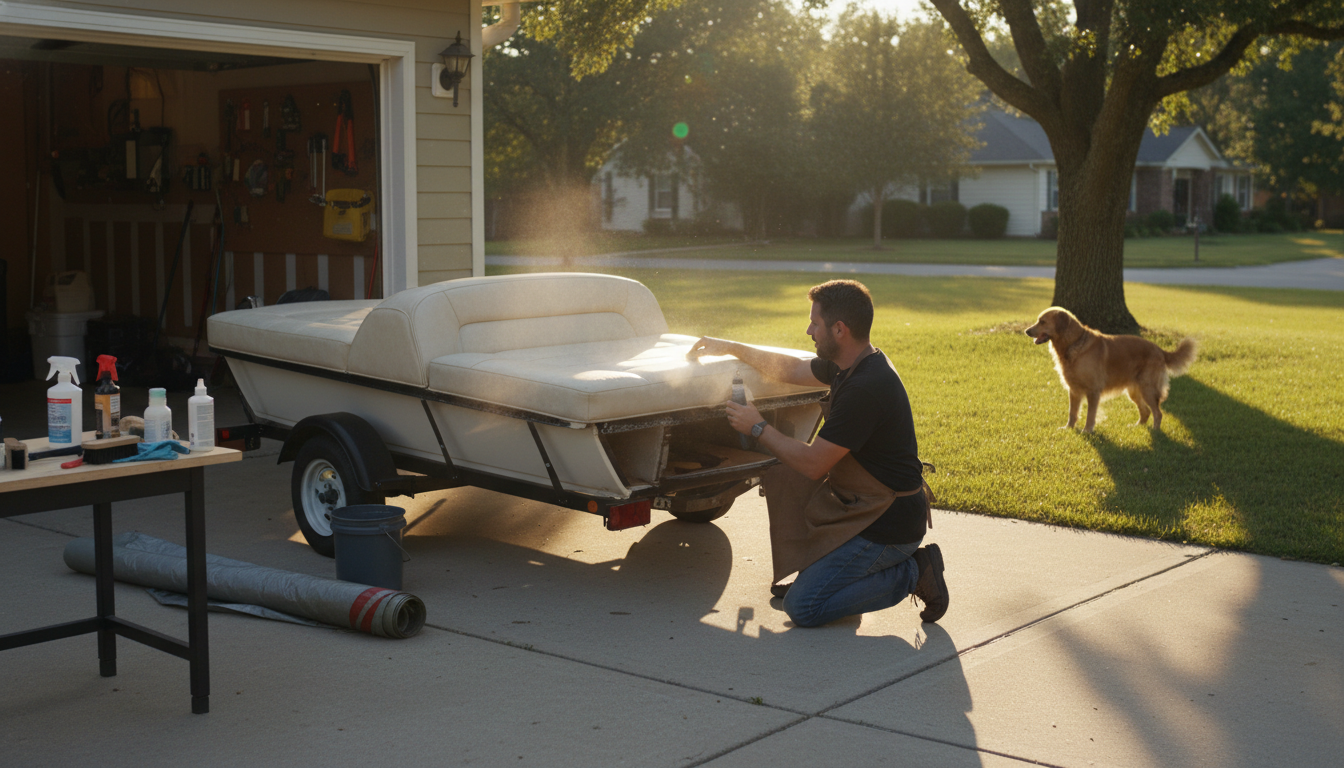
Yes, leather can be used for boat seats, but it has to be the right kind of leather and it needs more protection than most marine upholstery materials. Standard automotive or furniture leather will usually break down faster on a boat because it’s constantly challenged by UV exposure, heat, humidity, salt air, and frequent cleaning. If you’re set on the look and feel of leather, choose a marine-grade leather or a high-quality, water-resistant treated leather designed for harsh environments.
Leather can work well on boats that are kept covered, stored indoors, or used primarily in freshwater with limited sun exposure. It’s also a good fit for premium helm seats or interior cabin seating where direct spray and full sun are less frequent. Properly selected and maintained, leather delivers a warm, upscale finish that many vinyl options can’t match.
Leather is usually the wrong call for open seating areas that stay wet, bake in direct sunlight, or see heavy traffic with sunscreen, fish slime, or harsh cleaners. In these conditions, leather can dry out, fade, stiffen, and crack. Stitching and foam can also suffer if water gets trapped.
Start with marine-grade leather (often with protective topcoats), use UV-blocking protectants approved for leather, and wipe seats down after each outing—especially after saltwater runs. Keep seats covered when not in use, avoid bleach or strong degreasers, and clean with pH-balanced leather products. If you’re restoring trim and want a uniform “like-new” look around your seating area, see the guidance here: https://splendona.com/guide-back-to-black-plastic-leather-restorer-gloss-guide/.
Marine vinyl is typically more forgiving: it’s purpose-built for UV, water, and easy cleaning. Leather can be more comfortable and luxurious, but it generally demands stricter care and a more controlled environment. If durability and low maintenance are top priorities, marine vinyl or marine synthetic leather is often the better long-term value.
Use a fitted cover when the boat is parked, clean regularly to remove sunscreen and grime, and apply a UV protectant recommended for your seat material. Reducing direct exposure is the biggest factor in preventing fading and cracking.



Leave a comment