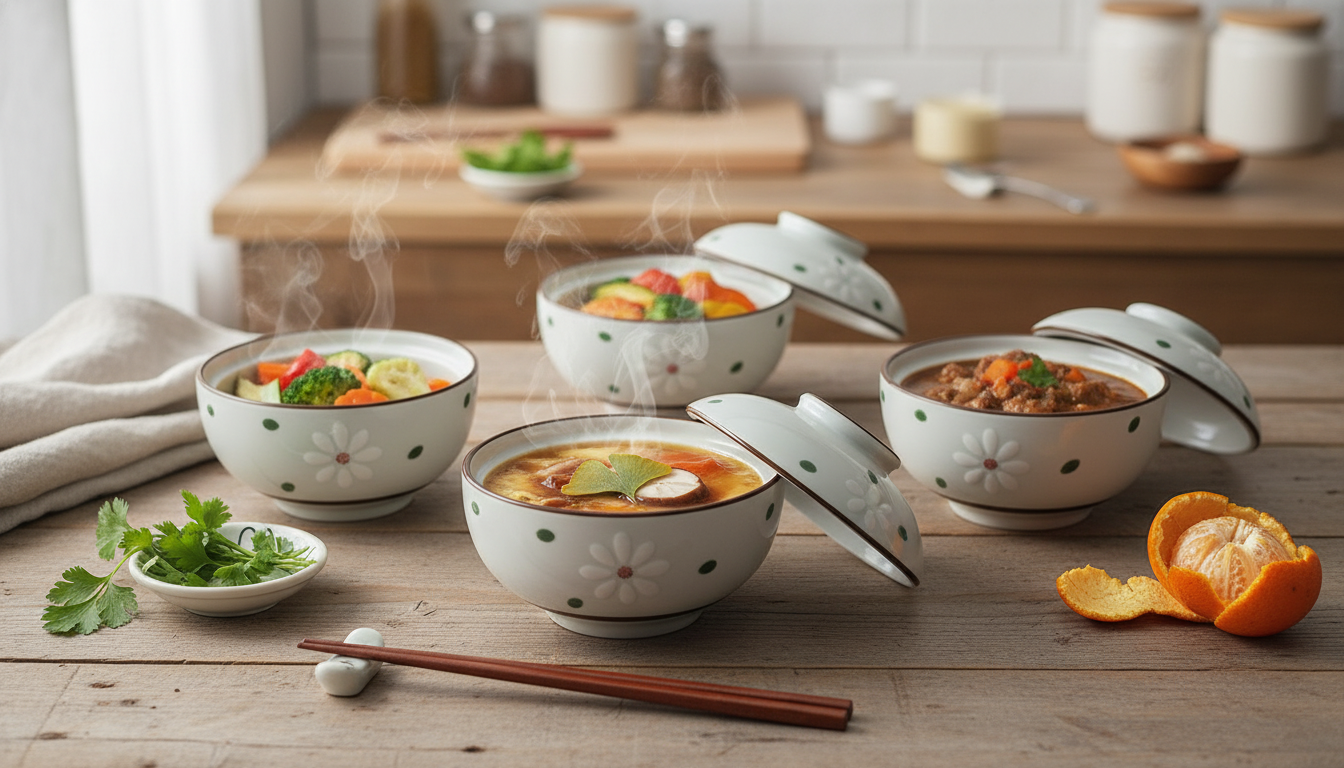
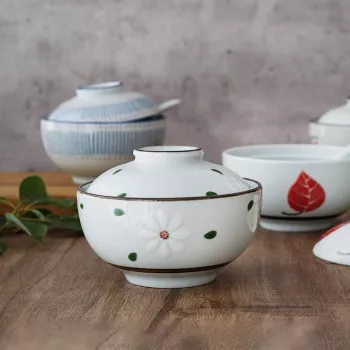
A lidded porcelain stew bowl is a simple upgrade that makes hot servings feel more intentional: it keeps soup warmer, helps contain splatters during reheating, and stacks more neatly than a plate-and-wrap setup. At 4.75 inches wide, this size is made for individual portions—perfect for a cozy bowl of something hot without overfilling or crowding the table. The lid also supports tidy storage for leftovers, reducing fridge odors and slowing down moisture loss so food tastes closer to freshly made.
Because 4.75 inches is compact, it shines in “small-but-hot” moments—when a full-size soup bowl feels too big, or when you want a covered vessel that holds heat between bites. A lidded porcelain bowl is especially handy for quick lunches, side servings at dinner, and make-ahead meals that need clean storage.
| Dish type | Why a lid helps | Typical serving moment |
|---|---|---|
| Soup (broth, ramen sides) | Reduces heat loss and prevents splashes during reheating | Weeknight lunch, light dinner |
| Stew or chili | Keeps surface from cooling and thickening too quickly | Cold-weather meals |
| Porridge or congee | Traps steam to maintain texture | Breakfast or recovery meals |
| Leftovers | Limits moisture loss and fridge odors | Meal prep, next-day lunch |
| Small baked side | Helps hold warmth on the table | Family-style dinner |
Porcelain is a dense ceramic that typically feels substantial in the hand—and that density can translate to better heat retention than thin plastic containers. When the bowl is already warm, it can help hot food stay enjoyable longer, especially when paired with a lid that reduces the exposed surface area where steam escapes.
For safe food handling when cooling and storing leftovers, follow time-and-temperature basics from the USDA Food Safety and Inspection Service. And because these bowls are food-contact items, it’s worth understanding why food-safe materials matter; the FDA’s overview of food contact substances provides helpful context.
Two bowls can share the same diameter and still behave very differently day to day. Small design choices—lid fit, rim profile, and base shape—often determine whether the bowl becomes a weekly staple or sits unused.
With no two ceramics behaving exactly the same, the best choice comes down to matching the bowl’s ratings and shape to how it will actually be used—reheating, serving, storing, or all three.
| Checklist item | What to look for | Why it matters |
|---|---|---|
| Microwave compatibility | No metallic trim; clear microwave-safe label | Safer reheating and fewer limitations |
| Oven compatibility | Oven-safe temperature rating and care notes | Prevents cracking and glaze damage |
| Lid ergonomics | Easy-grip knob; stable seating | Safer handling and better heat retention |
| Cleaning | Dishwasher-safe claim; smooth glazed interior | Less scrubbing and fewer stains |
| Storage | Stackable shape; lid nests well | Saves cabinet space |
Hot liquids can cause serious burns, especially when a lid traps steam; basic scald safety guidance from MedlinePlus is a useful refresher for any kitchen where reheating happens often.
Yes—ceramic and porcelain bowls are commonly used for soup because they tolerate hot liquids well and retain heat. If reheating, confirm the bowl is rated for microwave or oven use, avoid sudden temperature changes, and make sure the glaze is intact and food-safe.




Leave a comment